Sayer Ji
Mar 01, 2026
Brain regeneration — long dismissed as biologically impossible — is now emerging as one of the most extraordinary frontiers in modern neuroscience. At the center of this revolution sits an ancient golden spice whose regenerative power extends far beyond what even its most ardent proponents imagined: the capacity to awaken the brain’s own dormant stem cells and stimulate the birth of new neurons.
A Spice That Shatters the Central Dogma of Neuroscience
For the better part of a century, the medical establishment held an unshakeable conviction: the adult human brain cannot regenerate. Once neurons were lost — to injury, aging, toxic exposure, or disease — they were gone forever. This dogma, codified in textbooks and reinforced in clinical training, shaped everything from how we treated traumatic brain injury to how we counseled patients receiving a diagnosis of Alzheimer’s or Parkinson’s disease. It was considered settled science, a fixed boundary of biological possibility.
It was also profoundly wrong.
The discovery of endogenous neural stem cells (NSCs) — a subpopulation of cells residing in the adult brain, capable of continuous self-renewal and differentiation into new, functional neurons — shattered this paradigm irreversibly. We now know the brain harbors within its own architecture the seeds of its repair. The regenerative potential of these cells has been demonstrated in the subventricular zone (SVZ) lining the brain’s lateral ventricles and in the dentate gyrus of the hippocampus, a region central to memory consolidation and emotional processing. Neural stem cells in these “neurogenic niches” exist in a state of quiet readiness, waiting for the right biochemical signals to awaken them.
The question that should now occupy us is no longer whether the brain can regenerate, but what activates that process — and what suppresses it. And here is where turmeric (Curcuma longa) enters the story with a power that borders on the revelatory.
Beyond the Curcumin Paradigm: The Discovery of Ar-Turmerone
Turmeric is hands down one of the most versatile healing spices in the world, with over 986 experimentally confirmed health benefits and an ancient history filled with deep reverence for its seemingly compassionate power to alleviate human suffering. It may also represent the pharmaceutical industry’s single most existential threat, given that the preliminary science signals turmeric is at least as effective as 14 drugs, and orders of magnitude safer in terms of toxicological risk.

Yet for the past two decades, the vast majority of turmeric research has orbited a single compound: curcumin, the primary polyphenol responsible for the spice’s golden hue. Curcumin is a remarkable molecule in its own right, with well-documented anti-inflammatory, antioxidant, and neuroprotective properties. The nutraceutical industry, emulating the pharmaceutical model’s instinct to isolate a singular “magic bullet,” developed sophisticated delivery systems — phospholipid-bound concentrates like Meriva and BCM-95, piperine-enhanced formulas — to maximize curcumin’s absorption and bioactivity.
But this curcumin-centric focus, however well-intentioned, obscured something essential: turmeric is not curcumin. The whole rhizome contains hundreds of bioactive compounds — polyphenols, terpenes, essential oils, polysaccharides, mineral cofactors — orchestrated in a synergy that no isolate can replicate. Extracting and standardizing a single compound from this matrix is like pulling a single instrument from an orchestra and expecting it to reproduce a symphony. There is, in truth, no singular “magic bullet” in foods and herbs responsible for reproducing the whole plant’s healing power. There are, in most healing plants, hundreds of compounds orchestrated by the intelligent hand of Nature, which can never be reduced to the activity of a singularly quantifiable phytocompound.
And among turmeric’s many overlooked compounds, one has now emerged as a candidate of extraordinary significance for brain regeneration: aromatic turmerone (ar-turmerone) — a fat-soluble sesquiterpenoid that constitutes a major bioactive component of the turmeric essential oil fraction.
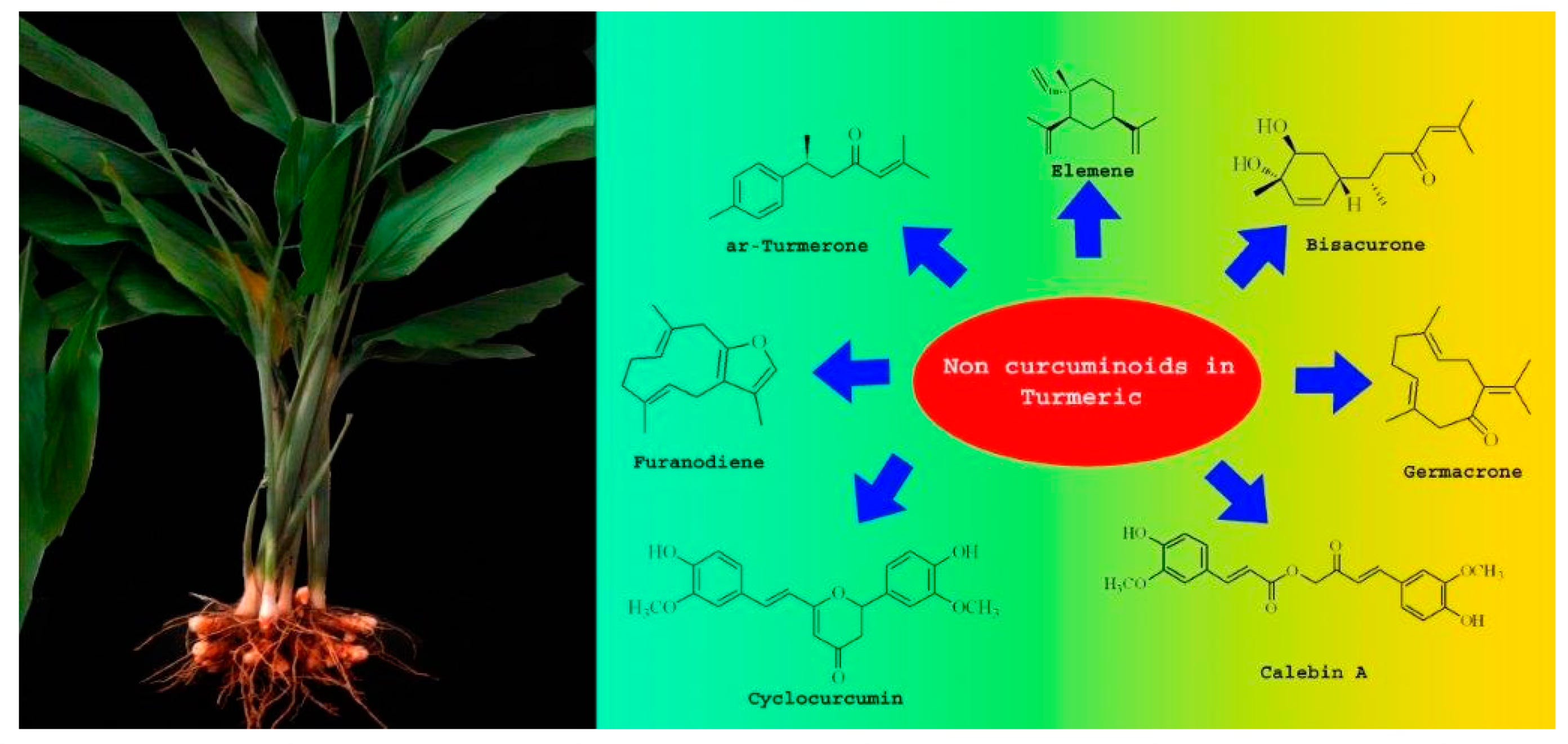
[Image from: Nair, A.; Amalraj, A.; Jacob, J.; Kunnumakkara, A.B.; Gopi, S. Non-Curcuminoids from Turmeric and Their Potential in Cancer Therapy and Anticancer Drug Delivery Formulations. Biomolecules 2019, 9, 13. https://doi.org/10.3390/biom9010013]
The Landmark Research: Neural Stem Cell Proliferation In Vitro and In Vivo
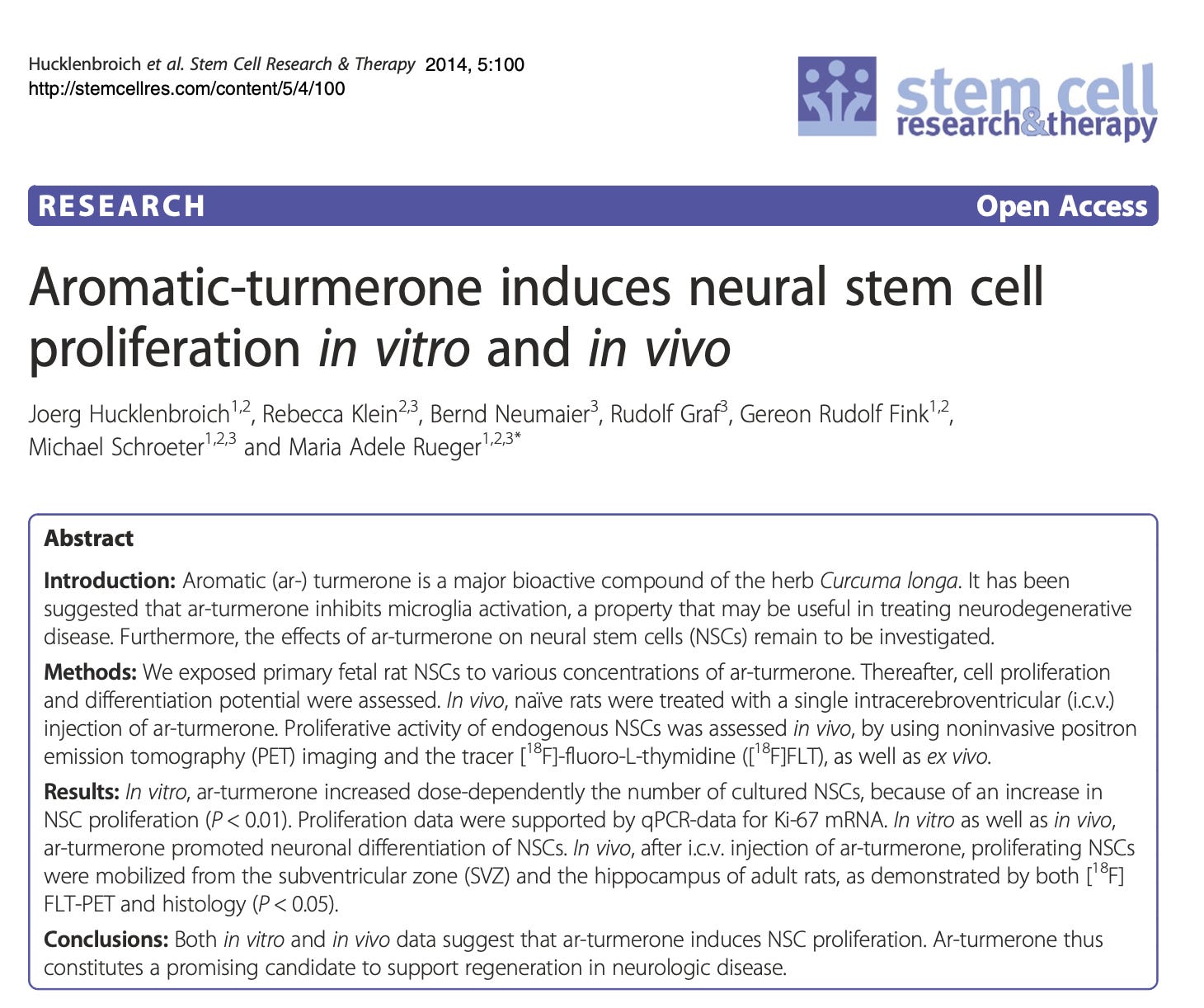
In 2014, a team of German researchers led by Dr. Maria Adele Rueger at the University of Cologne published a study in Stem Cell Research & Therapy that would fundamentally alter our understanding of turmeric’s relationship to the brain. Titled “Aromatic-turmerone induces neural stem cell proliferation in vitro and in vivo,” the study systematically investigated what ar-turmerone does to the very cells responsible for the brain’s self-repair.
The In Vitro Evidence: A Dose-Dependent Awakening
The researchers exposed primary fetal rat neural stem cells to various concentrations of ar-turmerone (ranging from 1.56 to 25 μg/ml) and measured the effects over 72 hours. The results were striking:
Cell numbers increased dramatically. NSC populations grew significantly at concentrations between 3.125 and 25 μg/ml, with a maximum increase of approximately 80% at the optimal concentration of 6.25 μg/ml (P < 0.01). This was not a subtle effect. Ar-turmerone was nearly doubling the number of neural stem cells in culture.
The increase was driven by genuine proliferation, not merely survival. Using BrdU incorporation assays — the gold standard for measuring active cell division — the team demonstrated that ar-turmerone increased the percentage of actively dividing NSCs from roughly 50% to approximately 80% (P < 0.01). In plain terms: in untreated cultures, about half the stem cells were actively dividing. With ar-turmerone, four out of five were. This finding was independently confirmed at the molecular level through quantitative PCR analysis of Ki-67, a well-established proliferation marker, which showed significantly elevated mRNA expression in treated cells (P < 0.05). Two entirely different methods of measurement told the same story: ar-turmerone was powerfully switching on the brain's stem cell engine.
The proliferative concentrations did not compromise cell viability. At the doses that produced the most potent proliferative effects (1.56–6.25 μg/ml), ar-turmerone had no adverse effect on cell survival whatsoever, establishing a favorable therapeutic window. Only at substantially higher concentrations (12.5–25 μg/ml) was any cytotoxicity observed — a pattern consistent with hormesis and the general principle in toxicology that the dose makes the poison.
From Proliferation to Neurogenesis: The Differentiation Effect
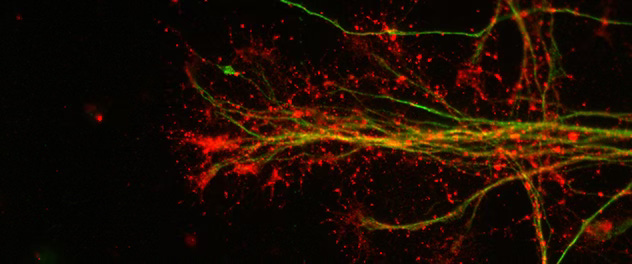
Perhaps even more significant than the proliferation data was what happened when the researchers allowed the ar-turmerone-treated stem cells to differentiate. After withdrawing the growth factor FGF2 and allowing a 10-day differentiation period, the treated cells showed a dramatically accelerated maturation process:
There were significantly fewer undifferentiated (SOX2-positive) stem cells remaining in the ar-turmerone group compared to controls (P < 0.01). SOX2 is a marker that identifies cells still in their immature, uncommitted state. Fewer SOX2-positive cells meant that ar-turmerone was actively nudging stem cells to grow up — to graduate from their dormant potential into mature, working brain cells.
Critically, the treated NSCs preferentially differentiated into young neurons, as assessed by TuJ1 staining — a marker for neuron-specific class III beta-tubulin (P < 0.01). To put this simply: stem cells can become several different types of brain cells — neurons (which process thoughts and memories), astrocytes (support cells), or oligodendrocytes (which insulate nerve fibers). Ar-turmerone didn't just create more cells randomly. It specifically guided them to become neurons — the very cell type most needed for cognitive repair. It was as if the compound carried instructions: "become the cells the brain needs most."
Meanwhile, the generation of astrocytes (GFAP-positive) and oligodendrocytes (CNPase-positive) was unaffected by ar-turmerone — demonstrating a remarkable specificity in its neurogenic action.
To summarize: ar-turmerone both multiplied the brain’s stem cell population and directed those new cells to become functional neurons. This is not merely cellular growth. This is orchestrated neurogenesis — the birth of new brain cells from the body’s own regenerative reserves.
The In Vivo Confirmation: Proof in the Living Brain
The Cologne team did not stop at cell culture. They proceeded to test ar-turmerone in living animals — a critical step in translational neuroscience.
Adult Wistar rats received a single intracerebroventricular injection of 3 mg ar-turmerone directly into the lateral ventricle of the brain. Over the following week, the rats received daily systemic injections of BrdU at 50 mg/kg to label dividing cells in vivo. Seven days later, the researchers assessed the results using both immunohistochemistry and noninvasive PET imaging. The findings confirmed and extended the in vitro data:
The subventricular zone expanded by approximately 45%. BrdU staining revealed that the SVZ — one of the brain’s two primary neurogenic niches — was significantly wider in ar-turmerone-treated animals compared to saline-injected controls (P < 0.05). This expansion of the stem cell niche represents a tangible, measurable increase in the brain’s regenerative infrastructure.
Neuroblast production surged. Staining for doublecortin (DCX) — a protein expressed specifically by newborn neurons as they migrate through the brain toward where they are needed — revealed significantly more DCX-positive cells in the SVZ of treated animals (P < 0.01). Think of DCX-positive cells as baby neurons on the move, traveling from the brain's nursery to the neighborhoods that need repair. The treated animals had significantly more of these migrating newborns — tangible, visible evidence that genuine neurogenesis was taking place.
PET imaging confirmed mobilization from both neurogenic niches. In one of the study’s most elegant and translatable contributions, the team used noninvasive positron emission tomography (PET) — the same type of brain scanning technology used in hospitals to detect cancer and monitor brain activity — with the radiotracer [¹⁸F]FLT, a molecule that gets absorbed specifically by dividing cells, making them light up on the scan. This allowed the researchers to literally watch stem cell activation happening in the living brain in real time, without surgery. The PET scans revealed significantly increased [¹⁸F]FLT accumulation in both the subventricular zone andthe hippocampus of ar-turmerone-treated animals (P < 0.01). In other words: the brains of treated animals were visibly glowing with new cell birth in both of the brain’s major regenerative centers.
As the authors concluded: ar-turmerone “constitutes a promising candidate to support regeneration in neurologic disease.”
A Dual-Action Mechanism: Why Ar-Turmerone Is Uniquely Positioned
The significance of these findings was recognized immediately by the broader neuroscience community. In a companion letter published in Stem Cell Research & Therapy, Poser and Androutsellis-Theotokis of the University of Dresden highlighted what makes ar-turmerone particularly remarkable as a therapeutic candidate: its dual-action mechanism.
Successful recovery from neurological injury, they noted, requires addressing two simultaneous challenges. First: the moderation of neuroinflammation — the chronic activation of microglia (the brain’s resident immune cells) that, while initially protective, becomes destructive when sustained, producing chemokines and free radicals that oppose tissue recovery. Second: the mobilization of endogenous neural stem cells to provide trophic support through the production of neurotrophic factors like BDNF and Sonic hedgehog, and where possible, to directly replace damaged neurons, astrocytes, and oligodendrocytes.
Most therapeutic approaches address one or the other. Ar-turmerone appears to do both.
Prior research by Park et al. had demonstrated that ar-turmerone possesses potent anti-inflammatory properties through the inhibition of NF-κB, JNK, and p38 MAPK signaling pathways in microglia stimulated by both lipopolysaccharide (LPS) and amyloid-beta (Aβ) — the toxic peptide that accumulates in Alzheimer’s disease. This represents a precisely targeted intervention at the molecular switches that drive neuroinflammation in conditions ranging from Alzheimer’s and Parkinson’s to traumatic brain injury and stroke.
Combined with its demonstrated ability to stimulate neural stem cell proliferation and neurogenesis, ar-turmerone emerges as what the Dresden team described as a multimodal therapeutic agent — one that simultaneously quiets the destructive inflammatory process while awakening the regenerative machinery, “allowing for the establishment of a regenerative microenvironment that facilitates innate repair and functional recovery.”
The Emerging Molecular Picture: STAT3 Signaling and the Regenerative Axis
How does ar-turmerone accomplish this dual action at the molecular level? While research continues to refine the picture, a compelling hypothesis has emerged centering on the STAT3-Ser/Hes3 signaling axis — an emerging regulator of neural stem cell growth and survival described by Poser, Park, and Androutsellis-Theotokis.
The STAT3 pathway is a master regulator of neural cell fate, operating through two distinct phosphorylation events with opposing consequences:
STAT3 tyrosine 705 phosphorylation promotes differentiation of neural stem cells toward a glial fate — pushing them to become astrocytes (support cells) rather than neurons, and opposing the expansion of the stem cell pool. Think of this as the “stop growing and settle down” signal.
STAT3 serine 727 phosphorylation activates the Hes3 transcription factor, promoting neural stem cell self-renewal, survival, and the maintenance of regenerative capacity. This is the “keep multiplying and stay young” signal — the one you want active when the brain needs to regenerate.
Here is where the molecular logic becomes elegant — and beautifully simple once you see it.
The brain has a built-in braking system that prevents stem cells from multiplying too freely. One of the key molecules enforcing that brake is the kinase p38 MAPK, which suppresses the “keep regenerating” signal (STAT3 serine 727 phosphorylation). As long as p38 is pressing down on that brake, the brain’s regenerative engine stays idling. Ar-turmerone is known to inhibit p38 in microglia. If it does the same in neural stem cells — and the evidence strongly suggests it does — then ar-turmerone effectively lifts the foot off the brake, allowing the brain’s own regenerative signaling to flow freely and powerfully in response to the body’s natural growth cues.
But there may be a second, complementary mechanism at work. Curcumin — ar-turmerone’s better-known sibling compound in the same plant — has been shown to suppress a different signal: STAT3 tyrosine 705 phosphorylation, the one that tells stem cells to “stop being stem cells and become support cells (astrocytes) instead.” If ar-turmerone shares this property, it would simultaneously quiet the “settle down” signal while amplifying the “keep growing” signal. The net effect: more stem cells, more neurons, fewer cells shunted toward non-neuronal fates — which is precisely what Hucklenbroich et al. observed in their experiments.
In other words, turmeric may contain compounds that work both sides of the regenerative equation at once — releasing the brake while pressing the accelerator. And it does so through the same deep signaling pathways (the STAT3-Ser/Hes3 axis) activated by the most potent growth factors studied in modern neuroscience, including FGF2, Delta4, angiopoietin 2, and insulin. That a common kitchen spice accesses the same regenerative architecture as the most powerful molecules in a neuroscientist’s toolkit is a remarkable convergence of ancient botanical wisdom and contemporary cell biology.
The Neuroprotective Arsenal: 420 Studies and Counting
The ar-turmerone research belongs to a vast and growing body of evidence documenting turmeric’s extraordinary affinity for the brain. The GreenMedInfo database catalogs over 420 peer-reviewed articles on turmeric’s neuroprotective properties, encompassing research into Alzheimer’s disease, Parkinson’s disease, traumatic brain injury, stroke recovery, depression, and age-related cognitive decline.

The mechanisms are multifaceted: modulating master inflammatory switches including COX-2 and NF-κB; providing potent antioxidant protection through free-radical scavenging; supporting mitochondrial function; enhancing expression of brain-derived neurotrophic factor (BDNF); crossing the blood-brain barrier to reach neurological targets; and, as the ar-turmerone research now demonstrates, directly stimulating the proliferation and neuronal differentiation of neural stem cells.
This is not a substance that targets a single pathway. Turmeric has been characterized as acting through over 290 distinct pharmacological mechanisms. No pharmaceutical drug on Earth can make such a claim. And this multi-pathway activity is precisely what one would expect from a whole-plant medicine: not a blunt-force intervention on a single molecular target, but a sophisticated, systems-level modulation of the body’s own regulatory networks.
The Intelligence of the Whole Plant
The ar-turmerone findings illuminate a deeper principle that runs throughout the history of plant medicine: the irreducible intelligence of the whole botanical agent.
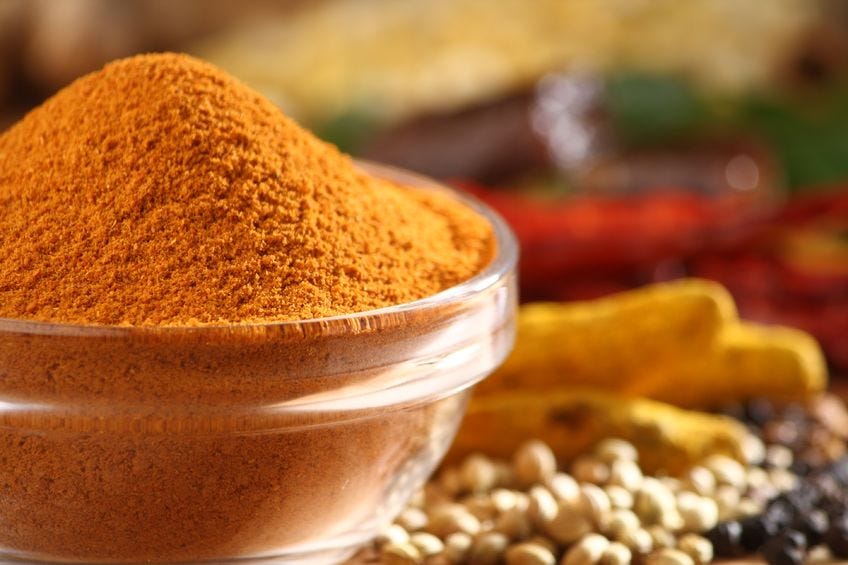
In any healing plant, there are not one but hundreds of compounds working in concert through what can only be described as a kind of molecular symphony. Curcumin is the violin. Ar-turmerone is the cello. But the whole turmeric rhizome — with its full spectrum of turmerones, curcuminoids, polysaccharides, volatile oils, and yet-uncharacterized compounds — is the entire ensemble. And it is the ensemble that produces the healing.
This is not a romantic notion. It is an empirical observation confirmed repeatedly across the botanical sciences. Whole-plant preparations routinely outperform their isolated constituents — not because any single compound is more potent, but because the synergistic interactions between compounds produce emergent therapeutic properties that no individual molecule possesses alone. The whole, as the ancients understood and as modern research increasingly confirms, is greater than the sum of its parts.
This principle has profound practical implications. The nutraceutical industry’s extraction and standardization processes, modeled on the pharmaceutical paradigm, generate proprietary formulas that serve market differentiation — a value proposition that serves the manufacturer and not the consumer. The whole plant, by contrast, delivers the full informational complexity that the body’s epigenetic and nutrigenomic systems evolved to recognize and respond to.
What Suppresses the Brain’s Regenerative Capacity
If the brain possesses endogenous neural stem cells capable of self-repair, why do neurodegenerative diseases continue to progress? The answer lies in the conditions of modern life that systematically suppress the very regenerative processes the brain carries within it.
Environmental toxins — heavy metals, pesticide residues, industrial chemicals — accumulate in neural tissue and create a hostile microenvironment for stem cell function. Electromagnetic field exposure affects cellular signaling pathways. Chronic psychological stress elevates cortisol and other glucocorticoids that directly suppress hippocampal neurogenesis. Pharmaceutical residues carry their own neurotoxic burdens. And the inflammatory load of the standard Western diet creates a baseline state of chronic neuroinflammation that silences the stem cells waiting to heal us.
The brain’s regenerative potential remains fundamentally intact. But it is increasingly dormant. This is what makes the ar-turmerone research so electrifying. It suggests that a naturally occurring, food-derived compound can reawaken a regenerative process the body already possesses but has been prevented from fully expressing. It is not creating something foreign. It is restoring something innate.
From Research to Formulation: The Birth of Brain Health
It was this very body of research — the ar-turmerone findings in particular — that set me on a path I had not originally anticipated. For years, I had been writing about turmeric’s neuroprotective properties, cataloging the studies, building the GreenMedInfo database’s collection of over 3,000 abstracts on this extraordinary spice. But the Hucklenbroich et al. study changed something fundamental in my understanding. Here was evidence that a specific, fat-soluble compound naturally present in whole turmeric could awaken the brain’s own dormant stem cells — mobilizing them from both the subventricular zone and the hippocampus, and steering them toward neuronal differentiation. The implications were staggering. And the question became unavoidable: could we create a formula that honored this science while respecting the intelligence of the whole plant?

That question led to a years-long collaboration with my colleague Dr. Ed Group, founder of Global Healing, a clinician and formulator whose commitment to purity and energetic integrity in supplementation is unmatched in the industry. Together, we set out to create something that did not yet exist: a formula built around a rare concentration of aromatic turmerones — the very compounds shown in the German research to support neurogenesis — delivered within the full-spectrum context of the whole turmeric plant, and synergized with complementary botanicals chosen for their own documented contributions to brain health.
The result is Brain Health — a formula years in the making that represents, I believe, a genuine convergence of ancient plant wisdom and cutting-edge neuroscience.
The Formulation Philosophy
Brain Health was designed from the ground up to embody the whole-plant principle discussed throughout this article. Rather than isolating curcumin alone, the formula centers on a rare concentration of aromatic turmerones extracted through a proprietary cold glycerospheric process that preserves their living essence — the very compounds the Hucklenbroich study identified as activating neural stem cell proliferation and neurogenesis.
Surrounding this core are carefully selected synergistic ingredients, each chosen for its own evidence base in cognitive support:
Full-Spectrum Turmeric Extracts — harnessing not just curcumin, but the entire biochemical and energetic profile of the turmeric rhizome for a truly synergistic effect that honors the intelligence of the whole plant.
Ginkgo Biloba — one of the most ancient and resilient plants on Earth, with well-documented antioxidant properties and a long history of supporting memory and cerebrovascular circulation.
Sea Buckthorn Extract — a rare source of Omega-7 fatty acids and potent antioxidants that help protect neural tissue against oxidative stress.
Ashwagandha — the revered adaptogenic herb that promotes physiological balance, mental clarity, and long-term cognitive resilience under stress.
Every ingredient is certified organic, vegan, and non-GMO. The formula is enhanced with Ormus-infused minerals and triple-distilled biophotonic water to maximize energetic coherence and absorption. It is produced in a glass, frequency-shielded environment designed to capture and preserve the life force of each ingredient — pure, potent, and resonant.
The compounds in this formula work synergistically to optimize epigenetic pathways, enhance antioxidant protection, and provide the brain with the tools it needs to activate its own innate regenerative intelligence. Users describe the experience as “liquid sunshine” — a sense of clarity, calm, and luminous focus lighting up the mind from within.
Brain Health is designed to be safe, versatile, and easy to integrate into daily life. Start with one dropperful twice daily, as recommended on the label, and listen to your body. For enhanced performance or deep focus, you can safely increase to up to four dropperfuls twice a day. The formula is gentle, effective, and energetically balanced — suitable for most adults, particularly those between 35 and 75 years old.
Learn More: The Science and Story Behind Brain Health
For those who want to go deeper into the research, alchemy, and inspiration behind Brain Health, I have recorded two in-depth video presentations that explore the full story:
“Revitalize Your Mind: The Science Behind Brain Health” — This is the official launch video, covering the neural stem cell science, the formulation methodology, the key ingredients, and why this product represents a new paradigm in cognitive support. Watch it here.
“BRAIN HEALTH: Where Ancient Alchemy Meets Modern Science” — A deeper exploration of the vibrational and alchemical dimensions of the formula — how the extraction process, the Ormus-infused minerals, and the biophotonic water work together to create something that is more than a supplement: a tool for reconnection to the body’s own wisdom and the higher frequencies of health. Watch it here.
Hear what people are saying. Experience the shift yourself. Feel the difference. Awaken your brain’s full potential.

Learn more and purchase Brain Health at Global Healing.
How to Get the Most Out of Your Turmeric
One of the most frequent questions we receive at GreenMedInfo is: “What is the best type of turmeric or curcumin to use?” Given the research presented here, the answer requires nuance and bio-individualization.
The first principle: the whole plant carries a wider range of therapeutic compounds than any isolate. If your goal is to access ar-turmerone alongside curcumin and the full spectrum of turmeric’s bioactive compounds, whole-plant preparations — particularly those that preserve the fat-soluble essential oil fraction where ar-turmerone resides — are essential. A curcumin-only supplement, however well absorbed, will not deliver the compound now shown to activate neural stem cells.
The second principle: context-dependent application. For localized gastrointestinal issues, a teaspoon of whole turmeric powder may paint the intestinal lumen with exactly the compounds needed. For systemic effects targeting the brain or joints, a preparation that enhances bioavailability through phospholipid binding, piperine co-administration, or advanced extraction methods preserving the volatile oil fraction may be more appropriate.
The third principle: culinary doses can be profoundly effective. We have featured studies showing that culinary doses of herbs improved memory, whereas higher “heroic doses” impaired it. Daily use of turmeric in curries, golden milk, or a pinch in a smoothie may be an ideal long-term approach — one that honors the body’s capacity to respond to the subtle informational complexity of whole foods rather than the brute-force pharmacology of isolated compounds.
Quality is everything. Choose organic, wild-crafted or biodynamically sourced turmeric whenever possible. And remember: less can be more.
A Return to Reverence
What the ar-turmerone research ultimately reveals is not merely a new therapeutic compound. It reveals something about the nature of healing itself.
For centuries, traditional cultures revered turmeric not because they had conducted randomized controlled trials, but because they recognized in it a quality of intelligence — a capacity to restore what was broken, to bring the body back into alignment with its own design. Modern science, with its PET scanners and proliferation markers and doublecortin staining, is now providing the mechanistic evidence for what those cultures intuited.
The brain can regenerate. Neural stem cells are waiting to be awakened. And a golden spice that has been cherished for millennia carries within it compounds capable of catalyzing that awakening — not through force, but through a kind of molecular eloquence that speaks the language of the brain’s own regenerative intelligence.
Perhaps the most advanced healing technology we will ever discover is one that was here all along — embedded in the living intelligence of the plants that grow beneath our feet, waiting only for us to recognize what they offer and to receive it with the reverence it deserves.
Learn more about Brain and Heart Regeneration in my video below from the REGENERATE YOURSELF MASTERCLASS. Get the entire course including advanced modules here now.

.jpg)
References
1. Hucklenbroich J, Klein R, Neumaier B, Graf R, Fink GR, Schroeter M, Rueger MA. Aromatic-turmerone induces neural stem cell proliferation in vitro and in vivo. Stem Cell Res Ther. 2014;5(4):100. doi: 10.1186/scrt500.
2. Poser SW, Androutsellis-Theotokis A. Spicing up endogenous neural stem cells: aromatic-turmerone offers new possibilities for tackling neurodegeneration. Stem Cell Res Ther. 2014;5(6):127. doi: 10.1186/scrt517.
3. Park SY, Jin ML, Kim YH, Kim Y, Lee SJ. Anti-inflammatory effects of aromatic-turmerone through blocking of NF-κB, JNK, and p38 MAPK signaling pathways in amyloid beta-stimulated microglia. Int Immunopharmacol. 2012;14(1):13–20.
4. Park SY, Kim YH, Kim Y, Lee SJ. Aromatic-turmerone’s anti-inflammatory effects in microglial cells are mediated by protein kinase A and heme oxygenase-1 signaling. Neurochem Int. 2012;61(5):767–777.
5. Androutsellis-Theotokis A, Leker RR, Soldner F, et al. Notch signalling regulates stem cell numbers in vitro and in vivo. Nature. 2006;442:823–826.
6. Androutsellis-Theotokis A, Rueger MA, Park DM, et al. Targeting neural precursors in the adult brain rescues injured dopamine neurons. Proc Natl Acad Sci USA. 2009;106:13570–13575.
7. Poser SW, Park DM, Androutsellis-Theotokis A. The STAT3-Ser/Hes3 signaling axis: an emerging regulator of endogenous regeneration and cancer growth. Front Physiol. 2013;4:273.
Sayer Ji is the founder of GreenMedInfo.com, author of the international best-seller REGENERATE: Unlocking Your Body’s Radical Resilience through the New Biology, co-founder of Stand for Health Freedom (501c4), and chairman of the Global Wellness Forum.
Disclaimer: This article is not intended to provide medical advice, diagnosis, or treatment. The information presented is drawn from peer-reviewed scientific literature and is provided for educational purposes. Before beginning any treatment regimen, consult a licensed healthcare professional.
© 2026 GreenMedInfo LLC. All rights reserved.
No hay comentarios:
Publicar un comentario