
tomatobubble,com
1914 --- 1923 --- 1939
This ought to dispel the myth of "German militarism", once and for all. Just like the original opening lines of the misunderstood and grossly misrepresented German anthem 'Deutschland Uber Alles' used to proclaim:
Germany, Germany above all * (Deutschland uber alles)Above everything in the world * (in terms of love for Germany)When, always, for protection and defenseBrothers stand together
Catch that? For "protection and defense" --- not aggressive conquest.
1914

Before Germany invaded puppet-Belgium to get to France,
the French had invaded Germany.
A little known fact of World War I is that Germany was the LAST of the great European powers to mobilize her military. In order to kick off the war, the French (allied with Britain & Russia) had crossed into German territory on numerous occasions, even dropping bombs from the primitive airplanes of the day. Germany's two-front push against The Triple Entente powers and "neutral" Belgium was provoked and necessary for self-defense.
Germany's war declaration correctly recited the fact that Germany had made every effort to resolve any differences peacefully, but that France "interposed obstacles to a peaceful understanding." The first soldiers and the first bombs to cross borders were French going into Germany, and that's a fact.
1923
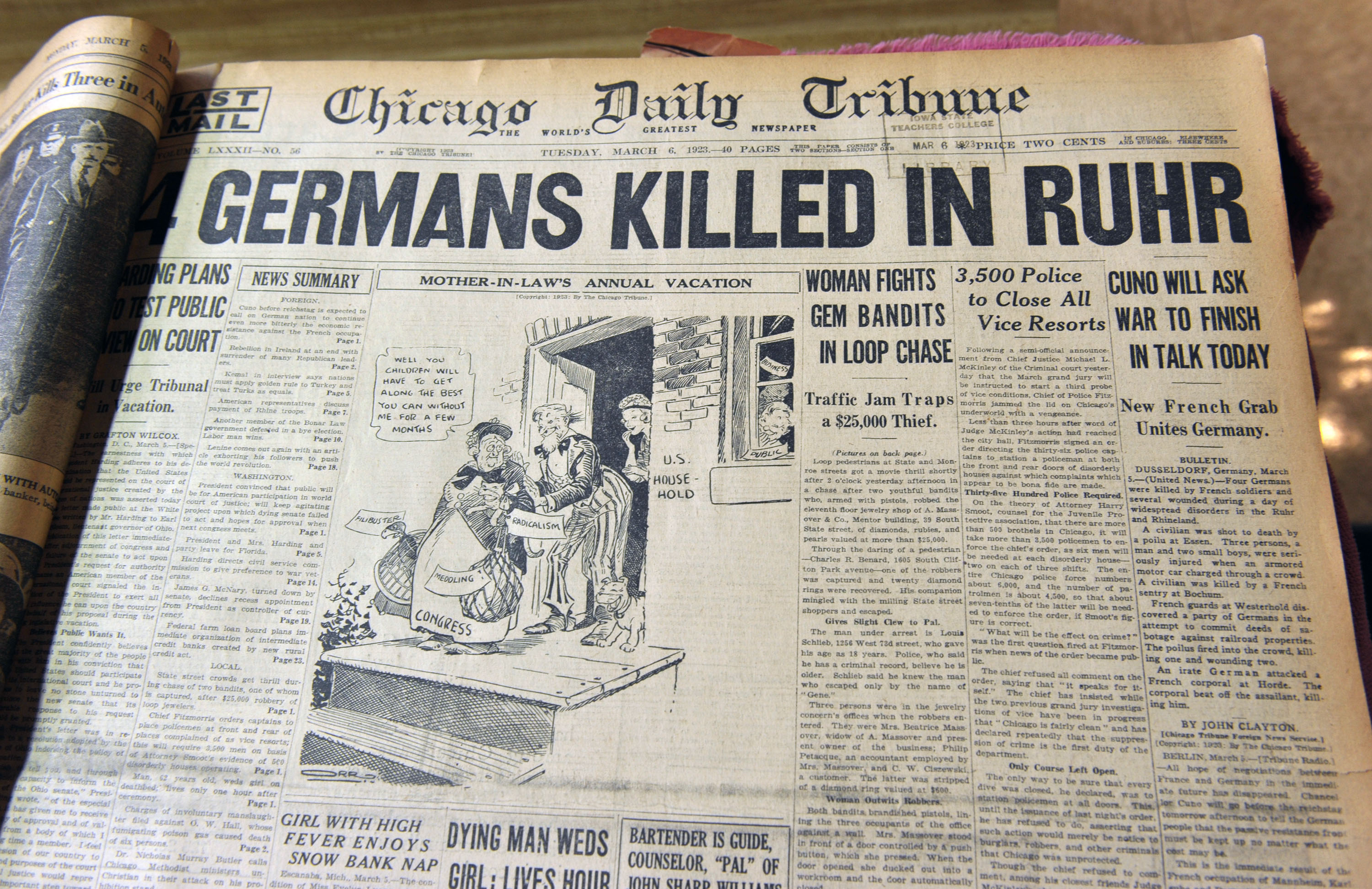

"Germans Killed in Ruhr (Germany)" --- When looted-out Germany struggled to make its post-war extortion payments, French & Belgian troops marched in to confiscate resources of the German Ruhr region by force. Germans who protested were abused or even murdered.
A little known fact of post-World War I is that the oppression and looting of Germany -- which fueled