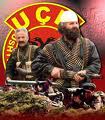
24 March 1999:
Remembering the NATO led War on Yugoslavia:
Kosovo “Freedom Fighters” Financed by Organized Crime
By Prof Michel Chossudovsky
Twelve years ago, March 24th 1999, marks the commencement of
NATO’s aerial bombardment of Yugoslavia. The bombings which lasted for
almost three months, were followed by the military invasion (under a
bogus UN mandate) and illegal occupation of the province of Kosovo.
In the course of the last week, the so-called international
community, backed by the UN Security Council has called for the bombing
of Libya, a sovereign country, allegedly to protect the lives of
civilians under the logo of “Responsibility to Protect”.
The covert operations, the military strategies applied in Libya not
to mention the process of media disformation bear a canny resemblance to
Yugoslavia in 1999.
The Libyan “humanitarian bombing” campaign is an integral part of a
military strategy which consists in destroying the country’s civilian
infrastructure. It is a “copy and paste” of previous “humanitarian
bombing” endeavors including the 1999 bombing of Yugoslavia and the 2003
military campaign and occupation of Iraq.
The military technology applied today against Libya is far more sophisticated and precise.
In 1999, when Belgrade was bombed, the children’s hospital was the
object of air attacks. It had been singled out by military planners as a
strategic target.
NATO acknowledged that that had done it, but to “save the lives” of
the newly borne, they did not target the section of the hospital where
the babies were residing, instead they targeted the building which
housed the power generator, which meant no more power for the
incubators, which meant the entire hospital was for all sakes and
purposes destroyed and many of the children died.
I visited that hospital, one year after the bombing in June 2000 and
saw with my own eyes how they did it with utmost accuracy. These are war
crimes using the most advanced military technology using NATO’s
so-called smart bombs.
In Yugoslavia, the civilian economy was the target: hospitals,
airports, government buildings, manufacturing, infrastructure, not to
mention 17th century churches and the country’s historical and cultural
heritage.
The following article focussing on the KLA, written and published in
April 1999, documents the KLA’s links to organized crime and Al Qaeda.
While the nature of the opposition in Libya remains to be analysed,
Western media reports have confirmed that it is integrated by members of
the Libyan Islamic Fighter Group (LIFG), a terrorist organization with
links to Al Qaeda.