Busca en Nuestros Archivos

Busca en Nuestro Blog

Translate / Traducir

Mostrando entradas con la etiqueta Timothy Alexander Guzman. Mostrar todas las entradas

09 agosto, 2015

#US #Created #ISIS

Will the US-Created ISIS Attack Americans on US Soil?
By Joachim Hagopian
us-isis

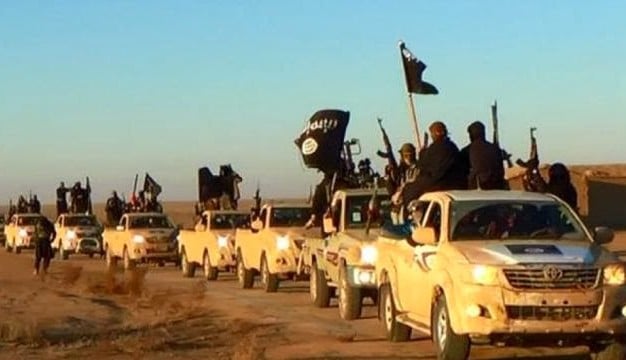
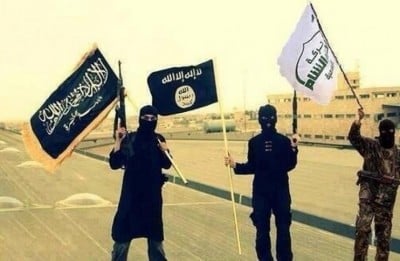
Those of us in alternative news media shoulder a growing responsibility of shedding light on the truth where little to none exists anymore either in government and mainstream media. As such, citizens of the world but especially of America need to know that the so called Islamic State of Iraq and Syria (ISIS) like al Qaeda before them are the created, well-paid, well-armed secret mercenary ally of the US Empirein cahoots with Israel, other Western nations, NATO, and US Muslim allies Saudi Arabia, Turkey and other oil-rich Gulf state puppets.

Overwhelming evidence has been amassed to expose this basic fundamental fact. This sobering reality in and of itself proves that key members of the international crime syndicate posing as the US government have violated their sworn oaths to protect and defend America from both foreign and domestic enemies and clearly committed repeated acts of treason. The same neocons responsible for murdering 3000 of their own American citizens on 9/11 have also been the creators of ISIS and they have the blood of five US servicemen on their hands in Chattanooga… not to mention the millions of people in the Middle East and North Africa.

No sooner did Islamic State forces invade Iraq in June 2014, within days a groundswell of relentless warnings ever since have been pumped out of the feds’ echo-chambers, be it Homeland Security, the US intelligence community, law enforcement, Border Patrol and prominent Republican politicians like Senator Lindsey Graham, all insisting sooner than later another 9/11-like attack by ISIS is imminent on US soil. In Graham’s own words:


The seeds of 9/11’s are being planted all over Iraq and Syria. They want an Islamic caliphate that runs through Syria and Iraq… and they plan to drive us out of the Mideast by attacking us here at home.
House Intelligence Committee Chairman Mike Rogers (R-MI) warned:
 
-----------------------------------------------------

The Contradictions of US Sponsored Terrorism: Pentagon’s “New” Syrian Rebels to Direct U.S. Airstrikes against ISIS and Assad’s Government Forces
By Timothy Alexander Guzman
140227-map-crimea-1250_5f00f6012cf34480d5b588e14677df11 (1)

And so it begins. The first official airstrike was carried out by a U.S. drone that targeted ISIS strongholds inside Syrian territory. “A US drone today carried out one air strike in Syria near

15 septiembre, 2014

Syrian “Moderate” #Rebels and #IslamicState #Jihadists “Make #Peace”

What Will Obama do Now?

29 agosto, 2014

How the U.S. is Using ISIS as a Pretext for War Against Syria

“The Enemy of my Enemy is my Friend”
By Timothy Alexander Guzman
isis iraq
Absurdity beyond comprehension. 

Washington supported the Free Syria rebels who aligned themselves with the terrorist group called Al-Nusra to overthrow President Bashar al-Assad,

Then the Syrian rebels and other groups in Iraq form another terrorist organization who call themselves the Islamic State of Iraq and Syria (ISIS).


The consequences of Washington’s policies of aiding the Syrian rebels including ISIS have served a purpose. ISIS has spread to both Syria and Iraq gaining territory. ISIS has claimed it has executed 250 Syrian soldiers last weekend as they seized an airbase in the province of Raqqa.

Washington considers the advancement of ISIS a threat to its national security. As reported by the Associated Press, US surveillance planes were already deployed to pinpoint specific targets. The article titled ‘US surveillance planes fly over Syria, officials say’ stated that
“Two U.S. officials said Monday that Obama had approved the flights, while another U.S. official said early Tuesday that they had begun. The officials were not authorized to discuss the matter by name, and spoke only on condition of anonymity.”
Army Gen. Martin Dempsey did not comment on surveillance flights currently in use but did say that “Clearly the picture we have of ISIS on the Iraqi side is a more refined picture,” said Dempsey, using one of the acronyms for the Islamic State group. “The existence and activities of ISIS on the Syrian side, we have … some insights into that but we certainly want to have more insights into that as we craft a way forward.” Obama’s rationale is that ISIS is a direct threat to American citizens after the public execution of photojournalist James Foley. Republicans are willing to give the Obama administration an authorization to take military action against ISIS in Syrian territory. Historically, Both Republicans and Democrats have always agreed on foreign policy issues, especially when war is on the agenda:
Sen. Bob Corker of Tennessee, ranking Republican on the Foreign Relations Committee, said Tuesday the administration “has not yet shared with us what their plans are.” He said he hoped the White House would go to the Congress with a request for an authorization to act.
“I think it’s our responsibility as elected officials to let the American people know where we stand with respect to national security matters,” Corker told MSNBC. “For the American people’s sake, Congress should weigh in. Congress should be a part of it”

01 marzo, 2014

Israel - Lebanon’s Government - Hezbollah - Air Strikes

On the Brink of Another War? 
Israel To Hold Lebanon’s Government “Responsible” 
if Hezbollah Retaliates over Air Strikes
By Timothy Alexander Guzman
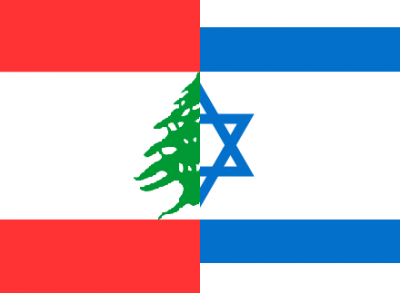
Lebanon_Israel_flags_012
Israel has warned the Lebanese government that it would be held responsible for any retaliation by Hezbollah after this past Monday’s airstrike by the Israeli Air Force that struck areas held by Hezbollah near the Lebanese-Syria border.  The Washington Post reported that “Hezbollah said it would ” choose the right time and place and the proper way to respond.” Israel is prepared to strike targets in Lebanon associated with Hezbollah strongholds. “An unspecified number of Hezbollah militants were killed in the airstrike, according to pan-Arab news channel Al Arabiya”  the Jerusalem Post said in their report which also stated Israel’s position on the matter:
Israel sent a warning to the Lebanese government in Beirut by way of UNIFIL that it would be held responsible for any attacks by Hezbollah that are launched from Lebanese soil, reported al-Akhbar News Agency on Friday
The Israeli Air Force recently launched strikes that hit Hezbollah targets on the border between Syria and Lebanon claiming that they were preventing missiles from reaching Hezbollah coming from Syria.  The Washington Post quoted Maj. Gen. Eyal Ben-Reuven on Monday’s actions undertaken by the Israeli government as he said “Israel has to act in order to prevent the transfer of game-changing weapons,” said retired Maj. Gen. Eyal Ben-Reuven, speaking from northern Israel. “Although I can’t confirm what happened . . . it is very clear that we are trying to prevent this.”
The Washington Post also quoted Israeli Prime Minister Benjamin Netanyahu’s comment on the military strike when he said “We will do all that is necessary to defend our citizens.” Hezbollah disagreed with the Lebanese media claiming that the strike targeted “a missile storage center and killed at least four Hezbollah fighters” Hezbollah said that the site “was only partially damaged” according to the report which also confirmed that a Lebanese intelligence official said that “the strike did target a shipment of missiles that had crossed the border from Syria.”
Tensions are rising on the border between Israel and Lebanon since the Syrian civil war began in 2011. Israel has been in preparation to counter Hezbollah in Lebanon and the Palestinians in the West Bank and Gaza since both groups are on their borders. “It is self-evident that we see Lebanon as responsible for any attack on Israel from the territory of Lebanon,” Strategic Affairs Minister Yuval Steinitz told Israel radio “It is the duty of the Lebanese government to prevent any terrorist attack – whether a terrorist or missile attack, or any other kind – on the State of Israel,” the Jerusalem Post stated.  Israel violated another UN resolution as “Foreign Minister Gebran Bassil condemned the Israeli strikes saying that Israel was in violation of UN Security Council Resolution 1701 that ended the 2006 Second Lebanon War, according to the Lebanese news outlet” the report said. The Brookings Institute issued a Report in 2011 called ‘The Next War: How another Conflict between Hizballah and Israel Could Look and How

24 febrero, 2014

Is Washington Considering a Full-Scale Drone War over Syria?


Timothy Alexander Guzman

droneWill the Obama administration launch a full scale drone war over Syria in the coming months ahead? Public support for Washington to order a direct military intervention against the Syrian government because it is accused of using chemical weapons against civilians is at the lowest level in 20 years according to a Gallop Poll conducted on September 2013.
More than 51% of Americans oppose military action and 13% are unsure if military action is practical.
In February 2013, US Press Secretary Jay Carney stated to the public, the ethical and “wise” use of drones that can pinpoint targets without of course killing innocent civilians is legal:
We have acknowledged, the United States, that sometimes we use remotely piloted aircraft to conduct targeted strikes against specific al Qaeda terrorists in order to prevent attacks on the United States and to save American lives. We conduct those strikes because they are necessary to mitigate ongoing actual threats, to stop plots, prevent future attacks, and, again, save American lives. These strikes are legal, they are ethical and they are wise. The U.S. government takes great care in deciding to pursue an al Qaeda terrorist, to ensure precision and to avoid loss of innocent life
Washington did consider launching drone strikes in the same year as reported by the Los Angeles Times ‘CIA begins sizing up Islamic extremists in Syria for drone strikes’:
The CIA has stepped up secret contingency planning to protect the United States and its allies as the turmoil expands in Syria, including collecting intelligence on Islamic extremists for the first time for possible lethal drone strikes, according to current and former U.S. officials.
President Obama has not authorized drone missile strikes in Syria, however, and none are under consideration
Obama’s speech on his drone policy had concerns on the public’s attitude towards another war in the Middle East. Obama said the following on the use of drones in foreign land:
Any U.S. military action in foreign lands risks creating more enemies and impacts public opinion overseas. Moreover, our laws constrain the power of the President even during wartime, and I have taken an oath to defend the Constitution of the United States. The very precision of drone strikes and the necessary secrecy often involved in such actions can end up shielding our government from the public scrutiny that a troop deployment invites. It can also lead a President and his team to view drone strikes as a cure-all for terrorism
In a recent meeting between French President Francois Hollande and President Obama to discuss issues in the Middle East and Africa, Obama was asked about the situation in Syria:
 I’ve said throughout my presidency that I always reserve the right to exercise military action on behalf of America’s national security interests. But that has to be deployed wisely. And I think that what we saw with respect to the chemical weapons situation was an example of the judicious, wise use of possible military action
The Obama administration refers to the use of military action and how it is deployed as a “wise” option.  Is he talking about the use of drone warfare? He later continued his statement saying that the Syrian situation is “Fluid”:
Whether we can duplicate that kind of process when it comes to the larger resolution of the problem, right now we don’t think that there is a military solution, per se, to the problem. But the situation is fluid, and we are continuing to explore every possible avenue to solve this problem, because it’s not just heartbreaking to see what’s happening to the Syrian people, it’s very dangerous for the region as a whole, including friends and allies and partners like Lebanon or Jordan that are being adversely impacted by it
The Obama administration can possibly launch a full scale drone war on Syria without involving ground troops since the public is opposed to another direct military intervention in the Middle East. Washington still has its hands tied with troops remaining in Afghanistan. Relations with President Hamid Karzai are strained. President Karzai refused to sign a security pact allowing 10,000 US troops to stay in Afghanistan for counter-terrorism purposes and training Afghan forces beyond 2014. Karzai also wants limited NATO troops in Afghanistan. With US and Israeli troops in preparation for a possible confrontation with Iran if nuclear talks fail, the use of drones would be a viable option for Washington since it would strike a delicate balance with the international community and the American public concerning their attitudes towards a new war using ground troops. A full-scale drone war launched by Washington would seem like a low-intensity war to the public, meaning that a drone war is not really a “major war” involving US troops on the ground, as President Obama said in his 2013 drone policy speech “such actions can end up shielding our government from the public scrutiny “.
Washington would hope that the American public and the international community would not organize anti-war protests regarding America’s 21st century drone war against President Bashar al-Assad and the Syrian people involving so-called “precision” strikes. War is war, regardless of what some people in power may think. The public wants no war against Syria, but will Washington and its allies listen? That is a good question.

28 septiembre, 2013

Why Israel will not Join the Non-Proliferation Treaty

A “Nuclear-Free Zone” in the Middle East? Why Israel will not Join the Non-Proliferation Treaty
By Timothy Alexander Guzman
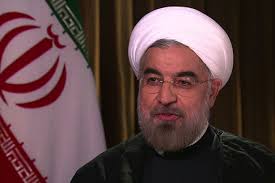
Irans-President-Hassan-Rouhani
Iran’s New President Hassan Rouhani has requested that Israel to sign and become a member of the Nuclear Non-Proliferation Treaty (NPT) as he spoke for a second time at the United Nation General Assembly. “As long as nuclear weapons exist, the threat of their use exists,” Rouhani said, citing the American bombings of Hiroshima and Nagasaki in 1945.  Rouhani is calling for “nuclear-free zone” in the Middle East.  Israel is the only country in the Middle East that had not and will not sign the Nuclear Non-Proliferation Treaty.  Israel would use nuclear weapons if it felt it was threatened by any nation in the Middle East.
The nuclear capability of Israeli Defense Forces (IDF) defensive capabilities just reached another plateau this past April.  It purchased its 5th nuclear submarine that can be deployed anywhere in the world with first strike capability.  The Israel News Agency reported that Israel purchased a fifth Dolphin class submarine called the “INS Rahav” from Germany.  The article headlined “Israel Launches Ninth Submarine, Ready To Strike Iran Nuclear Weapons.”  Israel’s Prime Minister Benjamin Netanyahu said “The submarines are a strong, strategic tool for the IDF. The State of Israel is ready to act anytime, anywhere – on land, sea and air – in order to ensure the security of Israel’s citizens.”  The submarines are equipped with Israeli-designed Popeye missiles that are capable of carrying nuclear warheads.  It is no secret that Israel has nuclear weapons.  Some estimates suggest that Israel has between 100 and 400 nuclear weapons.  No one knows exactly how many nuclear bombs Israel possesses, but we do know they have the capability to produce them at a moment’s notice.
Mordechai Vanunu, a former Israeli technician at the Dimona nuclear research center in the Negev desert exposed Israel’s nuclear program to the world in the 1986 Sunday Times (UK).  Vanunu was kidnapped in Italy by Mossad agents and brought to Israel to face an Israeli court.  He was convicted and imprisoned for more than 18 years at Shikma Prison in Ashkelon, Israel.  Half of his prison term was in solitary confinement.  He was eventually released in 2004.  Since then, Vanunu has been arrested and even imprisoned for violating his parole.  He was also arrested for trying to leave Israel at one time.  Former Israeli Prime Minister and Noble Peace Prize winner Shimon Peres said “he was a traitor to this country”.
Since Israel is not a signatory to the Nuclear Non-Proliferation Treaty; the Dimona Nuclear Research center is not subject to inspections from the international community such as the International Atomic Energy Agency (IAEA).  According to the Federation of American Scientists in a 2007 report, Israel has between 75 and 400 nuclear warheads, but some estimates have their nuclear warheads at less than 200. It is also known that Israel has the ability to deliver them by intercontinental ballistic missile (ICBM) with a range of 5,500 kilometers or 3,400 miles, the Jericho III missile named after the biblical city of Jericho, various aircrafts and of course submarines.  The report stated the following:
By the late 1990s the U.S. Intelligence Community estimated that Israel possessed between 75-130 weapons, based on production estimates. The stockpile would certainly include warheads for mobile Jericho-1 and Jericho-2 missiles, as well as bombs for Israeli aircraft, and may include other tactical nuclear weapons of various types. Some published estimates even claimed that Israel might have as many as 400 nuclear weapons by the late 1990s. We believe these numbers are exaggerated, and that Israel’s nuclear weapons inventory may include less than 100 nuclear weapons. Stockpiled plutonium could be used to build additional weapons if so decided
Israel’s nuclear program began after World War II.  Israel’s first Prime Minister David Ben-Gurion once said “What Einstein, Oppenheimer, and Teller, the three of them are Jews, made for the United States, could also be done by scientists in Israel, for their own people”.  David Ben-Gurion wanted to establish a Jewish State with a military force that would repel an attack by any of its adversaries especially in the Arab world.  Ben-Gurion’s speech to the elected assembly of Palestine Jews on October 2nd, 1947 made it clear on the intentions of a new Jewish state:
Political developments have swept us on to a momentous parting of the ways – from Mandate to independence. Today, beyond our ceaseless work in immigration, settlement and campaign, we are set three blazing tasks, whereof fulfillment will condition our perpetuity: defense, a Jewish State and Arab-Jewish Cupertino, in that order of importance and urgency.
Security is our chief problem. I do not minimize the virtue of statehood even within something less than all the territory of the Land of Israel on either bank of the Jordan; but security comes unarguably first. It dominated our concerns since the Yishuv [Jewish community in Palestine] began from the start of colonization we knew we must, in the main, guarantee it ourselves. But recent upsets and upheavals in Palestine, in the Middle East and in the wide world, and in British and international politics as well, magnify it from a local problem of current safety into Zionism’s hinge of destiny. In scope, in intensity, in purport, it is entirely different now. Just think of the new factors that invest the problem with a political significance of unprecedented gravity – and I could add a dozen others: the anti-Zionist policy pursued by the Mandatory Government during the past ten years, the obliteration of European Jewry with the willing aid of the acknowledged leader of the Palestine Arabs, the establishment of an Arab League active and united only in combating Zionism, Bevin’s ugly war against the Jews, the crisis in Britain and its political and economic aftermath, the creation of armed forces in the neighboring States, the intrusion of the Arab Legion. And not a single Jewish unit exists.
We can stand up to any aggression launched from Palestine or its border, but more in potential than yet in fact. The conversion from potential to actual is now our major, blinding headache. It will mean the swiftest, widest mobilization, here and abroad, of capacity to organize, of our resources in economics and manpower, our science and technology, our civic sense. It must be an all-out effort, sparing no man.
Several months later on May 14th, 1948, the state of Israel became a reality with David Ben-Gurion as its first Prime Minister.  Ben-Gurion, Executive head of the World Zionist Organization in 1946 until 1956 and the head of the influential Weizmann Institute of Science and DefenseMinistry Scientist Ernest David Bergmann recruited Jewish Scientists from abroad during the 1948 Arab-Israeli War.  Israel recruited and funded Jewish scientists to help Israel establish a nuclear program.  By 1949, the Israel Defense Forces Science Corps or ‘Hemed Gimmel’ was in search of Uranium in the Negev Desert, but only small amounts were discovered in phosphate deposits.  Hemed Gimmel financed several students to study nuclear technology overseas.  One of the students attended the University of Chicago to study under Enrico Fermi, who developed the Chicago Pile-1, the first nuclear reactor.  Fermi also made scientific contributions to nuclear, quantum and particle physics among others.
By the late 1950s Shimon Peres had established LEKEM, or the ‘Science liaison Bureau’ a new intelligence service that would search for technology, materials and equipment needed for Israel’s nuclear program.
By 1952, Hemed Gimmel was under Israel’s Ministry of Defense to become the Division of Research and Infrastructure (EMET).    By June 1952, The Israel Atomic Energy Commission (IAEC) was established with Ernest David Bergmann as the first chairman.  Hemed Gimmel was renamed Machon 4 which became the “chief laboratory” of the Israel Atomic Energy Commission (IAEC).  France was a major partner for Israel’s nuclear program.  France also sold weapons to Israel.  The France-Israel relationship was instrumental in the development of the Dimona Nuclear Research Center.  Israel signed American President Dwight Eisenhower’s Atoms for Peace, an agreement for peaceful nuclear cooperation between the U.S. and Israel along with Turkey to build a“small swimming pool research reactor” at Nachal Soreq.
It was the first step to building the Dimona nuclear research center in the Negev desert in collaboration with France who faced political turmoil in its former colonies in North Africa.  Israel also faced Arab hostilities in the Middle East, so the cooperation on matters regarding new military technology complemented each other.  On March 20, 1957 a public signing ceremony to build a “small swimming-pool research reactor” took place between France and Israel.  But the reality was that France and Israel collaborated to build a larger facility at Dimona.  In‘Israel and the Bomb’ by Avner Cohen, he describes Ben Gurion’s ambitious plan regarding Israel’s nuclear program was advanced through the Atoms for Peace Initiative:
With the return of Ben Gurion to power in 1955, nuclear energy became a matter of national priority.  Ben Gurion gave political backing and financial support to those in the Ministry of Defense who were committed to promoting nuclear energy-Peres, Bergmann, Mardor, and the nuclear enthusiasts at Machon 4.  There was also a change in the international climate concerning nuclear energy, in the wake of Eisenhower’s December 1953 Atoms-for-Peace initiative.  Until then, nuclear energy in the United States, Canada, and Britain, the three major countries dealing with nuclear energy, was largely closed to other countries.  The Atoms for Peace Initiative made nuclear energy technology available to the rest of the world.     
The United States under President Eisenhower allowed Israel to seek a nuclear program that would advance its defense capabilities militarily.  By 1958, the construction of the Negev Nuclear Research Center located in the Negev desert in secret through the Protocol of Sevres agreement.   It was a secret agreement between Israel, France and Great Britain at Sevres, France to overthrow Egyptian President Gamal Abdul Nasser through an invasion of Egypt after Nasser nationalized the Suez Canal. Four days after the Sèvres meeting, Israeli forces invaded Egyptian territory.  French and British forces invaded shortly after they vetoed a US sponsored UN Security Council resolution under the guise that they would separate both Israeli and Egyptian forces after Egypt refused their call to withdraw from the Suez Canal.
In 1958, Charles de Gaulle became President of France.  Almost immediately after he assumed office, he wanted to end France’s assistance to Israel’s nuclear program.  He would only support Israel’s nuclear program if international inspectors were allowed to inspect Dimona and that Israel would declare that its nuclear program was for peaceful purposes and that under no circumstances reprocess plutonium.  Israeli Prime Minister Shimon Peres negotiated with the French government allowing a window of opportunity for French companies to continue its work until 1966 with the Israeli government.  Israel also had declared its nuclear program was “peaceful”.
BBC News received secret documents that the British government also supported Israel’s nuclear program by sending illegal and restricted materials that started in the 1950′s.  In 1961, the Ben-Gurion informed the Canadian government that a pilot plutonium-separation plant would be built at the Dimona facility.  By 1962, the nuclear reactor at Dimona went “critical” meaning a critical mass with a small amount of fissile material was needed for a sustained nuclear chain reaction.  Shortly after, Israel secretly acquired more than 90 tons of uranium oxide (yellowcake) from Argentina to fuel the reactor.  By 1965 the Israeli reprocessing plant was completed and ready to convert the reactor’s fuel rods into weapons grade plutonium for a nuclear bomb.  After the Six-Day War, Israel went live producing nuclear weapons.  A new era began in the Middle East.  One that was a dangerous step to a nuclear disaster if Israel decided to use its nuclear weapons against an Arab country.      
In Seymour M. Hersh’s ‘The Samson Option: Israel’s Nuclear Arsenal and American Foreign Policy’ stated the concerns Israel’s leaders had, especially Prime Minister David Ben-Gurion if they did not obtain nuclear weapons.  Hersh wrote:
“What is Israel?” he was quoted by an aide as asking. “. . . Only a small spot. One dot! How can it survive in this Arab world?” Ben-Gurion believed that he understood Arab character and was persuaded that as long as Arabs thought they could destroy the Jewish state, there would be no peace and no recognition of Israel. Many Israelis, survivors of the Holocaust, came to believe in ein brera, or “no alternative,” the doctrine that Israel was surrounded by implacable enemies and therefore had no choice but to strike out. In their view, Hitler and Nasser were interchangeable. 
For these Israelis, a nuclear arsenal was essential to the survival of the state. In public speeches throughout the 1950s, Ben Gurion repeatedly linked Israel’s security to its progress in science.  “Our security and independence require that more young people devote themselves to  science and research, atomic and electronic research, research of solar energy . . . and the like,” he told the Israeli parliament, the Knesset, in November 1955.
 Ernst Bergmann explicitly articulated the ein brera fears in a letter two years later: “I am convinced . . . that the State of Israel needs a defense research program of its own, so that we shall never again be as lambs led to the slaughter.” 
Ben-Gurion, Shimon Peres, and Ernst Bergmann believed that Israel’s independent arsenal finally could provide what President Eisenhower would not—the nuclear umbrella.
Israel’s nuclear program was built on the belief that it had “no alternative” but to build a nuclear weapon to deter Arab aggression.  Their experience with the Holocaust justifies their intentions on maintaining their nuclear weapons.  Israel’s believes that another Holocaust can be prevented, this time not from Germany but from Iran.  But many Israeli’s during the development stages of nuclear weapons were not keen on obtaining a nuclear bomb because of the Holocaust:
Less compelling to the military men was the moral argument against the bomb raised by some on the left and in academia: that the Jewish people, victims of the Holocaust, had an obligation to prevent the degeneration of the Arab-Israeli dispute into a war of mass destruction” Stated Hersh.  “ Those who held that view did not underestimate the danger of a conventional arms race, but believed that, as Simha Flapan, their passionate spokesman, wrote, “the qualitative advantages of Israel—social cohesion and organization, education and technical skills, intelligence and moral incentive—can be brought into play only in a conventional war fought by men.”
Another aspect of Israel’s foreign policy one should consider is the ‘Samson Option,’ a policy that calls for a retaliation using nuclear weapons against an enemy who threatens the Jewish homeland of its existence.  Hersh explains:
Dimona’s supporters had convinced most of the leadership that only nuclear weapons could provide the absolute and final deterrent to the Arab threat, and only nuclear weapons could convince the Arabs—who were bolstered by rapidly growing Soviet economic and military aid—that they must renounce all plans for military conquest of Israel and agree to a peace settlement. With a nuclear arsenal there would be no more Masadas in Israel’s history, a reference to the decision of more than nine hundred Jewish defenders—known as the Zealots—to commit suicide in A.D. 73 rather than endure defeat at the hands of the Romans.
In its place, argued the nuclear advocates, would be the Samson Option. Samson, according to the Bible, had been captured by the Philistines after a bloody fight and put on display, with his eyes torn out, for public entertainment in Dagon’s Temple in Gaza. He asked God to give him back his strength for the last time and cried out, “Let my soul die with the Philistines.” With that, he pushed apart the temple pillars, bringing down the roof and killing himself and his enemies.  For Israel’s nuclear advocates, the Samson Option became another way of saying “Never again.”
[In a 1976 essay in Commentary, Norman Podhoretz accurately summarized the pronuclear argument in describing what Israel would do if abandoned by the United States and overrun by Arabs: "The Israelis would fight . . . with conventional weapons for as long as they could, and if the tide were turning decisively against them, and if help in the form of resupply from the United States or any other guarantors were not forthcoming, it is safe to predict that they would fight with nuclear weapons in the end. ... It used to be said that the Israelis had a Masada complex . . .but if the Israelis are to be understood in terms of a 'complex' involving suicide rather than surrender and rooted in a relevant precedent of Jewish history, the example of Sarnson, whose suicide brought about the destruction of his enemies, would be more appropriate than Masada, where in committing suicide the Zealots killed only themselves and took no Romans with them." Podhoretz, asked years later about his essay, said that his conclusions about the Samson Option were just that—his conclusions, and not based on any specific information from Israelis or anyone else about Israel's nuclear capability.] 
In a White House press conference on May 18, 2009, US President Barack Obama’s concern about “the potential pursuit of a nuclear weapon by Iran.”  The United States and other Western nations have not announced any plans to disarm Israel’s nuclear weapons but rather focused its attention on Iran’s nuclear program.  Obama said “Iran obtaining a nuclear weapon would not only be a threat to Israel and a threat to the United States, but would be profoundly destabilizing in the international community as a whole and could set off a nuclear arms race in the Middle East.”  Israel already won the arms race in the Middle East.  What is to stop Israel’s “Zealot” mentality from using nuclear weapons in the Middle East?  Israel has threatened Iran in the past.
In a 2006 interview with Reuters former Israeli Prime Minister Shimon Peres “the president of Iran should remember that Iran can also be wiped off the map.” It was a response after a false claim Israel and its allies made on Iranian President Mahmoud Ahmadinejad’s comment in a 2005 speech at the Ministry of Interior conference hall in Tehran called “The World without Zionism” when he said Israel must be “wiped off the map” which was misinterpreted.  Earlier this year, former Prime Minister Ehud Barak said that the US and Israel would take action against Iran, “I don’t see it as a binary kind of situation: either they [the Iranians] turn nuclear or we have a fully fledged war the size of the Iraqi war or even the war in Afghanistan,” Barak continued “What we basically say is that if worse comes to worst, there should be a readiness and an ability to launch a surgical operation that will delay them by a significant time frame and probably convince them that it won’t work because the world is determined to block them.”  Rouhani is seeking negotiations that would put Iran, the United States and Israel on a path to a peaceful resolution.  One that will recognize Iran’s right to a “peaceful” nuclear program for its country so that they can export more oil and use the revenues it earned for the benefit of the Iranian people.  But do not expect any significant breakthrough between Iran and the US/Israel alliance that seeks to dominate the Middle East politically, economically and militarily.
The Obama administration is not seeking any negotiations with Iran unless they stop its nuclear program which will not happen.  Iran will insist that they are signatories to the NPT and have an “inalienable right” to use nuclear technology for peaceful purposes.  Israel will not be a signatory to the NPT because “This resolution is deeply flawed and hypocritical. It ignores the realities of the Middle East and the real threats facing the region and the entire world” according to Israeli Prime Minister Benjamin Netanyahu.  Another reason Israel will not sign the Non-Proliferation Treaty is because they are victims of the Holocaust which is why they have violated hundreds of U.N. Security Council resolutions and has used chemical weapons on the Palestinians.  The talks between Iran and the US that will be held in Geneva will fail come this October because the US wants to dominate Iran.  Iran has its principles it will stand by, but so will the US on Israel’s behalf.  The US and its staunch allies want Syria, Lebanon, the Gaza strip and the West Bank and every nation on earth under their rule.  That is the plan.

 

08 agosto, 2013

Yemen under Assault

Yemen under Assault: Drone Strike Kills 4 “Suspected Al-Qaeda” Members
By Timothy Alexander Guzman
"HUMANITARIAN TERRORISM": CIA to Expand  "Remote Control Assassinations" in Yemen
Washington’s approved drone strikes claimed the lives of 4 suspected Al-Qaeda members in the Maarib Province in Yemen on Tuesday.  It took place in the wake of the “Terror Alert” issued by Washington last week.  Reuters stated that “The New York Times reported on Monday that the closure of the U.S. embassies was prompted by intercepted communication between al Qaeda leader Ayman al-Zawahri and Nasser al-Wuhaishi, head of Yemen-based al Qaeda in the Arabian Peninsula (AQAP).”  
The report also said that “The Yemeni tribal leaders said five missiles struck a vehicle travelling in Maarib Province in Tuesday’s strike, killing all of its occupants.  State news agency Saba also said initial reports indicated that four suspected al Qaeda militants were killed in the air strike in Maarib, but gave no further details.” 
Were civilians killed by this particular drone strike?  In the past, civilians killed by drone strikes in Yemen have been the usual outcome.  Obama’s war on Al-Qaeda in Yemen has been more aggressive than the previous Bush administration according to the New America Foundation based in Washington D.C., stated As of August 6, 2013, U.S. drone and airstrikes had killed an estimated 610 to 849 people in Yemen, according to the New America Foundation data. Of these deaths, 99% occurred during Obama’s presidency.” 
The drone strike initiative began under U.S. President George W. Bush, but Obama has expanded the drone war in the Middle East and other parts of the world.  In a report conducted by the ‘Alkarama Foundation’ a human rights organization based in Switzerland called ‘The United States’ War on Yemen: Drone Attacks’ clarified what impact the drone war in Yemen has on the civilian population:
From the first air strike in November 2002 until the month of May 2013, there have been between 134 and 226 U.S. military operations in Yemen, including strikes by aircraft, drone missiles, or attacks launched from warships stationed in the Gulf of Aden. However, the exact number of operations is unknown due to the secrecy surrounding the United States’ military interventions in Yemen. As such, the number of casualties is also unknown. In a study of civilian victims of U.S. attacks in Yemen by Yemeni journalist Ali Al-Sha’bani, he notes the difficulty of obtaining accurate information about the number of strikes and people affected. In 2012, he counted 109 air strikes in nine provinces, causing the deaths of 490 people, including 390 civilians.
While the Bureau of Investigative Journalism counted nearly 1,150 deaths between 2002 and April 2013 due to U.S. attacks, Dennis Kucinich, a representative of the U.S. Congress, placed the number of deaths in Yemen at 1,952, in a speech to Congress. He says: “We have not declared war on any of these nations [Pakistan, Yemen, Somalia] but our weapons have killed innocent civilians there. Highly reputable research shows that the number of high-level targets killed as a percentage of total casualties is estimated at about 2 percent.” The head of national security in Yemen, Ali Hassan Al-Ahmady, announced that during 2012, a hundred members of al-Qaeda had been killed by U.S. aircraft strikes
The latest reports on the U.S. drone strike in Yemen can be a prelude to a military intervention led by American and British forces if the current civil war in Syria leads to an attack on Iran in the future.  The “Gulf of Aden” is a strategic waterway for oil exports vital to America’s interests.    The “Gulf of Aden” is located between Yemen, Somalia and the southern part of the Arabian Peninsula were the majority of people are anti-American because of America’s relentless drone strike policy.  As told by a Yemeni journalist and activist Farea al-Muslimi in a U.S. Senate hearing reported by the Bureau of Investigative Journalism last April:
‘Drone strikes are the face of America to many Yemenis,’ Farea al-Muslimi told a rare US Senate hearing on targeted killing yesterday.The Yemeni journalist and activist gave emotive testimony at a Senate subcommittee about the impact of drone strikes and targeted killings on his homeland. His statement was a view from beneath the strikes that is almost unique in Washington and drew some applause from the chamber.
In stark terms he described the human toll of the US’s covert campaign in Yemen, such as the aftermath of the catastrophic December 2009 cruise missile strike on al-Majala that killed over 40 civilians, including children and pregnant women. After the attack the bodies of the women and children were indistinguishable from the livestock that died alongside them, a tribesman told him.  ‘Just six days ago, this so-called war came straight to my village,’ said al-Muslimi, who was educated in the US. A reported drone strike on April 18 left farmers ‘scared and angry’ and ‘tore my heart’, he added.
Drone strikes will continue in both Yemen and Somalia so that Washington can establish a strategic point of operations that will secure oil shipments to the U.S. Military and its oil corporations.  The Yemeni population will continue to experience drone strikes with or without the approval of the Washington-backed Yemen government.  The collaboration between Washington and Sana’a can  establish a future military base in the Gulf of Aden.  Reuters says that “Security in Yemen is a global concern as it is home to AQAP, considered one of the most aggressive branches of the global militant organization, and shares a long border with Saudi Arabia, a U.S. ally and the world’s top oil exporter.  The U.S. government backs Yemeni forces with funds and logistical support.” 
Drone strikes in Yemen have had severe consequences for U.S. Foreign policy in the Middle East.  But, the question is whether continuous drone strikes in Yemen will only target Al-Qaeda and its leadership including Osama Bin Laden’s right hand man Ayman al-Zawahri who is affiliated with the leader of  Jabhat Al-Nusra, Mohammed al-Jawlani who “is a CIA operative in the Al Nusra” according to former Al-Qaeda member Sheikh Nabil Naiim in a recent video or will it continue to kill and injure innocent civilians.  Washington utilizes Ayman Al Zawahiri for its drone war within Yemen as they did for the overall “War on Terror” with Osama Bin Laden.  An American based news agency called the worldtribune.com had an interesting article back in January with a title that explains what the U.S. plans in Yemen.  It was called “U.S. to establish military bases in Yemen”:
The United States was said to planning to build at least three military bases in Yemen.  Yemeni sources said the administration of President Barack Obama intends to enhance defense and military cooperation in 2013 with a range of new projects. They said this would include arms deliveries and the construction of military bases in the Arab League state.  “The projects would begin over the next few months,” a source said.  The Yemeni daily Al Shaara reported that Washington has also agreed to construct 1,000 housing units in Yemen. The newspaper said the Defense Department would oversee the building of three bases, including one on the island of Socotra.
The objective of US policy in Yemen and its surrounding countries is to establish a permanent U.S. base to assure safe passage of oil exports out of Saudi Arabia and Yemen which has vast oil fields as well.  The Yemen Times reported on May 27th of this year that In a speech delivered at the first Yemeni-Turkish forum held in Sana’a this past Saturday, oil and minerals’ minister, Ahmed Dares,  confirmed that 35 international companies are currently competing to invest in 20 oil sites throughout Yemen.”  Yemen is a strategic location.  Expect more drone strikes to intensify that would result in more civilian deaths across the Middle East as the US and its allies continue to wage its “War on Terror.”      
 

01 agosto, 2013

Battle for Oil in Africa: Fighting Joseph Kony or Confronting China?

http://www.globalresearch.ca/the-battle-for-oil-in-central-africa-fighting-joseph-kony-and-the-lords-resistance-army-or-confronting-china/5344311 
The Battle for Oil in Central Africa: 
Fighting Joseph Kony and the Lord’s Resistance Army or Confronting China?
First “Highest Ranking” U.S. Official visits Uganda
By Timothy Alexander Guzman
Ouganda : les objectifs inavoués de la campagne « Kony 2012 »
The Obama administration recently sent the highest ranking official to discuss its support for the Ugandan government’s involvement in various conflict zones in East Africa that includes Somalia, the Democratic Republic of Congo, South Sudan and Sudan and continue its effort to stop Joseph Kony and the Lord’s Resistance Army (LRA).
Deputy Defense Secretary Ash Carter is the “highest-ranking DOD official ever to visit Uganda” according to the U.S. Department of Defense official website www.defense.gov press release.  The report said that the agenda discussed between Carter and Ugandan political and military leaders was to confirm Washington’s commitment to the Ugandan military operations in the region:
The visit gave him a chance to discuss a range of regional security challenges with Ugandan partners – including the conflicts in Somalia, Sudan and South Sudan, and the Democratic Republic of Congo – and ending the longstanding threat to civilians and to regional stability posed by Joseph Kony and the Lord’s Resistance Army, known as the LRA
Is Washington sincere in its concern to stop the LRA from terrorizing East Africa or is it to counter China’s influence in the region? It is assumed that Washington’s goal is to capture or kill Joseph Kony and members of the LRA.   AFRICOM’s propaganda is aimed at the African population to justify its presence.
But is Joseph Kony dead or alive?  Since the KONY2012 video that went viral, CBS news reported later that same year that Ugandan soldiers were starting to question themselves if they were actually “chasing a ghost”:
An Internet campaign that’s gone viral aims to capture notorious rebel leader Joseph Kony, but Ugandan foot soldiers who have spent years searching for the man are starting to ask a question their top commanders prefer to ignore: Is it possible he is dead?
Ugandan army officials say the Lord’s Resistance Army leader is alive and hiding somewhere within the Central African Republic. Rank-and-file soldiers, however, say intelligence on Kony is so limited that if he dies, or is already dead, his foes might never know and could wind up chasing a ghost through this vast Central Africa jungle.
Is Joseph Kony being used in Africa as was Osama bin Laden in the Middle East for the “War on Terror”?  The U.S. government stated that al-Qaida’s influence in Somalia is linked to the al-Shabaab militant group so it needs to increase its support financially and militarily to the Ugandan government.  The DOD report also stated how Ugandan soldiers were involved in Somalia:
“Senior defense officials traveling with Carter said the United States commends UPDF soldiers involved in AMISOM for their commitment and selfless support to the Somali people and to the fight against al-Shabaab, an al-Qaida-linked militant group and U.S.-designated foreign terrorist organization fighting to create a fundamentalist Islamic state in Somalia.
 The African Union Mission in Somalia (AMISOM) is leading the fight against the LRA with the Uganda People’s Defense Force (UPDF).  “Uganda is a key partner in terms of security and stability in the region,” a senior defense official said. “Not only do they tend to security within their borders, but … they’re operating in the region trying to track down LRA, which is something that affects four different countries in the region. It’s not just Uganda, it’s the Democratic Republic of Congo, it’s South Sudan, and it’s the Central African Republic” the report said.  Uganda, under Western influence was instrumental in negotiations that led to South Sudan’s independence back in 2011.  They are also a member of the African Union Peace and Security Council.  President Obama’s statement on America’s influence on South Sudan’s Independence is clear:
 This historic achievement is a tribute, above all, to the generations of southern Sudanese who struggled for this day. It is also a tribute to the support that has been shown for Sudan and South Sudan by so many friends and partners around the world. Sudan’s African neighbors and the African Union played an essential part in making this day a reality.  And along with our many international and civil society partners, the United States has been proud to play a leadership role across two Administrations. Many Americans have been deeply moved by the aspirations of the Sudanese people, and support for South Sudan extends across different races, regions, and political persuasions in the United States.  I am confident that the bonds of friendship between South Sudan and the United States will only deepen in the years to come.  As Southern Sudanese undertake the hard work of building their new country, the United States pledges our partnership as they seek the security, development and responsive governance that can fulfill their aspirations and respect their human rights.
The U.S. Department of Defense states that Uganda and its neighbors were victims of Kony’s atrocities where thousands were murdered, raped and even kidnapped:
Uganda and most of its neighbors have been victims and now are taking the fight to Joseph Kony and his followers. For more than two decades, according to a U.S. Africa Command fact sheet, the LRA murdered, raped and kidnapped tens of thousands of men, women and children. In 2011, the LRA committed more than 250 attacks. In 2012, the United Nations estimated that more than 465,000 people were displaced or living as refugees across the Central African Republic, the Democratic Republic of the Congo, and South Sudan as a result of LRA activity in 2011
The U.S. Department of Defense says AFRICOM and the United Nations reported that Joseph Kony’s victims were from the Central African Republic, the Democratic Republic of the Congo and South Sudan. It is also known that these countries including Uganda (estimated to have over 6 billion barrels of oil) have abundant natural resources. The Central African Republic has a vast amount of gold, diamonds, and uranium, timber and oil.  The Democratic Republic of the Congo has copper, cobalt, niobium, tantalum, petroleum, diamonds, gold, silver, zinc, manganese, tin, uranium, coal, hydropower, and timber.
South Sudan’s main natural resource is oil, but it also contains gold, silver, iron ore and copper.  These African states also have agricultural resources such as peanuts, tobacco, cotton, coffee, rice, palm oil and many other resources that can be used for many industries.  They have resources Washington needs so that the Military-Industrial Complex can wage war on Iran, China and Russia at a moment’s notice.  Recently, the New York Times published an article called ‘A New Anti-American Axis?’ stated that China and Russia are working in conjunction to weaken American Superpower status around the world.  The tone of the New York Times declares both countries actions are unacceptable to Washington in the case of whistle blower Edward Snowden:
 The flight of the leaker Edward J. Snowden from Hong Kong to Moscow last month would not have been possible without the cooperation of Russia and China. The two countries’ behavior in the Snowden affair demonstrates their growing assertiveness and their willingness to take action at America’s expense.
Beyond their protection of Mr. Snowden, Chinese-Russian policies toward Syria have paralyzed the United Nations Security Council for two years, preventing joint international action. Chinese hacking of American companies and Russia’s cyberattacks against its neighbors have also caused concern in Washington. While Moscow and Beijing have generally supported international efforts to end Iran’s nuclear weapons program, they clearly were not prepared to go as far as Washington was, and any coordinated shift in their approach could instantly gut America’s policy on the issue and endanger its security and energy interests. To punctuate the new potential for cooperation, China is now carrying out its largest ever joint naval exercises — with Russia.
 The Obama Administration is now focusing on China’s interests in Africa.  China is negotiating with many African countries in the region that has much needed natural resources for its economy.  Washington has been paying attention to the Middle East and Latin America’s natural resources for most of its existence. As the Department of Defense stated in its report concerning the LRA:
 In May 2010, President Barack Obama signed into law the Lord’s Resistance Disarmament and Northern Uganda Recovery Act, which reaffirmed U.S. commitment to support regional partners’ efforts to end LRA atrocities in central Africa. In October 2011, Obama authorized the deployment to central Africa of 100 U.S. forces whose mission is to help regional forces end the threat posed by Kony. 
The multiyear U.S. strategy seeks to help the governments of Uganda, the Central African Republic, the Democratic Republic of Congo, and South Sudan, and the African Union and the United Nations end the LRA threat to civilians and regional stability, defense officials said. Its four objectives are to increase civilian protection, apprehend or remove Kony and senior LRA commanders from the battlefield, promote defections of those who follow Kony and urge them back into the community and provide continued humanitarian relief to affected communities, they added.
Map of Uganda Oil and Gas Discovery
In a 2011 report by the World Resources Institute (WRI) called “Avoiding the Resource Curse: Spotlight on Oil in
Uganda” stated what  was also discovered in Uganda:
In 2006, commercially-viable quantities of oil were found in the Albertine Graben in western Uganda. The Albertine Graben, the northern portion of the Albertine Rift,5 stretch­es from the border of Uganda, Sudan and the Democratic Republic of Congo (DRC) in the north to Lake Edward on the Uganda-DRC border in the south—a distance of over 500 kilometers and an area of about 23,000 square kilome­ters.
The Ugandan government has established nine oil prospect­ing blocks in the Albertine Graben, of which five blocks have been allocated to oil companies for prospecting purposes (Figure 1).By mid-2009, over $700 million had been spent on oil exploration in the region. Oil companies have drilled in only three of the nine exploration blocks, but have already found more than 2.5 billion barrels of oil.
The report also stated that 6 billion barrels of oil is located within Uganda’s Albertine Graben.
Some analysts estimate that Uganda’s Albertine Graben may hold more than 6 billion barrels of oil.  Projected production of 100,000 to 150,000 barrels per day would significantly increase revenues for the government and, if well managed and invested, could improve economic growth, reduce poverty and promote development in Uganda.
On September 2010, President Barack Obama’s statement concerning a new U.S. law in the United Nations summit’s ‘Millennium Development Goals’ as reported by the WRI:
“We know that countries are more likely to prosper when governments are accountable to their people. So we are leading a global effort to combat corruption— which in many places is the single greatest barrier to prosperity, and which is a profound violation of human rights. That’s why we now require oil, gas and mining companies that raise capital in the United States to disclose all payments they make to foreign governments. And it’s why I urged the G-20 to put corruption on its agenda and make it harder for corrupt officials to steal from their people and stifle their development.”               
Back in 2007, the United States Africa Command (AFRICOM) had a press release titled “Pentagon Official Describes AFRICOM’s Mission, Dispels Misconceptions” reported that Theresa Whelan, deputy assistant secretary of defense for African affairs said:
 “Although this structure is new, the nature of our military engagement on the continent will not change,” she said. “It will remain primarily focused on conducting theater-security cooperation to build partnership capacities in areas such as peacekeeping, maritime security, border security, counterterrorism skills.” 
 AFRICOM’s mission is to control resources in the continent although Whelan tries to clarify its “misconceptions”.  “Some people believe that we are establishing AFRICOM solely to fight terrorism or to secure oil resources or to discourage China. This is not true,” she said.  Then she mentions the natural resources Africa has and why many people will benefit from U.S. involvement.  In reality, major U.S. oil corporations and the Military-Industrial Complex will benefit in an open-market environment, meaning American interests will be the main focus of AFRICOM.
“Natural resources represent Africa’s current and future wealth, but in an open-market environment, many benefit,” she continued. “Ironically, the U.S., China, and other countries share a common interest — that of a secure environment in Africa, and that’s AFRICOM’s objective.
Whelan also said that “AFRICOM is about helping Africans build greater capacity to assure their own security.”  The report said “The United States does not seek to compete with or discourage African leadership and initiative, Whelan said. Rather, AFRICOM will benefit its partners on the continent prevent security issues from escalating without U.S. intervention.” African nations are aware of U.S. interventions since World War II to stop the rise of communism.  The U.S. government intervened in more than 50 countries through Coups, direct military actions and assassinations of its political leaders.
The agenda is for the control of the natural resources throughout Africa.  If Washington can counter China by influencing governments through military and financial aid, then the possibility of exploiting oil and other commodities will benefit the Military-Industrial Complex and Wall Street.
Washington wants to control the majority of oil in Africa so that the petrodollar would continue to dominate world oil markets.  With a looming war on the horizon, Middle East oil would become difficult to obtain for the U.S. military machine especially if Iran is attacked.  Iran would block the flow of oil with a blockade on the Strait of Hormuz.  The U.S. military needs oil to sustain a long-term war against its perceived adversaries namely Iran, China and Russia.  Can the United States overstep China’s influence in Africa?
With the U.S. involved in coups, wars and political manipulation of governments in the past and present, China seems more favorable to most governments in Africa.  Why?  China is not overthrowing governments or invading countries, they negotiate with the intention of doing business with the country for the long-term.  China seeks business partners for its own economic growth with investment projects in many African nations.  As for America’s future in the African continent, it seems the Africa Command (AFRICOM) and its new drone base in Niger
does not seem to win the “hearts and minds” of most African governments and its people.  Then again, the U.S. can intimidate countries within Africa with its military and intelligence apparatus by either implementing a coup, assassinating a political leader (Patrice Lumumba of the Congo) or even a direct military intervention.  The question is will Africa stand up to the most powerful empire in history or will it continue to allow Western powers (U.S. France and Britain) to exploit its natural resources?