Aquí reposa la verdadera historia reciente del ser humano, desde el año 2013 hasta nuestros días, historia que será ocultada a las futuras generaciones.
Here lies the true recent history of humans, from 2013 to present day, a history that will be hidden from future generations.
There
is a serious health crisis which must be duly resolved. And this is a
number one priority. But there is another important dimension which has
to be addressed. Millions of people have lost their jobs, and their
lifelong savings. In developing countries, poverty and despair prevail.
While the lockdown is presented to public opinion as the sole means to
resolving a global public health crisis, its devastating economic and
social impacts are casually ignored.
According to a March 20 – 26 online survey of over 250 companies of varying sizes and business sectors, outplacement firm Challenger, Gray & Christmas reported that nearly half the number surveyed are likely to lay off workers over the next three months. Over one-third (37%) of companies instituted a hiring freeze. The St. Louis Fed projects unemployment potentially reaching 32% of the US workforce, a loss of 47 million jobs if things get this bad.
The coronavirus shutdown is hammering supply and demand across the globe. That has forced the real economy into a sharp recession and triggered a rolling financial crisis. Below is a primer on one key piece of this mess: the crisis in corporate debt markets. This branch of finance is vitally important because even healthy companies often need access to credit. If they do not get it, they go under.In 2008, the vector of crisis ran from mortgage-backed securities to the rest of the financial sector and then to the real economy. This time, the real economy is being hit directly, and the damage is reverberating back into financial markets.
The European Union’s decision to open negotiations with Northern Macedonia and Albania is a propaganda act from Brussels that attempts to reassure members of the Union that countries, even in the midst of the epidemic, want to become members of the organization. This is a cheap propaganda trick that attempts to restore confidence in the European Union at a time when it has completely failed to deal with the coronavirus pandemic that has shown weakness in the alliance.
The Fed’s Quantitative Easing since 2008 plus large companies using their earnings for stock buybacks drove the prices of financial assets into a realm of unreality. The result was that markets already were teetering on the brink of fragility. Any rise of normal interest to more normal conditions, or any external shock, was bound to crash the artificial values at which financial markets were priced. The Fed’s policy was to perpetuate this situation for as long as possible by pumping in yet more credit. But at near-zero interest rates, there was little that could be done.
Response to the pandemic and economic collapse are already showing change is possible. As part of what may be nearly a $2 trillion stimulus, even Republicans are urging cash payments to most people in the form of a short-term universal income, providing businesses with financing so they do not go bankrupt, and the government taking an equity share of large industries that seek financial support. Prisons are releasing inmates, police are arresting fewer people, and evictions and water and power shutoffs are being stopped. It is our responsibility to push for what we need and to ensure these crises are not used to put harmful policies in place.
On March 10th this year, the UNHCR made the entirely false claim that 77,000 Nicaraguans are currently seeking refugee status in Costa Rica. That claim is a downright lie. Despite the mercenary opportunism of the Costa Rican government, which has received over US$600m to assist alleged political refugees from Nicaragua, Costa Rica’s own migration statistics give a very different account.
Even before the novel coronavirus appeared, many American families were falling behind on student loans, auto loans, credit cards and other payments. America’s debt overhead
By all possible means, the political leaders of the United States
attempt to make invisible the economic crisis they face. While a few
weeks ago the President of the Federal Reserve System (Fed), Janet
Yellen, insisted that the federal funds rate will increase this year,
now it appears that this will not happen until the first quarter of
2016, when the Fed will begin to close the faucet of global liquidity.
The fall of prices (deflation) –a consequence of the fall of the rate
of profit– the extreme weakness in the prospects of investment, the
volatility of financial markets, product of the economic debacle of
Greece and the countries castigated by the euro zone crisis, the drop of
the stock market in China, are factors that, according to Yellen, put
off the decision until next year.
It is obvious that the United States is more inclined to look for the
guilty outside rather than look inside their own country to resolve
their crisis. The deterioration of the Silicon Valley, Detroit, West
Virginia,; Mississippi, Alabama, as well as the fiscal mess of the
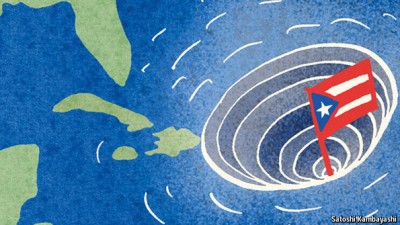
island of Puerto Rico are symptomatic signs of the economic decadence of
the US, that even though Washington has paid little attention in recent
years, now begin to appear in the mass media.
The case of Puerto Rico is, by a long way, that of more notoriety.
Even voices such as that of Hillary Clinton
European officials are openly admitting that the two largest banks in Cyprus are “insolvent“, and it is now being reported that Cyprus Popular Bank only has “enough liquidity to cover the next few hours“. Of course all banks in Cyprus are officially closed until Tuesday at the earliest, but there have been long lines at ATMs all over Cyprus as people scramble to get whatever money they can out of the banks. Unfortunately, some ATMs appear to be “malfunctioning” and others appear to have already run out of cash. You can see some photos of huge lines at one ATM in Cyprus right here. Some businesses are now even refusing to take credit card payments. This is creating an atmosphere of panic on the streets of Cyprus. Meanwhile, the EU is holding a gun to the head of the Cyprus financial system. Either Cyprus meets EU demands by Monday, or liquidity for the banks will be totally cut off and Cyprus will be forced out of the euro. It is being reported that European officials believe that the “economy is going to tank in Cyprus no matter what“, and that it would be okay to let the financial system of Cyprus crash and burn if politicians in Cyprus are not willing to do what they have been ordered to do. Apparently European officials are very confident that the situation in Cyprus can be contained and that it will not spread to other European nations.
Unfortunately, European officials are losing sight of the bigger picture. If the largest banks in Cyprus are allowed to fail, it will be another “Lehman Brothers moment“. The faith that people have in banks all over Europe will be called into question, and everyone will be wondering what major European banks will be allowed to fail next.
Meanwhile, European officials have already completely shatteredconfidence in deposit insurance at this point. Everyone now knows that when there is a major bank failure that depositors will be expected to share in the pain. Expect to see “bank jogs” all over southern Europe over the coming weeks.
The banks in Cyprus had been scheduled to reopen on Tuesday, but very few people expect that to actually happen at this point. In fact,Bloomberg is reporting that EU officials are actually thinking about shutting down the two biggest banks in Cyprus and freezing their assets…
Finance ministers for the 17 euro countries are considering a plan to shutter the two biggest banks in Cyprus and freeze the assets of uninsured depositors, said the four officials, who asked not to be named because the talks are ongoing. The ministers are holding a teleconference tonight.
Cyprus Popular Bank Pcl (CPB) and the Bank of Cyprus Plc would be split to create a so-called bad bank, one of the officials said. Insured deposits — below the European Union ceiling of 100,000 euros ($129,000) — would go into a so-called good bank and not sustain any losses, while uninsured deposits would go into the bad bank and be frozen until assets could be sold, said the four officials.
Losses to unsecured creditors, including uninsured depositors, could reach 40 percent under the plan, which has support from the International Monetary Fund and the European Central Bank. The proposal, a version of which was rejected last week, is considered a better option than taxing insured deposits or allowing Cypriot banks to collapse in a disorderly fashion if they lose access to ECB aid, the officials said.
Such a scenario would be an utter disaster.
How would you feel if you woke up someday and 40 percent of your life savings was suddenly gone?
According to Greek newspaper Kathimerini, European officials are also openly discussing the possibility of a Cyprus exit from the eurozone if a suitable bailout agreement is not worked out…
The possibility of Cyprus exiting the eurozone was discussed during teleconference involving technocrats from the Euro Working Group on Wednesday, Kathimerini understands.
A reliable source told Kathimerini that the technical implications of a euro exit, as well as the adoption of capital controls were debated by the Euro Working Group officials during the teleconference.
As I mentioned above, European officials seemed resigned to the fact that there will be an economic collapse in Cyprus “no matter what”, and so letting Cyprus leave the euro would not make that much of a difference. Either way, the banks are going to have to be “reorganized” and capital controls will be imposed…
In detailed notes of the call seen by Reuters, the group’s chair Austria’s Thomas Wieser said: “The economy is going to tank in Cyprus no matter what. Restrictions on capital will probably be imposed.”
Never before have we seen European officials impose such a harsh ultimatum with such a short deadline. It is almost as if they want to boot Cyprus out of the euro. The following comes from a recent CNBCreport…
In stark twin warnings on Thursday, the European Central Bank said it would cut off liquidity to Cypriot banks and a senior EU official made clear to Reuters that the bloc was ready to see the bankrupt island banished from the euro in the belief it could then contain damage to the wider European economy.
And European officials are even publicly talking about the possibility that Cyprus will soon need to start using “their own currency”…
In Brussels, a senior European Union official told Reuters that an ECB withdrawal would mean Cyprus’s biggest banks being wound up, wiping out the large deposits it has sought to protect, and probably forcing the country to abandon the euro.
“If the financial sector collapses, then they simply have to face a very significant devaluation and faced with that situation, they would have no other way but to start having their own currency,” the EU official said.
This is absolutely shocking. Everyone always thought that Greece would be the first to leave the euro, but now it looks like it might be Cyprus.
However, there is still a chance that Cyprus may find a way to comply with EU demands. Politicians in Cyprus are frantically searching for a way to raise the needed cash without raiding private bank accounts. The following is what CNN is saying about the latest efforts…
Leaders of Cyprus’ political parties agreed Thursday to create an “investment solidarity fund,” which would issue bonds backed by state and church assets.
The plan was due to be discussed by the Cypriot government and parliament on Thursday evening, but few details were available and it was not clear how much the fund would be worth.
According to Reuters, other proposals have been under consideration as well…
The government said a “Plan B” was in the works.
Officials said it could include: an option to nationalize pension funds of semi-government corporations, which hold between 2 billion and 3 billion euros; issuing an emergency bond linked to future natural gas revenues; and possibly reviving the levy on bank deposits, though at a lower level than originally planned and maybe excluding savers with less than 100,000 euros.
At this point it is unclear whether any of those proposals will turn out to be acceptable to European officials.
In fact, the tone of European officials has noticeably changed from previous bailout efforts. They now seem much more willing to play hardball. For example, just check out what German Finance Minister Wolfgang Schaeuble is saying about the situation in Cyprus…
German finance minister Wolfgang Schaeuble told the ZDF public broadcaster on Tuesday night (19 March) he “took note with regret” of the Cypriot parliament’s rejection of the bailout deal, but insisted that the terms will stay the same.
Asked if the eurozone was willing to let Cyprus go bust, he answered: “Well, we are much more stable in the eurozone – we took measures to protect ourselves from the risks of contagion … but I don’t want to have any of this.”
He added: “It is a serious situation, but this cannot lead to a decision that makes absolutely no sense, to rescue a business model that has failed. Cyprus has a banking sector that is totally oversized and this made Cyprus insolvent. And nobody outside Cyprus is to blame for it.”
Schaeuble knows that the EU is holding all of the cards and that Cyprus is doomed without their help…
“The Cypriot state cannot fund itself on the markets. Its two largest banks are insolvent and are being kept afloat with emergency funding from the ECB, but only on the condition that there will be a long-term rescue programme. If this condition is no longer met, Cyprus will no longer be solvent and this is something Cypriot decision makers must know”
But the truth is that the EU can’t really afford to allow major banks to fail or for a single member to leave the eurozone. If either of those things happen, the confidence game that has been holding the European financial system together will begin to rapidly evaporate.
If the EU thinks that they can abandon Cyprus without the crisis spreading to the rest of southern Europe they are just being delusional.
At least there are a few politicians in Europe that understand what is happening. Nigel Farage, a very outspoken member of the European Parliament, is telling people to get their money out of banks in southern Europe as quickly as they can. He is warning that a great collapse of the European financial system is coming and that people need to get prepared for it…