Busca en Nuestros Archivos

Busca en Nuestro Blog

Translate / Traducir

Mostrando entradas con la etiqueta Central America. Mostrar todas las entradas

28 mayo, 2015

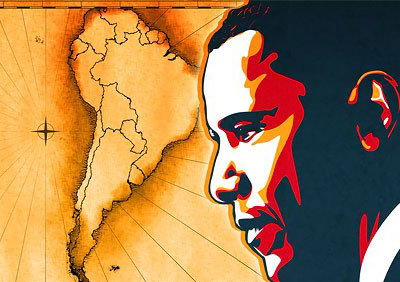
#Washington ’s “Two Track Policy” to #LatinAmerica

Marines to Central America and Diplomats to Cuba
By Prof. James Petras
US-Obama-Latin-America

Everyone, from political pundits in Washington to the Pope in Rome, including most journalists in the mass media and in the alternative press, have focused on the US moves toward ending the economic blockade of Cuba and gradually opening diplomatic relations.  Talk is rife of a ‘major shift’ in US policy toward Latin America with the emphasis on diplomacyand reconciliation.  Even most progressive writers and journals have ceased writing about US imperialism.

However, there is mounting evidence that Washington’s negotiations with Cuba are merely one part of a two-track policy.  There is clearly a major US build-up in Latin America, with increasing reliance on ‘military platforms’, designed to launch direct military interventions in strategic countries. 

Moreover, US policymakers are actively involved in promoting ‘client’ opposition parties, movements and personalities to destabilize independent governments and are intent on re-imposing US domination.

In this essay we will start our discussion with the origins and unfolding of this ‘two track’ policy, its current manifestations, and projections into the future.  We will conclude by evaluating the possibilities of re-establishing US imperial domination in the region.

Origins of the Two Track Policy
Washington’s pursuit of a ‘two-track policy’, based on combining ‘reformist policies’ toward some political

17 febrero, 2014

The Salvadorian Elections and Beijing’s Rising Star in Central America

By Mahdi Darius Nazemroaya

7869
The Salvadorian corruption scandal involving Francisco Flores, who was president of El Salvador from 1999 until 2004, has opened the door for the diplomatic recognition of the People’s Republic of China by the next government in San Salvador, which the FMLN failed to ascertain under the term of President Mauricio Funes. The graft involving Flores has created the appropriate political opportunity for El Salvador’s Farabundo Marti National Liberation Front (FMLN) to formally cut diplomatic ties with Taiwan (formally known as the Republic of China), if an FMLN president is elected in March 2014.
This diplomatic question additionally exposes the behind the scenes coordination that is taking place between Beijing and Taipei. This paints a picture of a cordial path towards Chinese unification between Taiwan and mainland China and not one of rivalry. Neither Beijing nor Taipei has put major obstacles in the other’s way, recognizing that ultimately there will be one China.

Francisco Flores and the Salvadorian Oligarchy