Busca en Nuestros Archivos

Busca en Nuestro Blog

Translate / Traducir

Mostrando entradas con la etiqueta Netherlands. Mostrar todas las entradas

28 junio, 2019

#French #Invade #Reich

NEW YORK TIMES SHOCK HEADLINE
SEPTEMBER 7, 1939
'FRENCH INVADE REICH'


By Mike King

SPECIAL REPORT

The 1939 Saar Offensive / Invasion of Germany is not new to your humble author. What I did not expect, however, was to find news of this little-known French invasion of Germany - which took place just days after Britain & France declared war on Germany - to be plastered on the front page of an old issue of the New York Slimes. Oh how I just luuuuuv using the Jewish-owned Slimes to confirm the truth of World War II for those stubborn newspaper-worshipping blockheads who still believe in the myth of "The Good War."

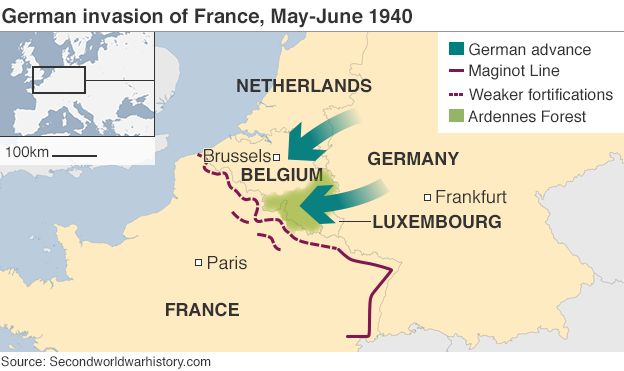
A full 8 months before The Great One (that's Hitler for all you newbies & normies)finally was to launch the preemptive invasion of the puppet Low Countries (Belgium / Netherlands) and France, the not-so-innocent French initiate the Saar offensive; the ground invasion into Saarland, Germany. The large scale assault was supposed to have been carried out by 40 divisions and 40 tank battalions. According to the Franco-Polish military convention, the French Army had planned to gain control over the area between the French border and the Siegfried Line of German defense. Much to the dismay of the fools in Poland, the full 40-division all-out assault does not materialize. The empty promise is just a trick just to get Poland's stupid Marshal Edward Rydz-Smigly -- secure in the belief that the Allies would later allow him take all of Prussia --to pick a fight with Germany.

But a limited invasion and occupation of Germany’s Saar region does indeed occur. On October 16 &

30 marzo, 2017

#1940: Why Did #Germany #Invade #Belgium & The #Netherlands

tomatobubble,com

THE SETTING

Eight months have passed since the Allied powers of Britain & France had declared war against Germany for its justified invasion of Poland. The Allies have ignored Hitler's numerous pleas for peace while amassing their armies in Northern France, close to France's border with Belgium. Other than low-scale British and German maneuvers in Norway and Denmark, the great bloodbath known as World War II has not yet begun and can still be avoided.

The tiny states of Belgium and The Netherlands (both members of the Globalist League of Nations) claim to be "neutral". In reality, under the pressure and influence of mighty England & France (also members of the League of Nations) the two mini-states have been assisting the Allies in their preparation for an attack upon Germany - which had quit the League of Nations in 1933. On May 10, 1940, Hitler orders the invasion of the Low Countries.
Britain, France, the Netherlands and Belgium were all members of the Globalist League of Nations. Germany took the fight to them in self-defense. 

The hysterical headlines of the West's major newspapers rush to condemn Germany's aggression, and today's history books portray the event as ultimate evidence that Hitler had been lying all along about not wanting to fight a war with the Western powers. Lost in the history books is the fact that Germany believed that it had no choice but to invade because Belgium and Holland were plotting with the Allies, while claiming to be neutral.

Even amidst its anti-German hysteria, The New York Times, in an effort to appear "objective", did indeed publish "Germany's side of the story", in the form of statements issued by German Foreign Minister Joachim von Ribbentrop. It is an account that you will neither find in contemporary history books, nor hear on a TV crockumentary.
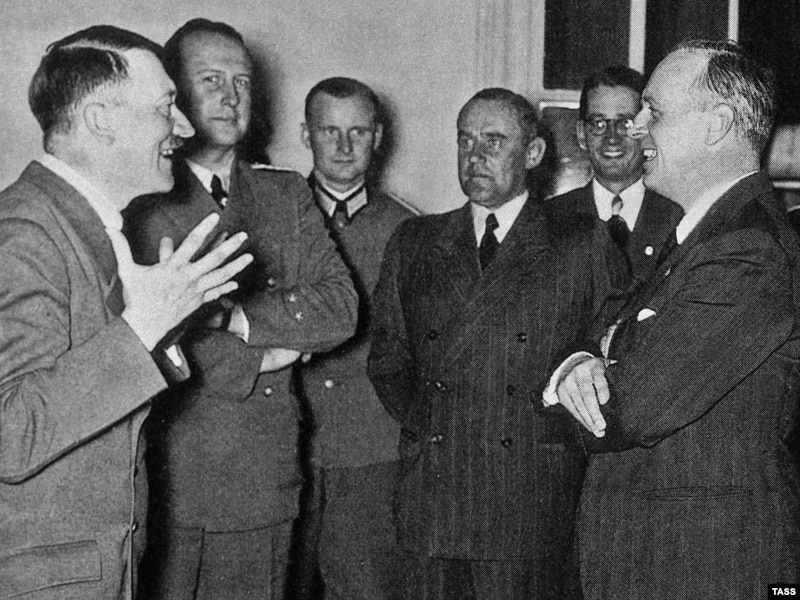
During better times, Hitler (left) and von Ribbentrop (right) enjoy a good laugh. 

Even if, for the sake of argument, we were to reject Germany's claim as being a false propaganda pretext for war, a la 'Weapons of Mass Destruction', the question remains: why do the 'court-historians' continue to conceal such serious allegations from us? Why are we not given all of the data so that we can make up our own minds? What are they so afraid of? The truth?

In the belief that "there are two sides to every story", we are posting abridged reproductions of the May 10 and May 11 Times articles containing the von Ribbentrop allegations. A few bits of highlighted analysis are also included.The full originals can be viewed by copy-paste-enlarging the article images.

******** 

As you can see, press accounts from New York's two major Jewish-owned newspapers of May

16 abril, 2013

Netherlands, the Next Chip to Fall?

http://www.danielestulin.com/2013/04/14/netherlands-the-next-chip-to-fall/
Most attention lately has been on Cyprus, Spain, and Italy. Long-time troubles have been brewing in Portugal and I have an update coming up shortly.
First consider Underwater: The Netherlands Falls Prey to Economic Crisis.
The Netherlands, Berlin’s most important ally in pushing for greater budgetary discipline in Europe, has fallen into an economic crisis itself. The once exemplary economy is suffering from huge debts and a burst real estate bubble, which has stalled growth and endangered jobs.
“Underwater” is a good description of the crisis in a country where large parts of the territory are below sea level. Ironically, the Netherlands, widely viewed as a model economy, is facing the kind of real estate crisis that has only affected the United States and Spain until now. Banks in the Netherlands have also pumped billions upon billions in loans into the private and commercial real estate market since the 1990s, without ensuring that borrowers had sufficient collateral.
Private homebuyers, for example, could easily find banks to finance more than 100 percent of a property’s price. “You could readily obtain a loan for five times your annual salary,” says Scheepens, “and all that without a cent of equity.” This was only possible because property owners were able to fully deduct mortgage interest from their taxes.
Instead of paying off the loans, borrowers normally put some of the money into an investment fund, month after month, hoping for a profit. The money was to be used eventually to pay off the loan, at least in part. But it quickly became customary to expect the value of a given property to increase substantially. Many Dutch savers expected that the resale of their homes would generate enough money to pay off the loans, along with a healthy profit.
No nation in the euro zone is as deeply in debt as the Netherlands, where banks have a total of about €650 billion in mortgage loans on their books.
Consumer debt amounts to about 250 percent of available income. By comparison, in 2011 even the Spaniards only reached a debt ratio of 125 percent.
The Netherlands is still one of the most competitive countries in the European Union, but now that the real estate bubble has burst, it threatens to take down the entire economy with it. Unemployment is on the rise, consumption is down and growth has come to a standstill. Despite tough austerity measures, this year the government in The Hague will violate the EU deficit criterion, which forbid new borrowing of more than 3 percent of gross domestic product (GDP).
It’s a heavy burden, especially for Dutch Finance Minister Jeroen Dijsselbloem, who is also the new head of the Euro Group, and now finds himself in the unexpected role of being both a watchdog for the monetary union and a crisis candidate.
Even €46 billion in austerity measures are apparently not enough to remain within the EU debt limit. Although Dijsselbloem has announced another €4.3 billion in cuts in public service and healthcare, they will only take effect in 2014.