Jan 20, 2026
Read, share, and comment on the X post dedicated to this article.
Modern medicine spent decades dismissing ancient fertility remedies as folklore—while the pomegranate was busy raising testosterone levels by 24% and provably replacing mammalian ovarian function in a series of laboratory experiments.
In the past two days, over 1.7 million viewed my investigation into the 2004 pomegranate study that cardiology willfully ignored—the one showing up to 35% plaque reversal in severely stenotic arteries using nothing more than three ounces of juice daily.
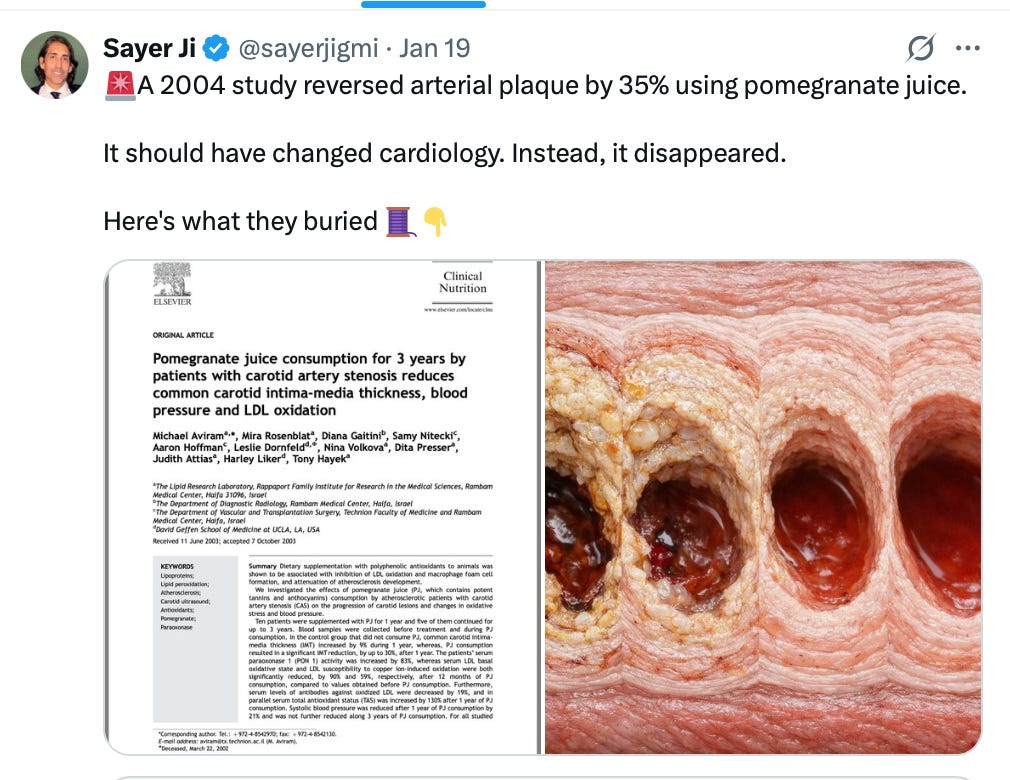
But here’s what I didn’t tell them: the heart story is only half the miracle.
The real revelation of food-as-medicine isn’t that a single food treats a single condition. That’s pharmaceutical thinking—one molecule, one target, one patent. Nature operates differently. When a food genuinely heals, it heals systemically, touching multiple organs through pathways we’re only beginning to understand.
And nowhere is this more elegantly demonstrated than in the pomegranate.
Cut one open. Watch the ruby juice run down your fingers like blood from a wound. Notice how the fruit’s chambers radiate outward from a central core—an architecture that mirrors the human heart so precisely that ancient physicians prescribed it for cardiac ailments millennia before the Aviram study proved them right.
But turn that same cross-section at a different angle, and you’ll see something else entirely: hundreds of arils clustered in compartmentalized spaces around a pale central membrane—a structure strikingly reminiscent of an ovary, with follicles at various stages of development.
The visual resemblance is striking—so striking, in fact, that ancient physicians following the doctrine of signatures prescribed pomegranate for female fertility and reproductive health.
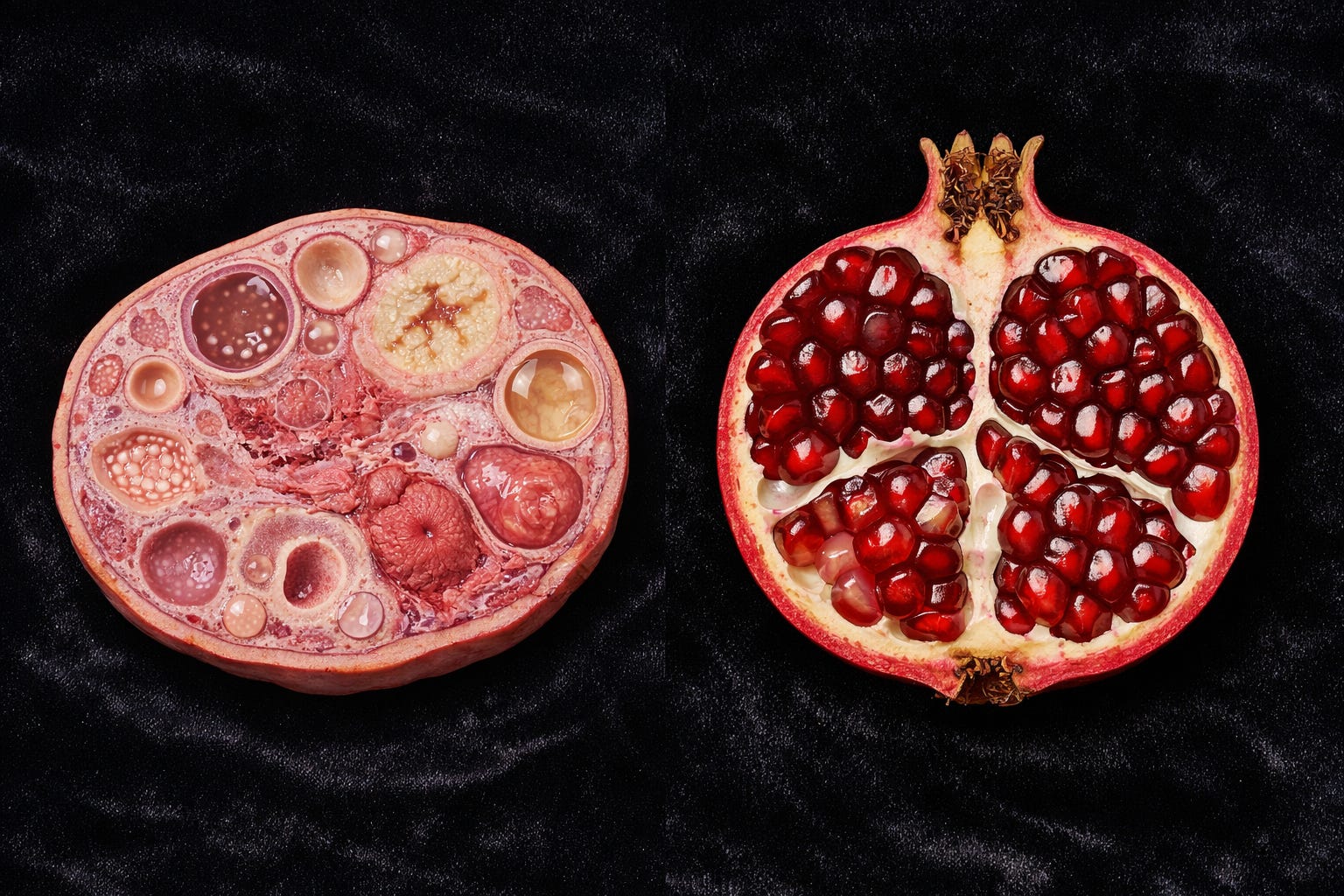
For centuries, modern science dismissed such observations as mere superstition—the pre-scientific mind projecting meaning onto coincidental resemblances. But what if the doctrine of signatures was pointing toward something real? What if the visual homology between pomegranate and ovary reflects a deeper functional and molecular homology—one that science is only now beginning to understand?
The answer, it turns out, involves some of the most exciting discoveries in modern biology: plant-derived extracellular vesicles—tiny membrane-bound messengers that carry bioactive molecules across the seemingly vast evolutionary distance between plant and mammal. These nanoscale communicators may finally explain how a fruit can serve, quite literally, as a “backup ovary.”
The Science Beneath the Symbol
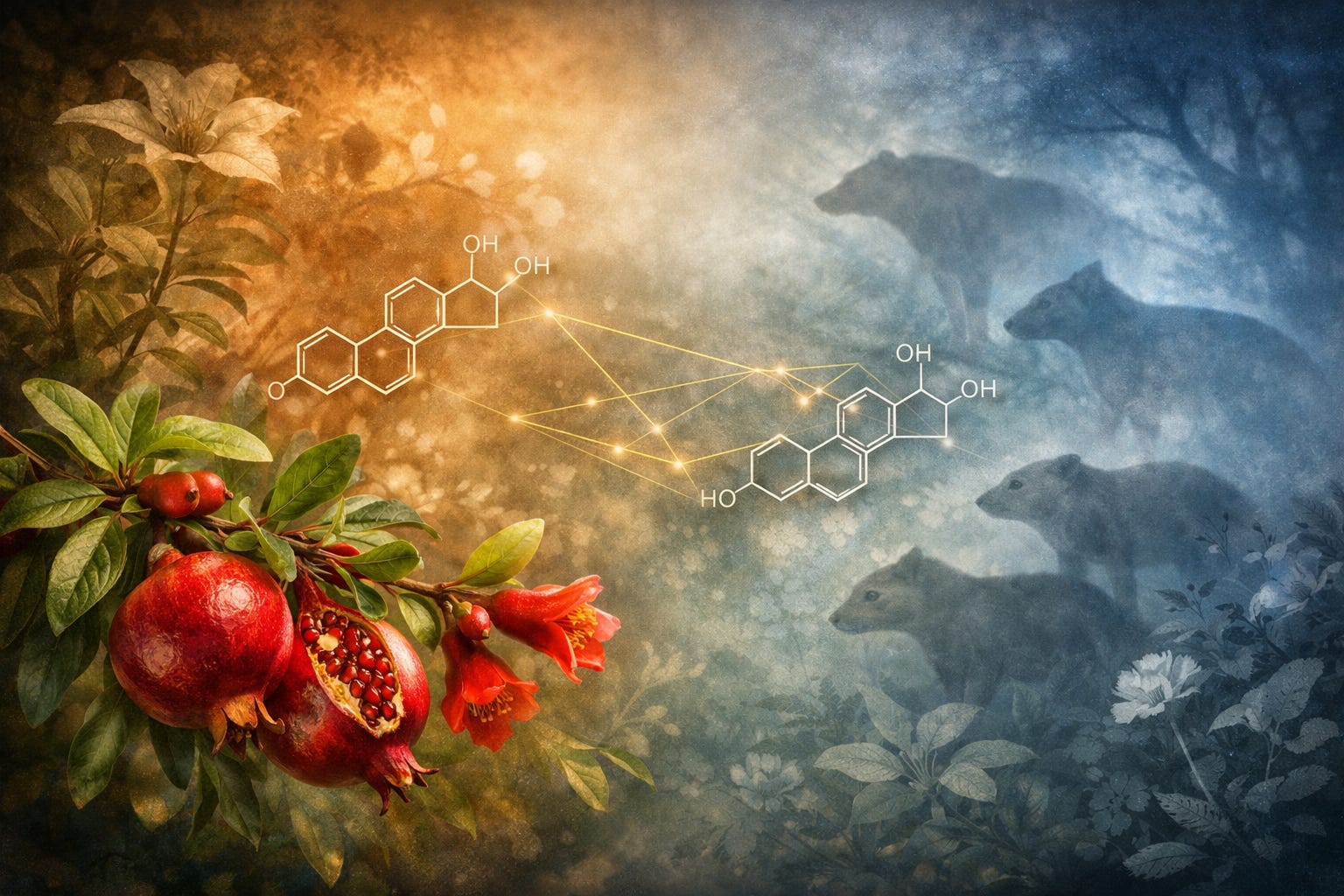
The pomegranate (Punica granatum) contains one of the most remarkable chemical profiles in the plant kingdom. In 1966, researchers Heftmann, Ko, and Bennett made a discovery that would have profound implications: pomegranate seeds contain estrone—not a plant compound that merely resembles estrogen, but the actual mammalian sex hormone itself, at concentrations of 17 mg per kilogram of dried seed. This represents the highest concentration of estrone found in any plant source.
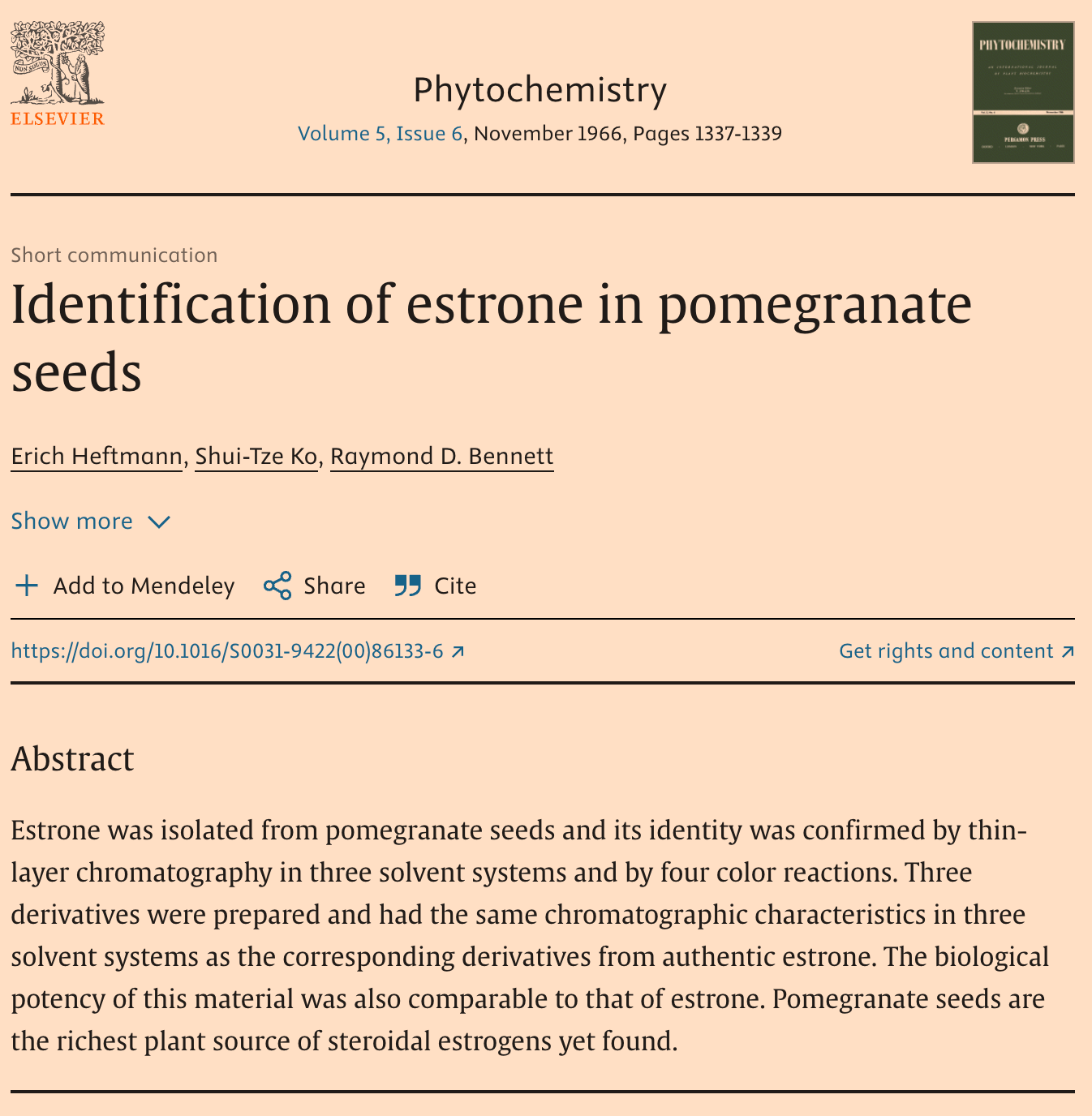
This finding was astonishing. Here was a plant producing the same molecular species used by mammals to orchestrate reproduction, fertility, and female development. Subsequent research revealed that pomegranate seeds also contain testosterone and a rich array of phytoestrogens, including genistein, daidzein, and coumestrol.
And this isn't merely a chemical curiosity—these hormones appear to be bioavailable and functional. A 2012 study presented at the Society for Endocrinology conference demonstrated that just two weeks of pomegranate juice consumption increased salivary testosterone levels by an average of 24% in both men and women. The same study documented significant improvements in mood, reduced anxiety, and enhanced sense of well-being—effects consistent with optimized hormonal function. The researchers noted that "throughout history, pomegranate symbolizes fertility and has been postulated to enhance sexual function and drive." Their findings suggest this ancient association has a measurable biochemical basis.
The Ovariectomized Rat Model: Pomegranate as Ovarian Replacement
A 2018 study published in the Journal of Obstetrics and Gynaecology Research by Kaban and colleagues provides remarkable evidence. Researchers removed the ovaries from female rats—eliminating their endogenous estrogen production—then administered pomegranate extract for 90 days.

The results were striking:
Estradiol levels in treated rats rose to 252 ± 43 pg/mL compared to just 154 ± 26 pg/mL in controls—a 64% increase despite the absence of ovarian tissue
Tibial bone cortex thickness increased from 40 ± 2 μm in controls to 58 ± 7 μm in treated animals—reversing the bone loss that characterizes estrogen deficiency
Vaginal epithelium thickness doubled, from 10 ± 4 μm to 21 ± 7 μm—demonstrating that pomegranate’s effects reached reproductive tissues specifically
In other words, pomegranate extract was functioning as a kind of external ovary, providing the body with the estrogenic signals it had lost. The fruit wasn’t merely “supportive” of ovarian function—it was partially replacing it.
Nature’s Selective Estrogen Receptor Modulator
Perhaps most remarkable is how pomegranate exerts its estrogenic effects. Unlike synthetic estrogens or even the body’s own estradiol, pomegranate compounds act as selective estrogen receptor modulators (SERMs)—a pharmacological holy grail that the pharmaceutical industry has spent billions trying to develop.
A 2011 study in the Journal of Nutritional Biochemistry demonstrated this elegantly. When estrogen-dependent breast cancer cells were exposed to pomegranate extracts, the fruit’s compounds blocked estrogen’s cancer-promoting effects. Unlike tamoxifen (the synthetic SERM), pomegranate achieved this without increasing uterine weight—a dangerous side effect associated with pharmaceutical SERMs.

This represents a kind of “molecular intelligence” that defies reductionist pharmacology. Pomegranate compounds appear to:
Increase estrogenic activity when estrogen is deficient (as in menopause)
Block excessive estrogenic activity when estrogen is promoting cancer
Provide beneficial effects to bone, cardiovascular, and reproductive tissues without the risks associated with hormone replacement therapy
How does a fruit achieve what pharmaceutical chemists struggle to accomplish? The answer may lie in a newly discovered communication system that bridges the plant and animal kingdoms.
The Exosome Revolution: Cross-Kingdom Messengers
For decades, we assumed that eating a plant was simply a matter of breaking down its components through digestion—extracting nutrients, discarding waste, and treating plant cells as raw material to be processed. This view is now being radically revised by the discovery of plant-derived extracellular vesicles (EVs), also called exosomes or exosome-like nanoparticles.
These tiny membrane-bound particles, ranging from 30 to 300 nanometers in diameter, are released by plant cells and carry remarkable cargo: proteins, lipids, metabolites, and—crucially—small RNA molecules including microRNAs (miRNAs). Far from being passive nutrition, these vesicles represent active biological communication and may be considered equivalent to packets of biologically indispensable information that transfers like ‘software’ from one organism to another.
Pomegranate Exosomes: First Characterized in 2022
In a groundbreaking 2022 study published in Food & Function, researchers isolated and characterized extracellular vesicles from pomegranate juice (PgEVs) for the first time. Using size exclusion chromatography and advanced imaging techniques, they documented:
A homogeneous population of vesicles with dimensions and structure comparable to other plant-derived EVs
131 distinct proteins identified through proteomic analysis, many related to EV biogenesis and transport
Demonstrated anti-inflammatory, antioxidant, and wound-healing effects on human cell lines

More recent research, including a 2025 study in Food Science & Nutrition, has shown that pomegranate-derived nanovesicles (PNVs) are enriched with ellagic acid and can be efficiently distributed to critical organs including the liver and intestines. These vesicles demonstrate biocompatibility and deliver their bioactive cargo without toxic effects.
Plant miRNAs: Genetic Instructions Across Kingdoms
Perhaps the most profound discovery involves plant microRNAs. These small RNA molecules (21-24 nucleotides) regulate gene expression by binding to target messenger RNAs and either degrading them or blocking their translation into protein. Remarkably, plant miRNAs can survive digestion, enter the mammalian bloodstream, and regulate gene expression in human tissues.
A landmark 2012 study published in Cell Research demonstrated that rice-derived miR168a could be detected in human serum after consumption and actively downregulated LDLRAP1 in the liver—affecting cholesterol metabolism. This was cross-kingdom gene regulation: a plant RNA molecule controlling the expression of a mammalian gene.
Plant miRNAs possess unique stability features that enable this cross-kingdom communication:
2’-O-methylation at the 3’ terminal nucleotide protects them from enzymatic degradation in the digestive tract
Encapsulation in exosomes shields them during transit through the harsh gastrointestinal environment
Higher target complementarity compared to animal miRNAs may enable more precise gene regulation
The Emerging Picture: A Plausible Mechanism
We can now propose a plausible mechanism for pomegranate’s remarkable effects on ovarian and hormonal health—one that integrates the doctrine of signatures with cutting-edge molecular biology:
Bioidentical hormones: Pomegranate seeds contain actual mammalian estrone—not a mimic, but the identical molecule—at the highest concentration known in any plant source
Exosome delivery: Pomegranate-derived extracellular vesicles carry bioactive compounds including proteins, lipids, and potentially miRNAs into mammalian cells with remarkable efficiency
Gene regulatory effects: Plant-derived miRNAs packaged within these vesicles may modulate expression of genes involved in estrogen signaling, receptor sensitivity, and metabolic pathways
SERM-like modulation: The complex interplay of pomegranate compounds allows for context-dependent effects—supportive when estrogen is needed, protective when it might promote disease
Tissue-specific targeting: EVs may preferentially accumulate in certain tissues, potentially explaining why pomegranate affects reproductive, bone, and cardiovascular tissues specifically
This is not simply a story of “plant chemicals acting like drugs.” It is a story of living information exchange—of molecular dialogs that have been ongoing between plants and the animals that consume them for hundreds of millions of years.
The Deep History: Co-Evolution of Plants and Mammals
The relationship between flowering plants (angiosperms) and mammals stretches back over 200 million yearrs. During this vast span of evolutionary time, the two kingdoms developed together in intricate interdependence. Mammals ate plants; plants responded by evolving fruits to attract animal seed-dispersers. This co-evolution wasn’t merely mechanical—it was biochemical.
Phytoestrogens are now understood to have co-evolved with mammalian estrogen receptors. Research published in Evolutionary Applications notes that the structural similarity between plant-derived compounds and vertebrate hormones is too consistent to be coincidental. The carbon ring structures, hydroxyl group placements, and molecular weights align because they evolved in relationship with each other.
This framework recasts the “doctrine of signatures” not as magical thinking but as intuitive recognition of deep biological relationships. When ancient physicians saw the pomegranate’s ovary-like structure and prescribed it for fertility, they were perceiving—however imperfectly—a functional homology that science is only now confirming at the molecular level.
For a deeper dive into the role of miRNAs as cross-kingdom messengers of biological information and the so-called Gaia principle, read my exposé on the topic here: Genetic Dark Matter and the Return of the Goddess
Implications for Women’s Health
The research on pomegranate and hormonal health suggests multiple applications:
Menopause Support
For women experiencing menopause, pomegranate may offer what hormone replacement therapy promises but with a safety profile shaped by millions of years of co-evolutionary refinement. The Kaban study demonstrates that pomegranate can partially compensate for lost ovarian function—supporting estrogen levels, protecting bone density, and maintaining vaginal epithelial health.
Bone Health
A 2004 study in the Journal of Ethnopharmacology demonstrated that pomegranate extract reversed ovariectomy-induced bone loss in animal models. This aligns with what we know about estrogen’s bone-protective effects, but with the additional benefits of pomegranate’s anti-inflammatory and antioxidant properties.

Mood and Cognitive Support
Research has shown reduced depression indicators in ovariectomized mice treated with pomegranate—consistent with estrogen’s well-documented effects on mood and brain function.
Fertility and PCOS
Pomegranate’s punicic acid—a unique conjugated linolenic acid found in pomegranate seed oil—shows promise for polycystic ovary syndrome (PCOS), helping to regulate hormones, reduce elevated testosterone, and improve insulin sensitivity.
Breast Cancer Protection
The SERM-like activity of pomegranate compounds suggests potential protective effects against hormone-dependent breast cancer. By blocking excessive estrogenic stimulation in breast tissue while supporting healthy estrogen function elsewhere, pomegranate may offer cancer-protective benefits that synthetic hormones cannot.
Too Many Additional Benefits to Count…
These are only the tip of the iceberg, as far as potential therapeutic benefits of pomegranate. Consult our massive research database on the topic below. Consider becoming a full subscribing member to Greenmedinfo.com to access all our research tools and enhancements across 10,000 different subjects.

Practical Applications
For those seeking to harness pomegranate’s hormonal benefits, always select organically produced when available, as well as the following:
Whole fruit consumption: Eat the arils (seeds) whole, including the fiber-rich seed interior where estrone concentrations are highest
Pomegranate seed oil: Cold-pressed seed oil provides concentrated punicic acid and fat-soluble compounds
Fresh juice: Provides extracellular vesicles and water-soluble polyphenols; choose organic, unpasteurized when possible
Regular consumption: The benefits of plant exosomes and phytoestrogens likely depend on consistent dietary intake rather than occasional supplementation
Quality matters: Choose organic sources to minimize pesticide exposure and maximize nutrient density
Conclusion: The Miracle Beneath the Mystery
The pomegranate-ovary connection represents more than a curiosity of natural medicine—it exemplifies a paradigm shift in how we understand the relationship between food and health. We are not merely “extracting nutrients” from our diet; we are engaging in an ancient biochemical conversation with the plant kingdom.
The discovery of plant-derived exosomes carrying bioactive molecules—including miRNAs capable of regulating mammalian gene expression—opens a new chapter in nutritional science. It suggests that whole foods are not just collections of vitamins and minerals, but sophisticated biological packages designed by evolution to communicate with our cells.
The visual resemblance between pomegranate and ovary, once dismissed as coincidence, now appears as a signpost pointing toward profound functional relationships. When our ancestors saw this resemblance and prescribed pomegranate for women’s health, they were perceiving a truth that science is only now articulating: that through hundreds of millions of years of co-evolution, certain plants have become intimately attuned to mammalian physiology.
The pomegranate doesn’t just resemble an ovary—through its extracellular vesicles, its phytoestrogens, and its bioidentical hormones, it may actually communicate with our reproductive system in ways that honor and support its function. This is not superstition. This is biology at its most elegant—a miracle, if you will, hidden in plain sight, waiting for science to catch up with ancient wisdom.
To learn more about the power of plants to heal the organs they resemble, watch my member’s only exclusive presentation on the topic here. my exposé on the topic: The Science of Signatures: Foods That Heal The Tissue They Look Like


Key References
Heftmann E, Ko ST, Bennett RD. Identification of estrone in pomegranate seeds. Phytochemistry. 1966;5:1337-1339.
Kaban I, et al. Effect of pomegranate extract on vagina, skeleton, metabolic and endocrine profiles in an ovariectomized rat model. J Obstet Gynaecol Res. 2018;44:725-732.
Turrini E, et al. Characterization and bioactivity of extracellular vesicles isolated from pomegranate. Food Funct. 2022;13:12930-12940.
Zhang L, et al. Exogenous plant MIR168a specifically targets mammalian LDLRAP1: evidence of cross-kingdom regulation by microRNA. Cell Res. 2012;22:107-126.
Samad AFA, et al. Cross-kingdom regulation by plant microRNAs provides novel insight into gene regulation. Adv Nutr. 2021;12:197-211.
Kim YE, et al. Pomegranate-derived exosome-like nanovesicles containing ellagic acid alleviate gut leakage and liver injury in MASLD. Food Sci Nutr. 2025.
Lambert MR, Edwards TM. Hormonally active phytochemicals and vertebrate evolution. Evol Appl. 2017;10:419-432.
Sreekumar S, et al. Pomegranate fruit as a rich source of biologically active compounds. Biomed Res Int. 2014;2014:686921.
No hay comentarios:
Publicar un comentario