Sayer Ji
Apr 23, 2026
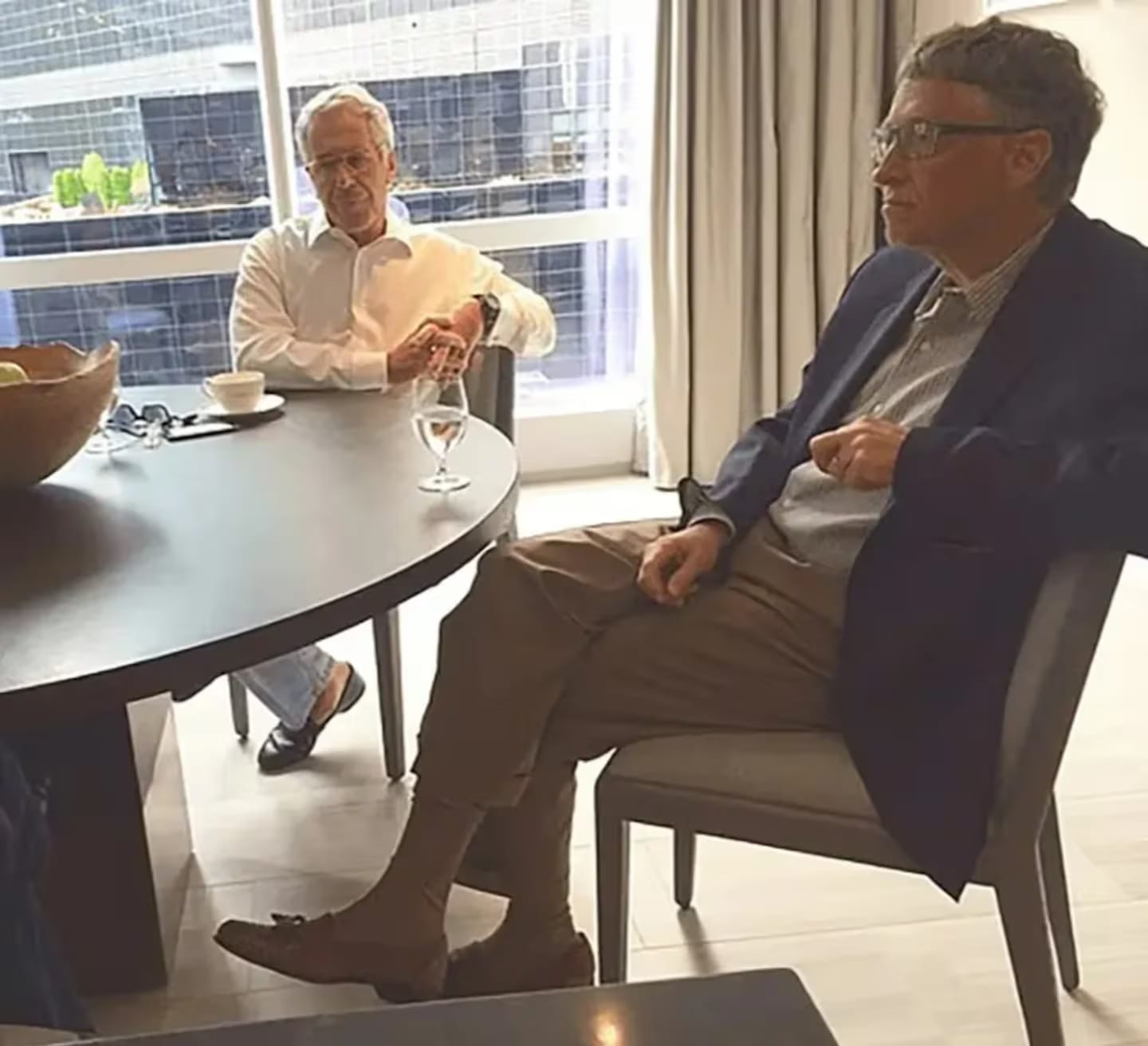
The Gates Foundation has denied two things about its relationship with Jeffrey Epstein. The press has been reporting a third denial the Foundation never made — and the external review it announced on April 21 has been scoped around what the denial leaves uncovered.
Share the X thread dedicated to this post here.
On Tuesday, April 21, 2026, the Gates Foundation announced that it has commissioned an external review of its past engagement with Jeffrey Epstein.1 The review was first announced internally in a March 11 memo. It is expected to report this summer. The third-party investigators have not been publicly named.
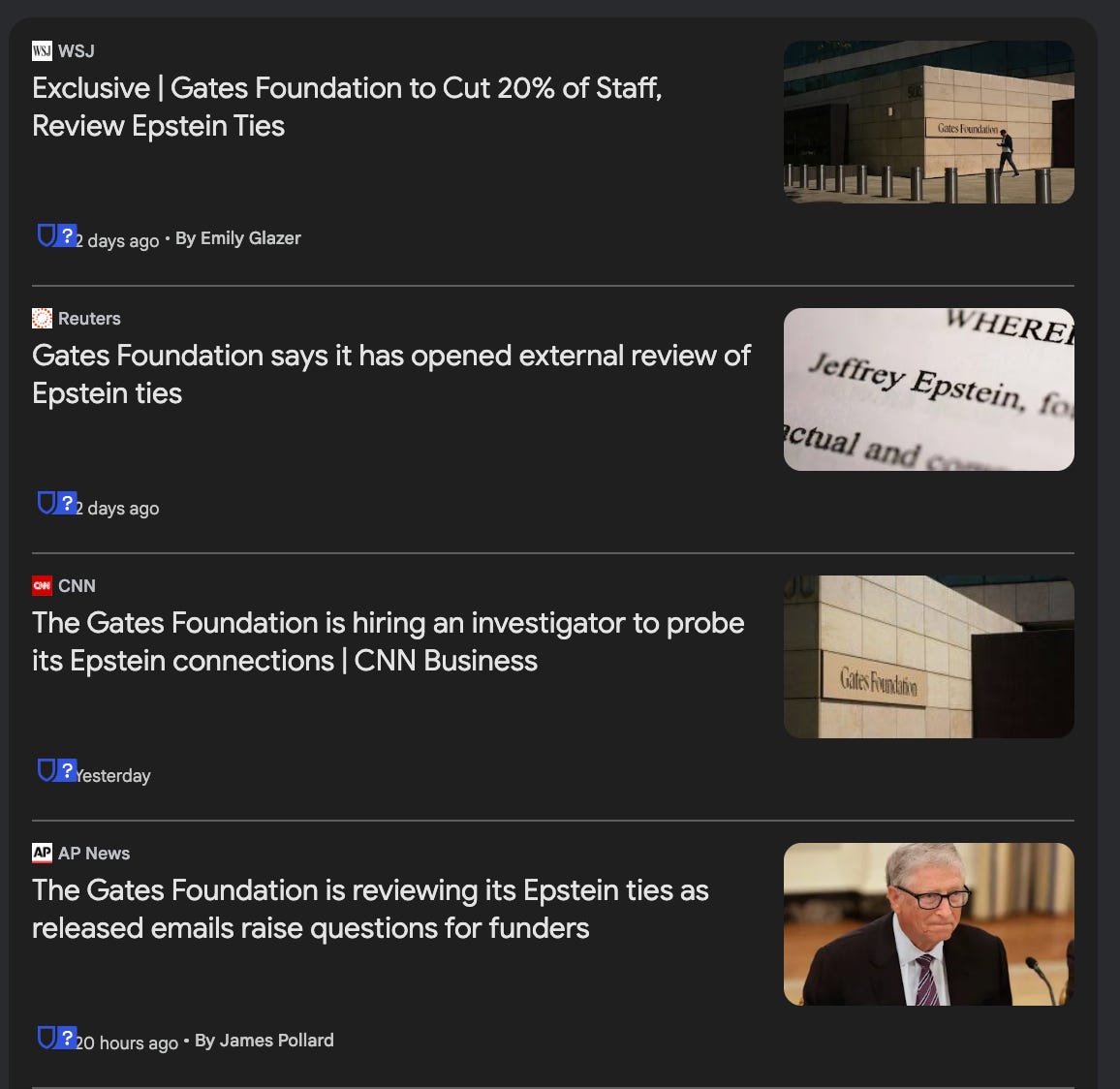
The news was reported across every major outlet — the Wall Street Journal, the Associated Press, the Seattle Times, Reuters, Fox News Digital, CNBC, the Daily Beast — most of them citing the same Foundation talking point to frame the story: that “they never created a fund together and the foundation made no payments to Epstein.”
Read carefully, that talking point is not what the Foundation said.
What the Foundation said, in its February 2026 statement to Reuters, was narrower:
The Foundation “did not make any financial payments to Epstein or employ him at any time and that it regrets having any employees interact with him in any way.”1
That is the denial, in full. It addresses two things:
Payments. No money flowed from the Foundation to Epstein.
Employment. Epstein was never on the Foundation’s payroll.
It does not deny co-designing a financial vehicle, as I reported on in Part I and Part II of my Epstein Files investigative series. It does not deny shaping a governance structure. It does not deny adopting design features Epstein communicated to JPMorgan’s most senior executives. It expresses regret about employee interactions — a rhetorical move that concedes the interactions occurred while reframing them as unwanted rather than institutional.
Every major account of the April 21 external review announcement — the Associated Press, Fox News Digital, the Seattle Times, CNBC, the Daily Beast — has carried a paraphrase of the Foundation’s position that reads broader than the Foundation’s own words. The most common construction has been some variant of: “They never created a fund together and the foundation made no payments to Epstein.” That first clause is the press’s gloss, not the Foundation’s claim. The Foundation has not publicly denied creating a fund. It has denied paying one.
The Seattle Times, meanwhile, reported on April 21, based on documents its staff reviewed, that at least five Gates Foundation employees — in addition to Bill Gates himself — corresponded with Epstein between 2011 and 2014 using their official Gates email addresses.2 “A small number” is six.
This post reads the federal record against what the Foundation actually said, and against the scope of the review the Foundation has now commissioned.
What the federal record documents
The question the record raises is not whether the Foundation paid Epstein or employed him. It is whether a fund the Foundation principals participated in was shaped by Epstein’s documented communications with JPMorgan’s most senior executives.
The documentary sequence:
February 17–18, 2011. JPMorgan’s Juliet Pullis sent Epstein a structured questionnaire at Jes Staley’s direction, asking him to define the architecture of a Gates-linked fund. Epstein replied the same evening with a fully formed vision — a donor-advised fund structure with governance layers, an investment committee, a distribution committee, and a link to the Giving Pledge’s then-$60 billion in committed capital.3
August 17, 2011. Epstein emailed Mary Erdoes — CEO of JPMorgan Asset and Wealth Management, writing to her while she was on vacation in Maroon Bells, Colorado — with the structural parameters of the fund: perpetual duration, succession controls, an offshore arm “especially for vaccines,” donor anonymity, custom investment portfolios, predefined silos. He projected “billions of dollars” in year one and “tens of billions by year 4.”4
![[IMAGE: Epstein’s August 17 email to Erdoes — EFTA01256269]](https://substackcdn.com/image/fetch/$s_!LJz1!,f_auto,q_auto:good,fl_progressive:steep/https%3A%2F%2Fsubstack-post-media.s3.amazonaws.com%2Fpublic%2Fimages%2F7b0cd8a9-041d-4cbd-ab25-0a6d52a85982_1676x2232.png "[IMAGE: Epstein’s August 17 email to Erdoes — EFTA01256269]")
August 28, 2011. Epstein wrote to Staley and Erdoes explaining that “Bill is terribly frustrated” and insisting that the presentation include the phrase “additional money for vaccines.”5
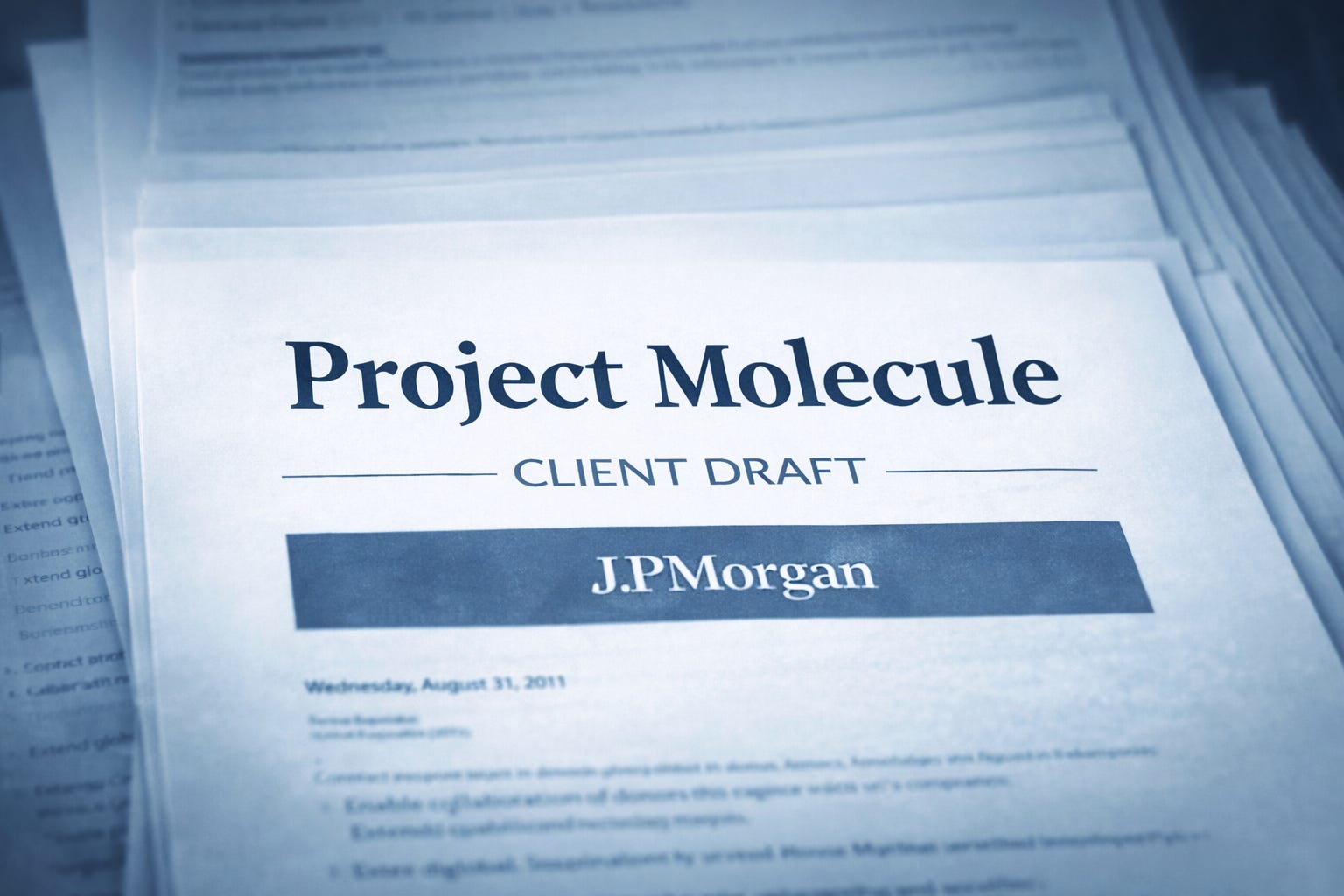
August 31, 2011. JPMorgan’s private wealth division delivered Project Molecule — Client Draft, Version 13, a fourteen-page client proposal for a vehicle titled “The Gates & J.P. Morgan Charitable Giving Fund.” The deck was stamped into the federal record under three independent production numbers.6
![[IMAGE: Project Molecule organizational chart — EFTA01301118]](https://substackcdn.com/image/fetch/$s_!l2pA!,f_auto,q_auto:good,fl_progressive:steep/https%3A%2F%2Fsubstack-post-media.s3.amazonaws.com%2Fpublic%2Fimages%2Fdff019e0-c54c-427f-beb1-489e2115aab1_2230x1772.heic "[IMAGE: Project Molecule organizational chart — EFTA01301118]")
Version 13. The document had been revised at least twelve times before delivery.
The deck’s architecture mirrors Epstein’s email shorthand point for point:
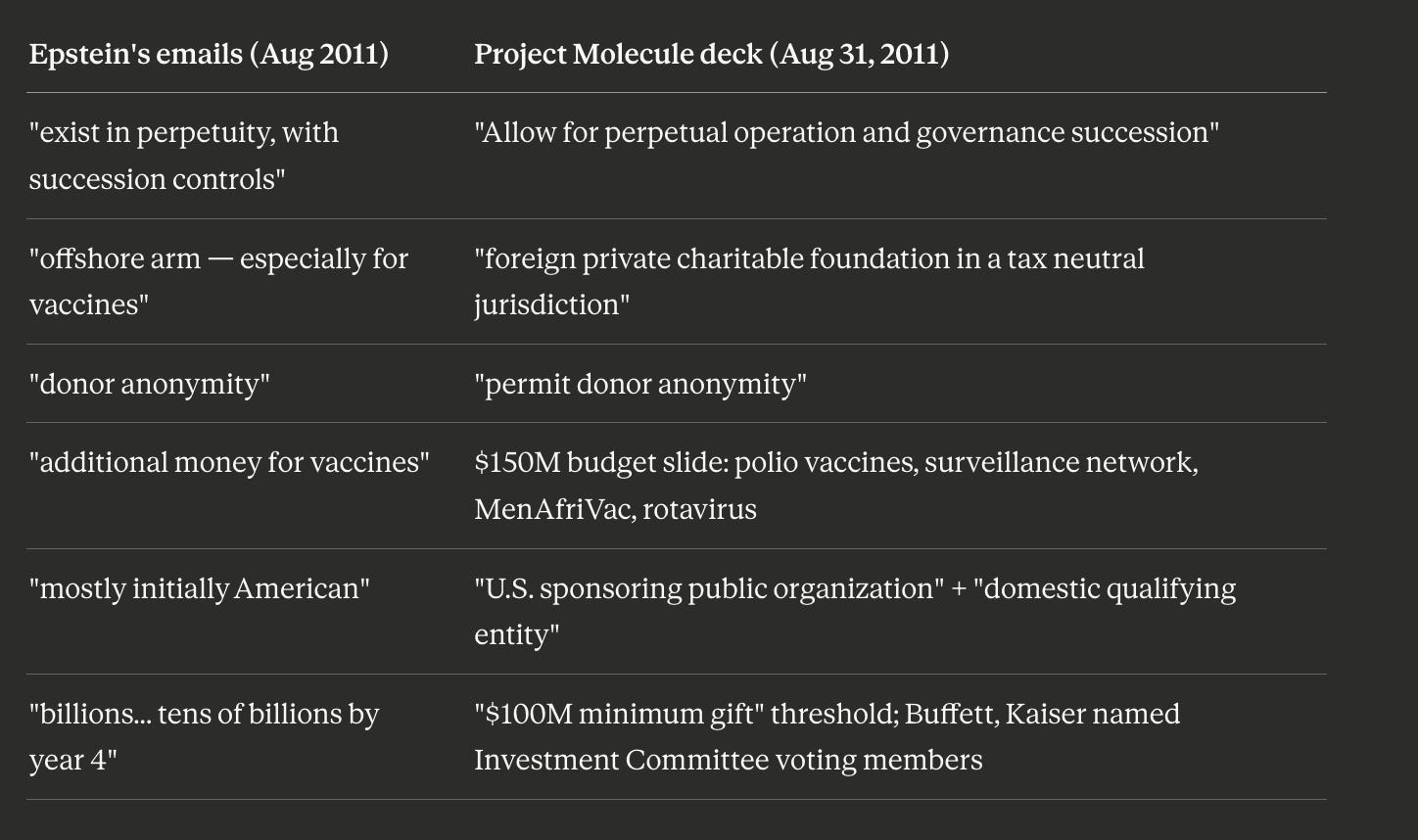
The deck names Melinda Gates as Chair of the Strategic Program and Grant Distribution Committee.7 It names Mary Erdoes — the same executive who received Epstein’s “offshore arm” email — as a non-voting Investment Committee member. It names Warren Buffett, George Kaiser, David Rubenstein, Susan Rice, Seth Berkley, Jeffrey Sachs, and Queen Rania of Jordan among its committee membership.
These are not retired philanthropists lending letterhead. At the time of the draft, Susan Rice was U.S. Ambassador to the United Nations. Seth Berkley had just taken over as CEO of Gavi. Jeffrey Sachs was advising the UN Secretary-General on global development goals.
None of that was co-signed. None of it required a dollar to move to Epstein. None of it required Epstein to be employed by the Foundation.
All of it is documented in the federal record. None of it is denied by the Foundation’s February statement.
To dive deeper into the details of this new investment vehicle, read Part II below:
What Gates has now confirmed on the record
At the February 25, 2026 Foundation town hall — per recordings reviewed by the Wall Street Journal and cited subsequently by the Seattle Times and Fox News Digital — Gates himself confirmed the scale of what Epstein was pitching:
“Epstein told Gates he could raise $100 billion from his relationship with Wall Street billionaires, according to Gates.”8
Epstein’s August 2011 email to Erdoes had projected “billions of dollars” in year one and “tens of billions by year 4.” Gates has now publicly confirmed, in his own words, that he personally understood Epstein’s pitch to be scaled in the tens to hundreds of billions.
This is the man the Foundation’s statement describes as having “claimed he could mobilize significant philanthropic resources.” The claim was not vague. It was specific, sustained, and — per Gates’s own February 2026 admission — taken seriously enough to justify three years of meetings, continued correspondence after Epstein’s 2008 conviction, and Gates’s March 2013 private-jet travel to Epstein’s residence.
The timing of the denial
The Foundation’s February 2026 denial followed by eight days the February 3, 2026 publication on this Substack of “Inside Project Molecule — How JPMorgan and the Gates Foundation Turned Biology into Investable Infrastructure,” which laid out the federal record in detail and named Project Molecule by its Bates-stamped title.9
The February 25 town hall, at which Gates apologized to Foundation staff and confirmed the $100 billion projection, followed two weeks later.
The external review commissioning, announced internally in a March 11 memo and publicly on April 21, followed Fortune‘s March investigation into Epstein’s network of intermediaries inside Gates’s inner circle.10
This is not retrospective pattern-matching. It is the chronology in the public record. The Foundation’s denial is precisely calibrated to the terrain the federal archive has opened. It defeats the claim that the Foundation paid or employed Epstein. It does not defeat the claim that Epstein shaped the design of a vehicle the Foundation principals subsequently participated in — because no institutional voice outside the federal record has been making that claim in terms the denial can reach.
This post makes it in those terms.
The review’s scope as an architectural tell
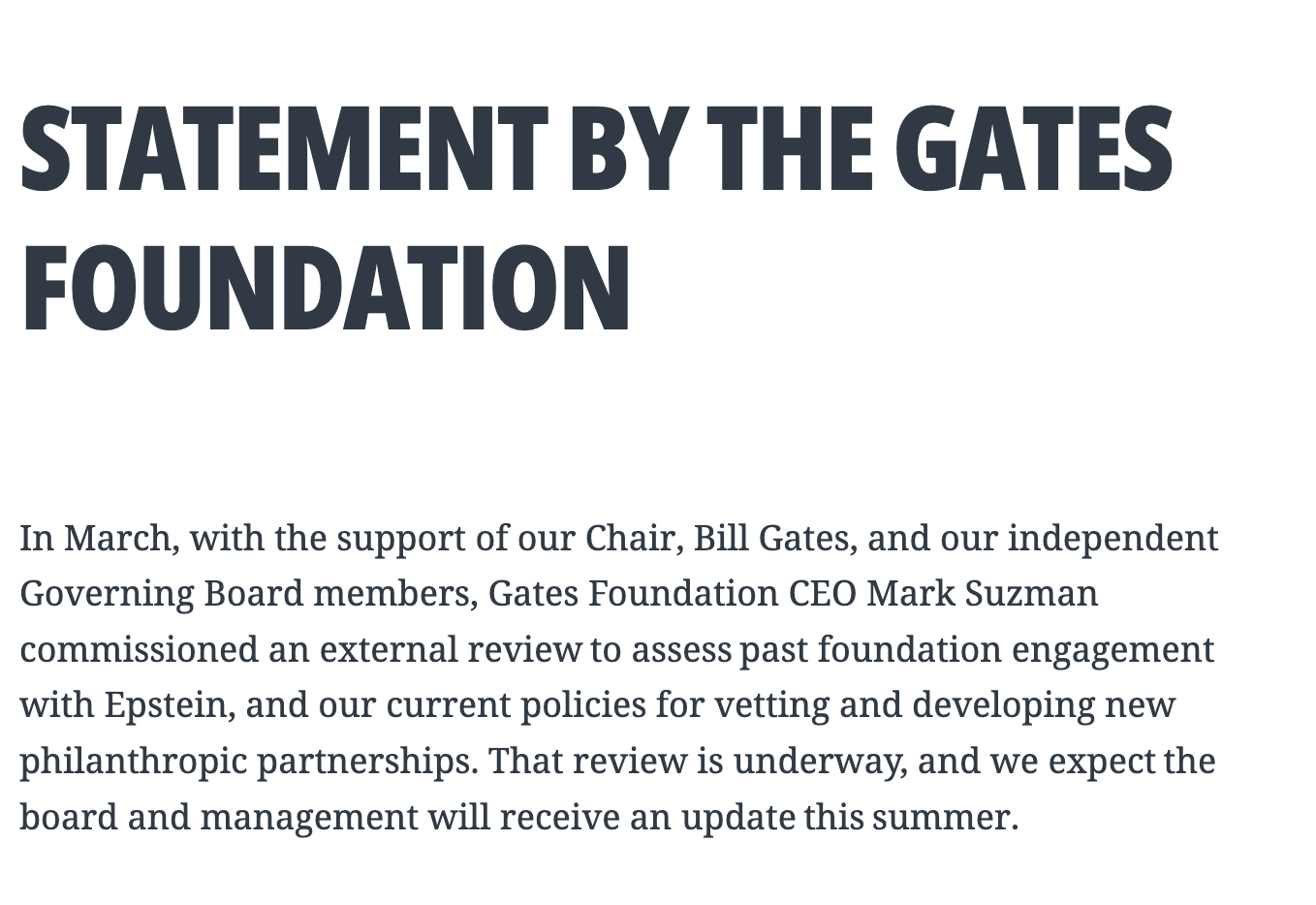
The April 21 statement published on gatesfoundation.org reads, in its entirety:
“In March, with the support of our Chair, Bill Gates, and our independent Governing Board members, Gates Foundation CEO Mark Suzman commissioned an external review to assess past foundation engagement with Epstein, and our current policies for vetting and developing new philanthropic partnerships. That review is underway, and we expect the board and management will receive an update this summer.”11
Three structural features of this announcement warrant close reading.
First. “With the support of our Chair, Bill Gates.”
Gates is publicly endorsing the review of Gates. The subject of the review has approved the review. In ordinary corporate governance, a review implicating the conduct of a sitting chair is routed through a special committee of independent directors with no reporting line to the chair, and the chair’s role is recusal, not sponsorship. The Foundation’s framing inverts that norm. The chair is listed not as subject but as sponsor.
Second. “Our independent Governing Board members.”
The Foundation’s governance body is small and has contracted materially in recent years. Warren Buffett resigned as trustee in 2021. Melinda French Gates has left the board. The current “independent Governing Board members” supporting this review are not named in the press release, and the composition of the body that approved the review’s scope is not set out at the level of detail that would allow an outside reader to assess independence. The third-party investigators conducting the review, the Associated Press separately reports, have also not been publicly named.12
Third, and most importantly. “Past foundation engagement with Epstein, and our current policies for vetting and developing new philanthropic partnerships.”
The scope is explicitly bifurcated: backward-looking on Epstein personally, and forward-looking on policies for new partnerships. What is notably outside scope is the middle — the governance relationships and advisory roles that were formed during the period of documented Epstein engagement and that continued into the Foundation’s subsequent operations.
Boris Nikolic's role as the Foundation's chief science and technology advisor through the relevant period is not named as in scope. The continuity of personnel and advisory relationships from the 2011–2014 period is not named as in scope.
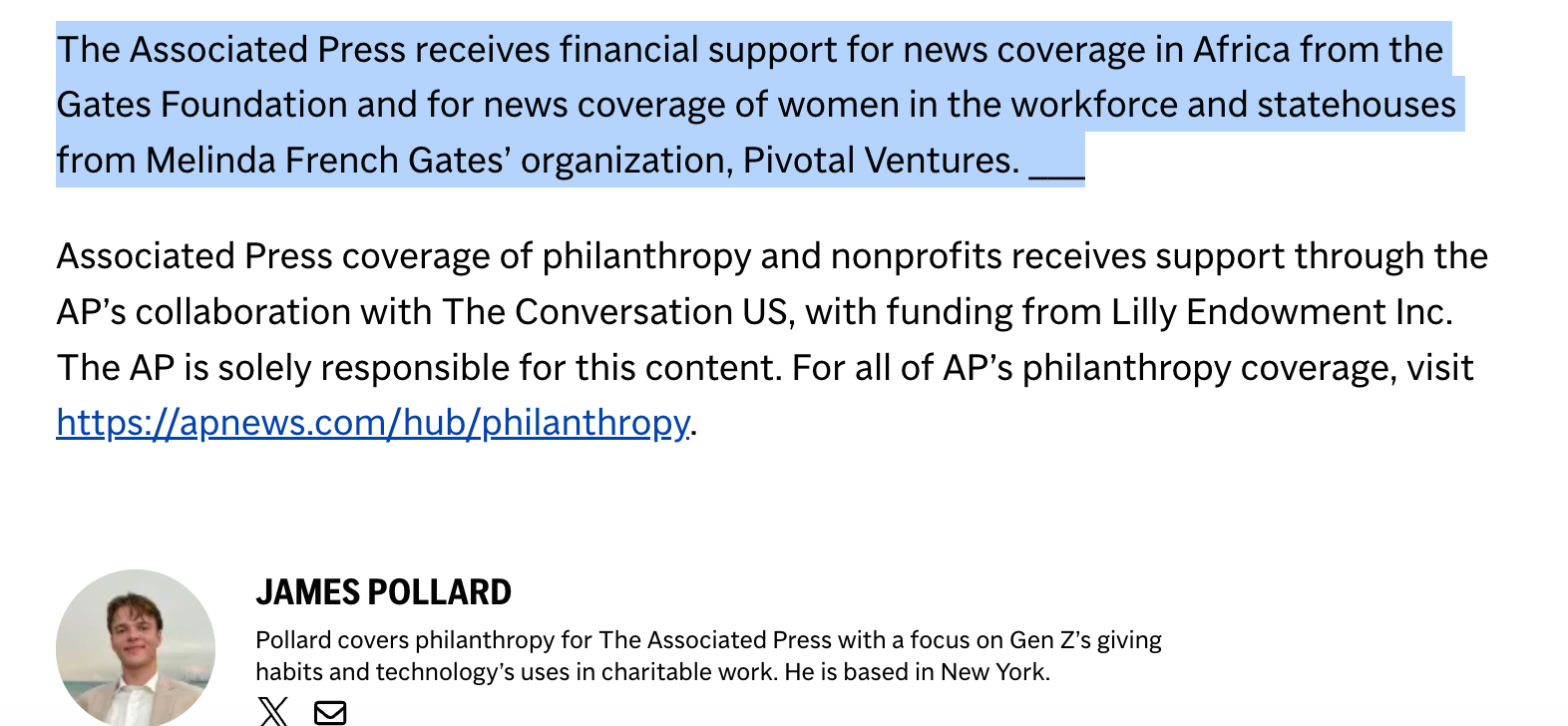
A fourth tell, adjacent to the Foundation's own governance: the outlets reporting on the April 21 announcement are, in several cases, partially funded by the Foundation they are covering. The Associated Press discloses in its own coverage that it "receives financial support for news coverage in Africa from the Gates Foundation and for news coverage of women in the workforce and statehouses from Melinda French Gates' organization, Pivotal Ventures." The Seattle Times discloses in its coverage that "Microsoft Philanthropies underwrites some Seattle Times journalism projects, as does the Gates Foundation." These disclosures are published by the outlets themselves, at the foot of their own articles. They are not alleged; they are acknowledged. What the reader should take from them is not that the reporting is compromised — both outlets disclose in good faith, and the reporting is factually accurate within the frame it carries — but that the mechanism that would ordinarily interrogate a narrow denial from the subject of its own funding is operating at less than full independence. The Foundation's Feb 2026 denial has been reported in both outlets without either one examining what the denial did not cover.
The review is scoped to examine the Foundation’s interactions with Epstein as a discrete historical matter, and to update vetting policies going forward. It is not scoped to examine the governance architecture that was in place during the engagement or the relationships that outlasted it.
This is a recognizable design. Define the review narrowly enough that it will find what it is asked to find, and nothing else. The review’s output, when it arrives this summer, will almost certainly include acknowledgment that some Foundation employees interacted with Epstein, some regret for those interactions, and some policy updates for vetting future partnerships. It will not include examination of the architecture.
The questions for June 10
On June 10, 2026, Bill Gates will sit for a closed-door transcribed interview before the House Oversight and Government Reform Committee.13
The committee has subpoena power. It can ask questions the Foundation’s press office cannot answer with a single calibrated sentence, and that the external review has been scoped not to examine.
Questions worth asking under oath:
Did the Foundation’s leadership — Gates, Melinda French Gates, Warren Buffett, or any member of the Foundation’s senior governance — review any iteration of the Project Molecule deck between Version 1 and Version 13, prior to August 31, 2011?
Did Melinda French Gates consent to being named Chair of the Strategic Program and Grant Distribution Committee in the August 31, 2011 draft? If so, when? If not, who consented on her behalf?
Who, specifically, are the “independent Governing Board members” referenced in the April 21, 2026 Foundation statement as having supported the external review — and what was each member’s involvement in the Foundation during the 2011–2014 period of documented Epstein engagement?
On what basis, and by whom, was the scope of the external review determined? Was any consideration given to extending the review to governance personnel and advisory relationships that were in place during the period of documented Epstein engagement?
What communication, if any, occurred between the Foundation’s senior leadership and Epstein during the drafting period of Project Molecule — Version 1 through Version 13 — that has not yet been produced to the Justice Department?
None of these questions requires the Foundation to retract its denial. Each of them requires either the denial, or the review’s scope, to answer a question it was not built to answer.
For readers who want the full documentary arc the committee will have in front of it on June 10 — the scheduling notes, the March 2013 Palm Beach flight, the “Bill was fun” debrief, the ghostwritten letter in Nikolic’s voice, the July 4 leverage inventory, the August 8 legal agreement, the document-minimization exchange, and the confirmed-deal emails that followed — I assembled it in “Bill Gates Will Testify Before House Oversight on June 10 — Here’s What the Federal Archive Says He’ll Have to Answer For,” published April 7. This post parses the Foundation’s response posture to that record. That post maps the record itself.
BREAKING: Bill Gates Will Testify Before House Oversight on June 10 — Here’s What the Federal Archive Says He’ll Have to Answer For
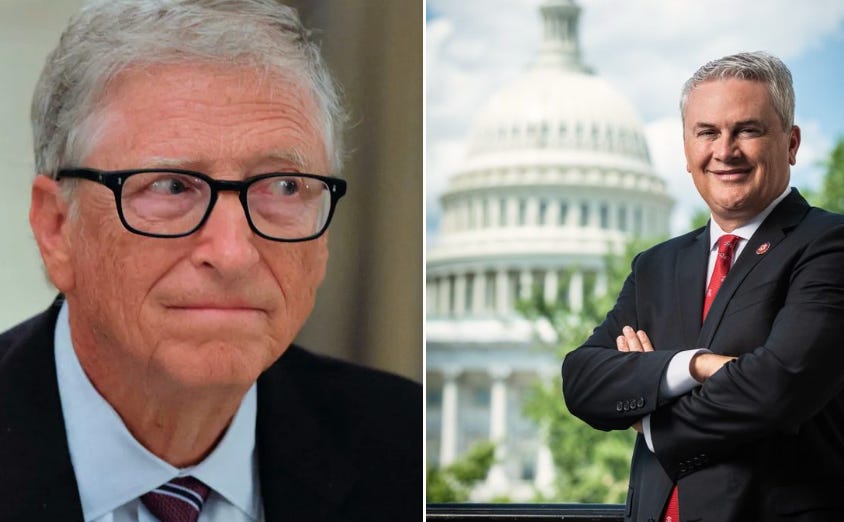
The date is set. The federal archive is public. And the man who signed a six-page legal agreement with a convicted sex offender — then thanked him for advice to minimize documents — will face structured questioning for the first time.
Closing
The Foundation’s February 2026 denial says two things: no payments, no employment. Both are likely true. Neither answers the question the federal record raises.
The April 21 review announcement defines its scope to exclude the governance architecture that existed during the period of documented Epstein engagement.
Asked by the Daily Beast on April 22, 2026 whether it retains confidence in Bill Gates as its chair, a Foundation spokesperson declined to answer the question and redirected to a talking point that “neither announcement was new.”14
These three signals — narrow denial, narrow review scope, and a non-answer on continued confidence in the chair — describe an institution navigating a documented public record by keeping as many questions technically unanswered as possible.
The record is not a matter of interpretation. It is a matter of reading.
“They never created a fund together” is the line the press has repeated. The Foundation has not said it. The documents do not support it. On June 10, under oath, the question will no longer be whether the sentence is true. The question will be what question the sentence was designed to defeat.
Every federal document cited in this post is publicly accessible at justice.gov/epstein. The Project Molecule deck is Bates-stamped EFTA01301114 through EFTA01301128. Readers who want to examine any specific claim are invited to retrieve the document from the federal archive directly: https://www.justice.gov/epstein/search


Footnotes
Reuters, “Gates Foundation Says It Has Opened External Review of Epstein Ties,” April 21, 2026 (3:45 PM EDT), quoting the Foundation’s February 2026 statement. ↩
Alex Halverson and Paige Cornwell, “Gates Foundation Launched Outside Review of Bill Gates’ Epstein Ties,” Seattle Times, April 21, 2026. ↩
Juliet Pullis to Jeffrey Epstein, February 17–18, 2011, EFTA00904739–40. ↩
Jeffrey Epstein to Mary Erdoes, August 17, 2011, EFTA01256269. ↩
Jeffrey Epstein to Jes Staley and Mary Erdoes, August 28, 2011, EFTA01301108. ↩
J.P. Morgan, “Project Molecule — Client Draft,” Version 13, August 31, 2011, EFTA01301114–28 (also bearing SDNY Government production Bates stamps). ↩
Ibid., page 6 committee structure (EFTA01301120); page 9 budget allocation (EFTA01301123). ↩
Halverson and Cornwell, Seattle Times, April 21, 2026; Brittany Miller, “Gates Foundation Plans to Cut Up to 500 Jobs While Undergoing Review of Jeffrey Epstein Ties,” Fox News Digital, April 21, 2026; Emily Glazer, “Gates Foundation to Cut 20% of Staff, Review Epstein Ties,” Wall Street Journal, April 21, 2026. ↩
Sayer Ji, “Inside Project Molecule — How JPMorgan and the Gates Foundation Turned Biology into Investable Infrastructure,” Sayer Ji’s Substack, February 3, 2026. ↩
Fortune, March 2026 investigation into Epstein’s network of intermediaries in Gates’s inner circle, as cited in Fortune, “The Gates Foundation Is Investigating Its Ties to Epstein—Just Weeks Before Bill Gates Faces Congress,” April 23, 2026. ↩
Gates Foundation, “Statement by the Gates Foundation,” press release, April 21, 2026, https://www.gatesfoundation.org/ideas/media-center/press-releases/2026/04/external-review. ↩
James Pollard, “The Gates Foundation Is Reviewing Its Epstein Ties as Released Emails Raise Questions for Funders,” Associated Press, April 23, 2026. ↩
House Oversight and Government Reform Committee schedule; NPR, CNBC, Washington Post, and MS NOW reporting of April 7–9, 2026, citing sources familiar with scheduling. ↩
Tom Latchem, “Bill Gates Hit With Foundation Probe Into His Epstein Ties,” Daily Beast, April 22, 2026. ↩
No hay comentarios:
Publicar un comentario