Died Suddenly News
Nov 10, 2025
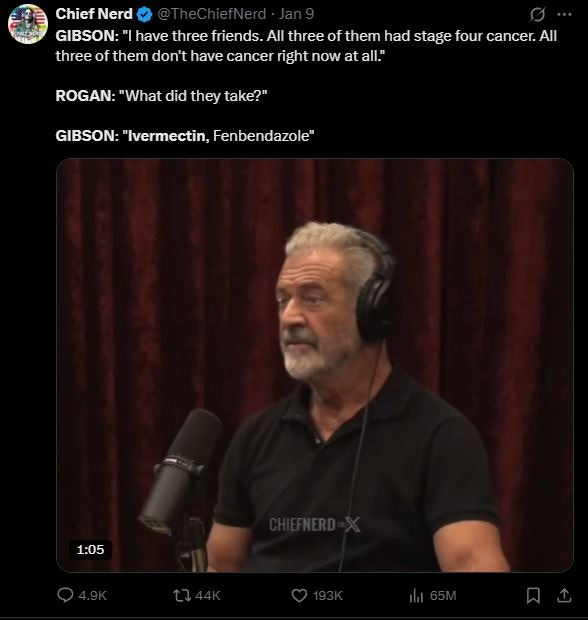
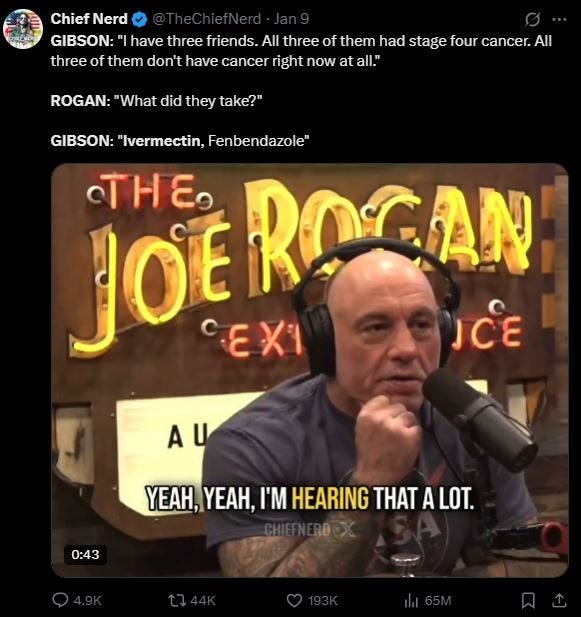
In a recent viral podcast, Actor Mel Gibson told Joe Rogan that three people close to him reportedly overcame terminal cancer using extremely cheap medications normally used for parasitic infections.
The discussion aired to Joe Rogan’s massive audience, immediately generating a surge of clips across social media platforms like X and Instagram.
Thousands of viewers and followers began searching for information on these drugs in the context of cancer treatment, asking questions about dosage, efficacy, and ongoing studies.
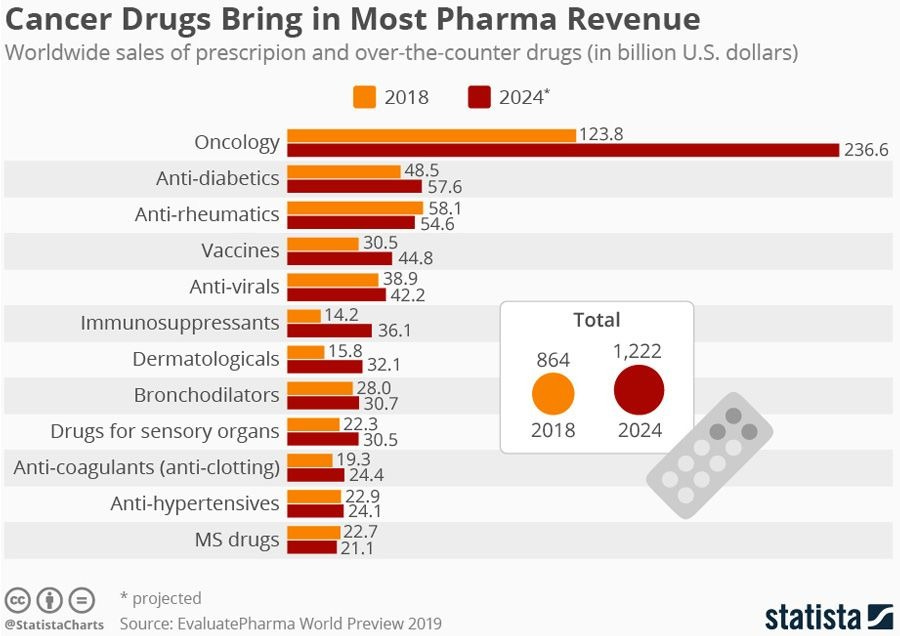
A recent report in a leading oncology journal revealed that cancer drug revenues skyrocketed by 70% between 2010 and 2019, even as sales of non-cancer drugs fell sharply.
Yet despite soaring prices, patient survival saw little improvement—underscoring a system driven less by health progress than by profit margins.
Cancer therapies remain the top moneymakers for pharmaceutical giants, aside from the recent COVID vaccines which generated nearly twenty times more revenue in a single year than OxyContin earned over two decades.
Now stepping into the picture are the challengers: Ivermectin and Mebendazole.
These two long-established, off-patent anti-parasitic drugs—one typically prescribed for head lice, the other for pinworms—are gaining attention for their potential anti-cancer benefits.
Multiple preclinical studies, along with anecdotal evidence, indicate they may be effective against a broad spectrum of cancers, including some of the most aggressive types. Unlike chemotherapy or immunotherapy, each dose costs only a few dollars.
Scott Adams, the creator of the once-widely syndicated comic strip “Dilbert”, has made a public plea for help after revealing that his prostate cancer has metastasized and he is running out of time. In a social-media post, Adams wrote that his health care provider had approved him for the radioligand therapy Pluvicto, but that the scheduled treatment had been delayed. He then asked Donald Trump to intervene, saying that the delay was costing him precious time and that he needed a “fighting chance to stick around on this planet a little bit longer.”
Within hours, Trump responded on his platform with “On it!”, and the administration’s health arm confirmed that he would look into the matter. Meanwhile, Adams’ provider, Kaiser Permanente of Northern California, stated that his oncology team is working with him and that treatment is already underway for patients with Pluvicto — noting that they have managed more than 150 such cases.
After revealing his cancer diagnosis, Scott Adams said he experimented with ivermectin and fenbendazole “with my doctor’s blessing,” though his physician made clear he did not expect them to help. Adams explained that he tried the regimen for an extremely short period while monitoring his prostate-specific antigen (PSA) levels but ultimately said he saw no improvement.

Largest Cancer Patient Publication Since 2021 Proves Link Between Cancer Recovery and Ivermectin
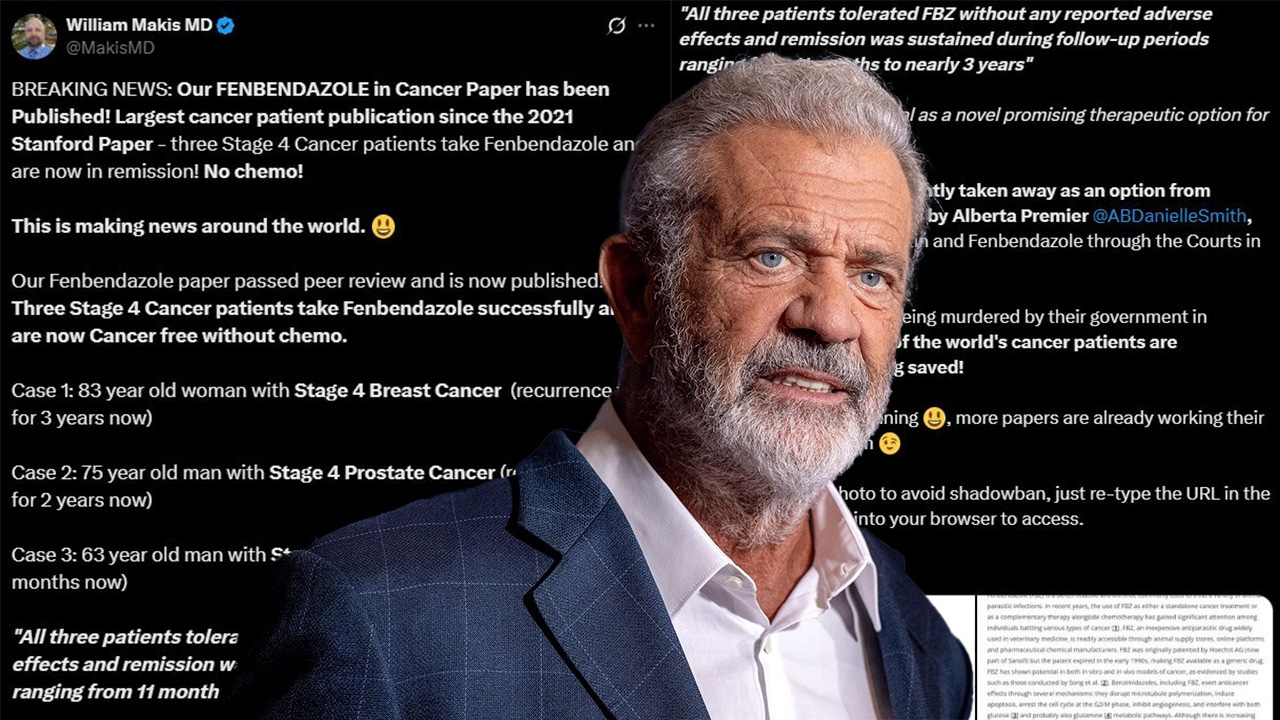
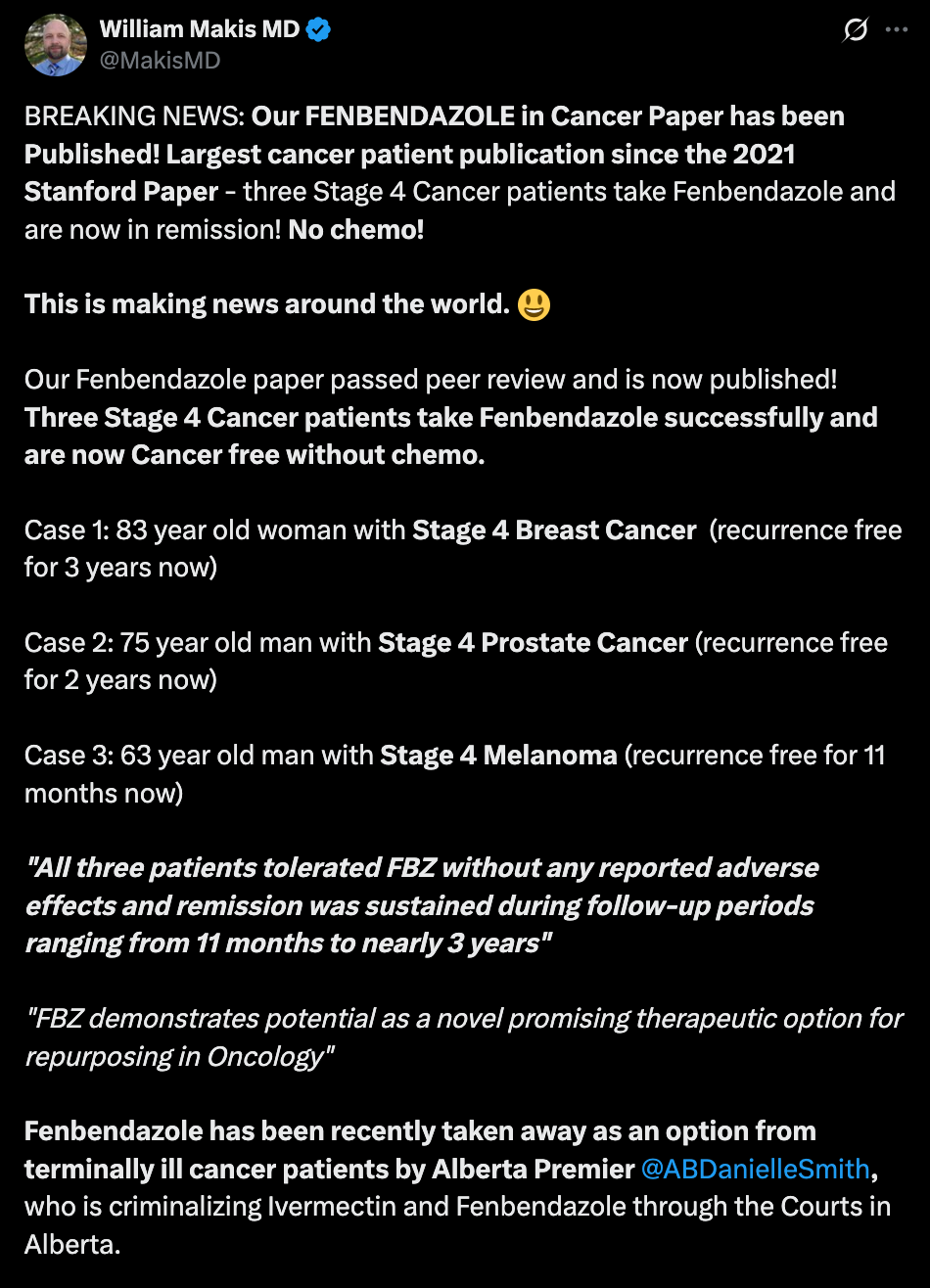
In a recent X post, Canadian radiologist and oncologist Dr. William Makis announced the publication of his case series study on fenbendazole (FBZ), a veterinary antiparasitic drug, as a potential anticancer agent.
The post, which garnered over 1.3 million views, highlights three stage 4 cancer patients who achieved remission after self-administering FBZ without chemotherapy. Makis describes it as the largest such publication since a 2021 Stanford paper, tagging podcaster Joe Rogan and criticizing Alberta Premier Danielle Smith for allegedly restricting access to FBZ and ivermectin through legal actions.
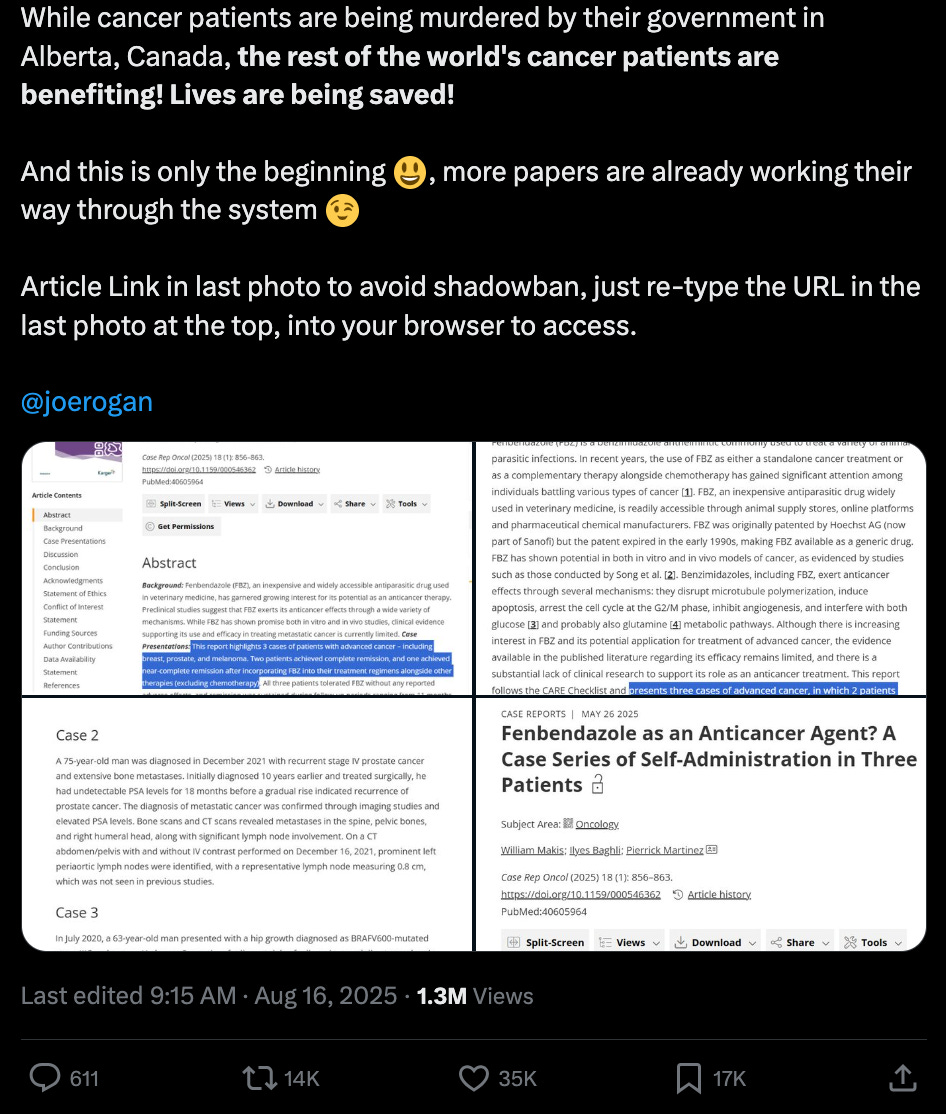
He shares screenshots of the abstract and urges readers to access the full article via a provided link, hinting at more upcoming research.
The study, published in Case Reports in Oncology (May 26, 2025), details FBZ’s preclinical anticancer mechanisms, including microtubule disruption, apoptosis induction, and metabolic interference. It reports on three self-treated patients:
An 83-year-old woman with recurrent stage 4 breast cancer (diagnosed 2021, history since 2009) took 222 mg/day FBZ for 8 months alongside fulvestrant, targeted radiation, and vitamins. PET scans showed complete remission by April 2022, with normalized CA 27.29 markers; she remains recurrence-free after nearly 3 years.
A 75-year-old man with stage 4 prostate cancer and bone metastases used 222–444 mg/day FBZ since December 2021, combined with androgen deprivation therapy and supplements like vitamin D, melatonin, and curcumin. Imaging confirmed near-complete remission, with undetectable PSA levels for over 2 years.
A 63-year-old man with stage 4 melanoma (BRAF-mutated, recurrent) achieved remission after 11 months on FBZ, though full details emphasize tolerance without adverse effects.
No side effects were reported, and remissions sustained 11 months to 3 years. Authors Makis (Cross Cancer Institute, Edmonton), Ilyes Baghli, and Pierrick Martinez declare no conflicts; funding was self-supported.
While promising for repurposed drugs, critics note the study’s limitations: small sample, no controls, and self-administration. Experts emphasize lacking human clinical trials, potential risks like inflammation spikes leading to recurrence, and unproven efficacy against cancer. Larger trials are urged to validate FBZ’s role amid rising interest in alternatives like ivermectin.
No hay comentarios:
Publicar un comentario