Sayer Ji
Feb 14, 2026
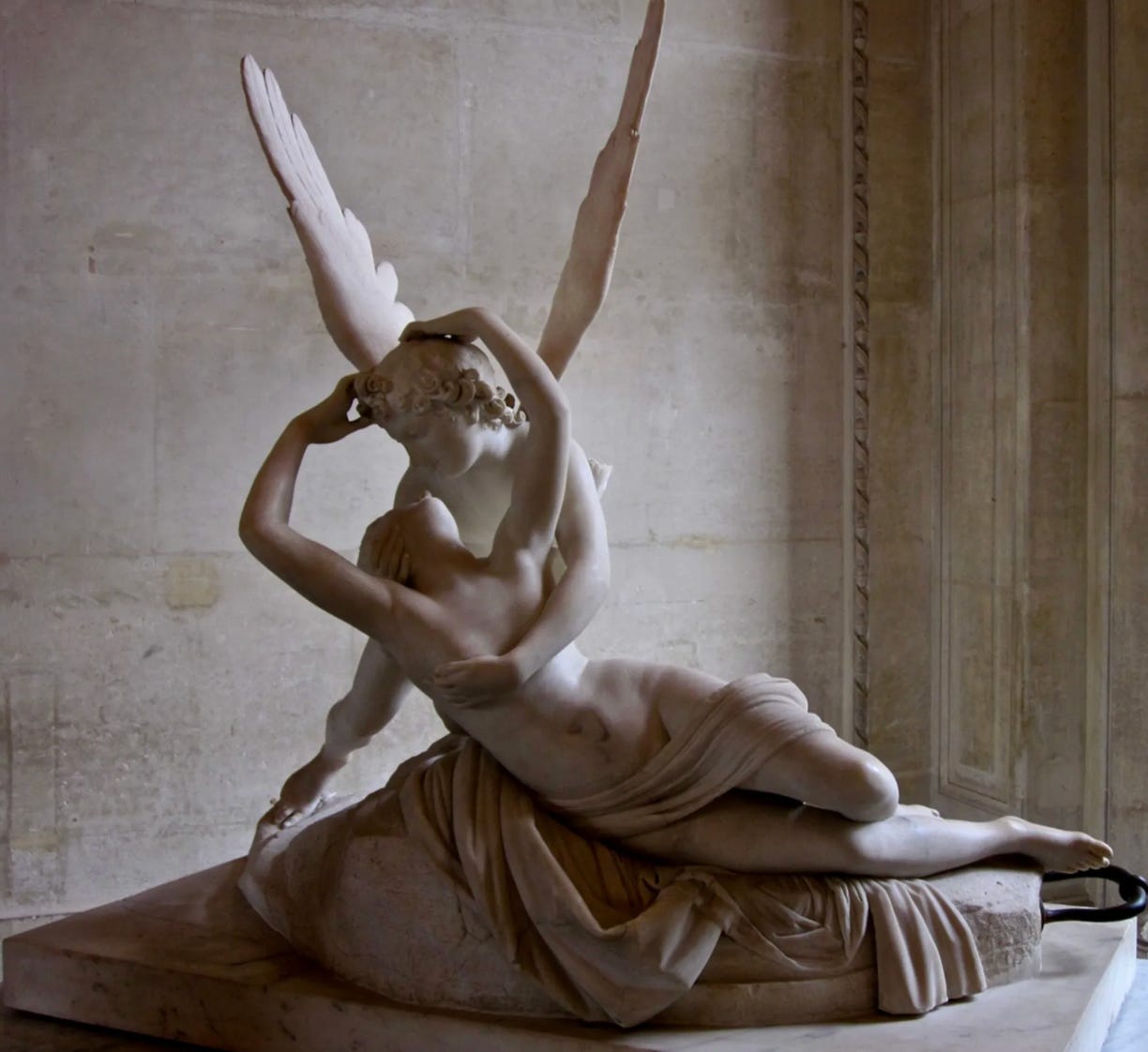
Psyche Revived by Cupid’s Kiss, Antonio Canova, 1787, marble sculpture.
There is a marble sculpture by Canova that shows the moment after the soul has been to the underworld and back. Psyche has dared to look at what was hidden. She has paid for it with everything. And here is Eros, not before the ordeal but after it, folding himself around her — and she, reaching back. Love that does not precede revelation. Love that survives it.
Yesterday I was offered a slot on InfoWars. I had accepted. The town crier in me — and that is what Sayer means — said yes.
And then my voice disappeared. Sudden laryngitis — as if the body had made a decision the mind had not yet reached. But it wasn’t only my voice. The rent was forming between the messenger and the man. The one who names and the one who grieves. The town crier was ready. The human being — the mortal one, the one who bleeds — was withdrawing his participation.
The truth is, I was choosing love. Not information war — love. Not out of weakness — out of alignment. I chose to slow down, on behalf of my own heart, and yours, and my family who have watched me carry this.
It was that same instinct — already moving in me before yesterday made it undeniable — that produced The Strongest Medicine I Know, which I published two days ago, after weeks of immersing myself in the horrors of the Epstein files. And the response broke something open in me — not because of the numbers, but because of what people wrote back. Some of you wept. Some of you said it arrived at the exact moment you needed it. One reader, Jerome, asked me a question I could feel in my chest: How can we ever come back from this abyss? Ever?
I answered him in the comments. But that answer wasn’t enough. Not for him. Not for me. Because what Jerome was really asking — what so many of you are asking right now, in the wake of everything that is surfacing — is not a question about information. It is a question about whether the human heart can survive what the human mind has just been forced to see.
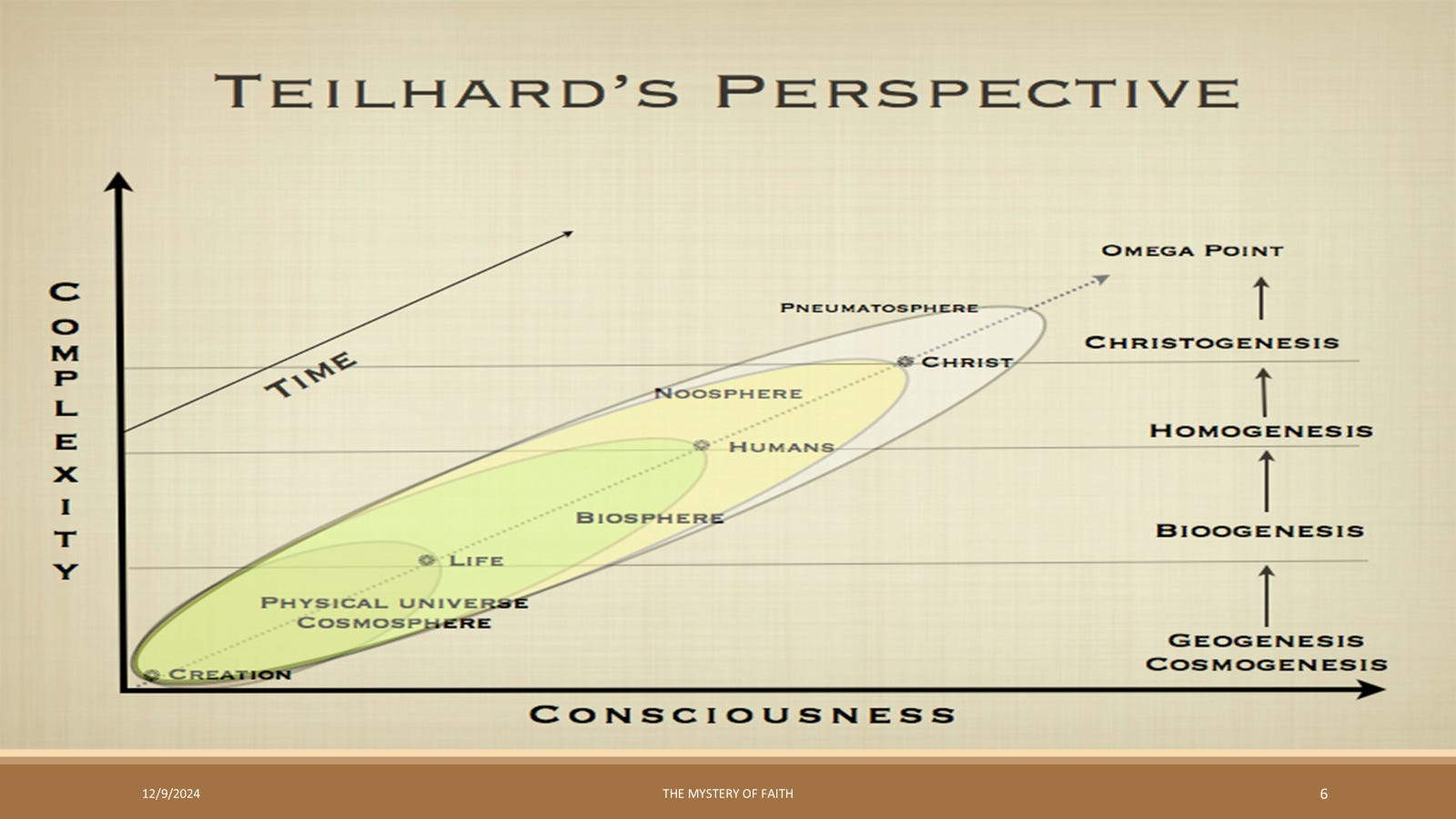
Today is Valentine’s Day. And I want to talk about love. Not the greeting-card kind. Love as the force that holds atoms in orbit. Love as the energy that drives the spiral arm of the galaxy. Love as what Teilhard de Chardin meant when he said that the universe is not a mechanism running down — it is a communion gathering itself together. Love as the only force capable of answering what we are facing right now — not by softening it, not by looking away, but by being more real than the darkness it confronts.
This is not sentimentality. This is biophysics — though the truth is that what we are calling new, the ancients simply called real. And it is what I want to share with you today, because it is also what I need most to remember and embody myself, at a moment when the sheer velocity of what is being revealed threatens to outrun the heart's capacity to hold it.
✦
There is a question I have been living inside for a long time now, and I want to offer it to you plainly:
In the moment before we die, are we born?
I don’t mean this as mystical flourish. I mean it as cosmology. I mean it as neurochemistry. Dimethyltryptamine — DMT — surges in the human body at two moments above all others: birth and death. Outside of plant medicine and certain yogic and prayer techniques, these are the peaks. The molecule most associated with the dissolution of ordinary boundaries floods the system at the precise moments we enter and exit embodied life — as if the body itself knows that arriving and departing are the same gesture, seen from different sides of the fold.
If the body encodes that knowledge at the molecular level, what else does it know?
The framework I have been developing — what I’ve called elsewhere a new physics of astrology — does not treat planetary bodies as externally related objects exerting force on passive matter. It understands them as nodes in an interference medium. An ether, if you will. A living field of which we are also formed, each and every moment, through which the miracle of coherence unfolds with infinite coordination — at all scales, from the subatomic to the galactic, unimaginably vast.
And yet held together in this simple fold: a human conscious embodiment. A simple universe. One fold. One voice.
The words themselves remember what we have forgotten. Simplex: one fold — from the Latin sim, one, and plicare, to fold. Universum: one turning — all of it, gathered into a single arc. But hear the other resonance — uni-verse, one voice, one song. The language knew before we did. What we call a person is the universe folded once into awareness. What we call consciousness is the fold noticing itself.
Merleau-Ponty, in the unfinished ontology he left behind — The Visible and the Invisible, published after his death at fifty-three — called this the Flesh: not my flesh or your flesh, but the elemental tissue of being itself, the single fabric that folds into seer and seen, toucher and touched. He understood that the deepest question was not how a subject encounters an object, but how one continuous field becomes two sides of the same experience. The fold. The chiasm. The place where the world touches itself and becomes aware.
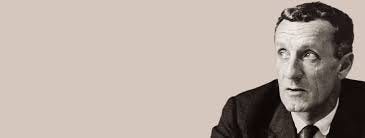
I pored over his work as an undergraduate. I intended to become a professor of philosophy — to complete the vision he left unfinished at his desk. I am fifty-three now. And I did not become a professor. My path folded differently — into the Everglades, working with troubled kids, where the Flesh was not a concept but a boy’s fist against a wall, a girl’s silence that held more ontology than any seminar I’d attended.
I know how this sounds. I assure you, it is the opposite of abstraction. It is how one actually lives — with feet on earth, heart cracked open, mind completely receptive. Not grasping. Receiving. This is how we must walk from here on out.
And we can. Even now. Even those of you whose hearts have been rent open by what you’ve learned. Especially you.
✦
Childhood’s End
What is happening right now is the end of a certain kind of innocence. Not the innocence of children — that innocence is sacred and inviolable, and the defense of it is what brought many of us to this fight in the first place. I mean the innocence of a civilization that believed its institutions were what they claimed to be. The innocence of trusting that the architecture of governance, of medicine, of justice, was fundamentally oriented toward the common good.
That innocence is over. And its ending is not gentle.
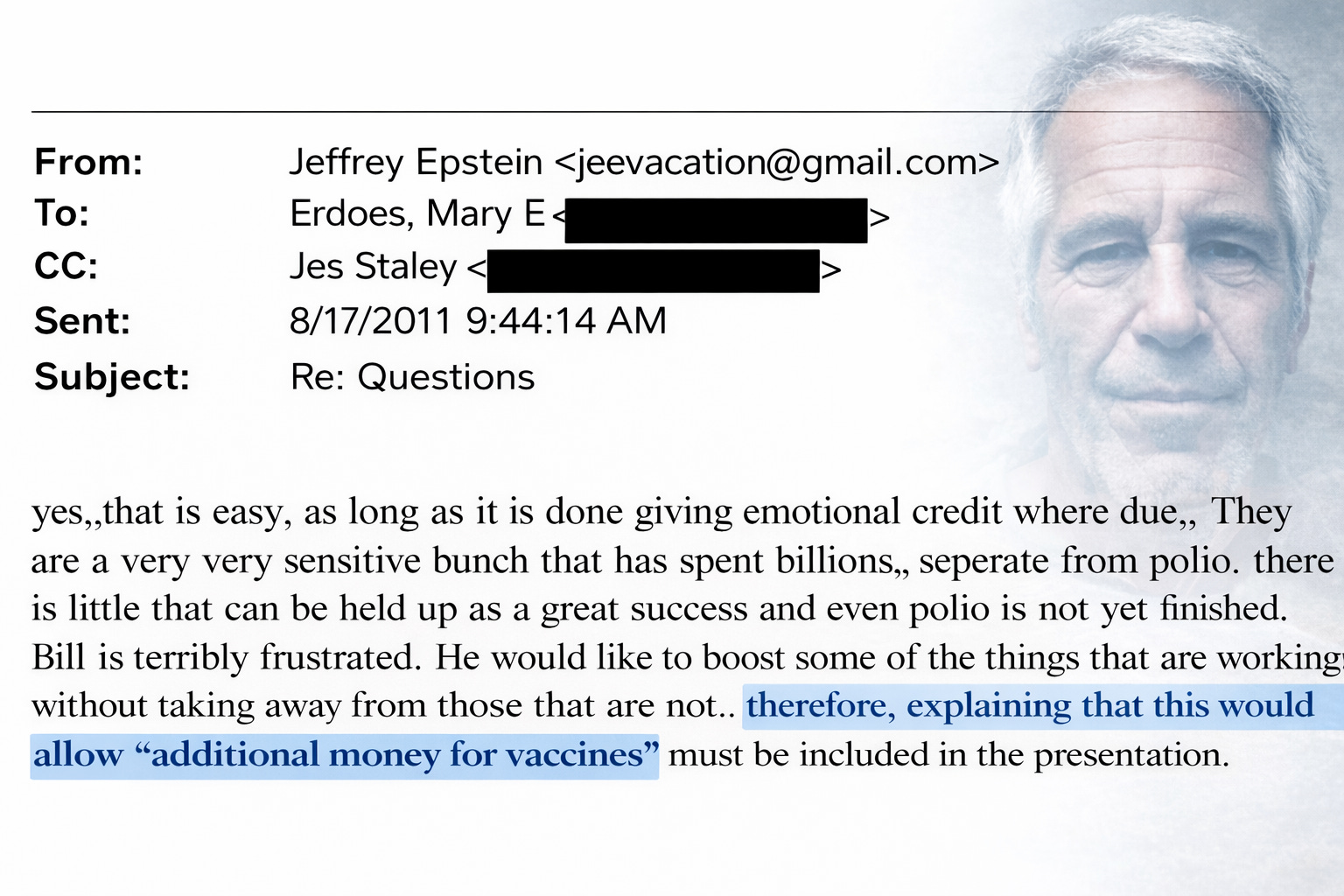
Tranche upon tranche of state-validated secrets, now declassified. Names we were told not to speak. Networks we were told did not exist. A scale of predation and complicity that makes the mind recoil because the mind was not built to hold it. And behind it all, the sickening recognition that the very institutions charged with protecting the most vulnerable were, in many cases, complicit in their destruction.
I know what this does to the body. I have felt it in mine. The nausea. The sleeplessness. The way you pick up your phone in the morning and some new revelation lands in your chest like a physical blow. Jerome described it perfectly: something feels broken inside.
And here is what I want to say to everyone who feels that way:
If you are horrified by what you’ve seen, that horror is not weakness. It is evidence of what you are made of.
If you are shattered by cruelty, you are structurally aligned with life.
If you feel grief when innocence is violated, you are aligned with coherence — with the deep grain of reality itself.
The capacity to be broken by this is not the problem. It is the signal. It is the proof that your instrument is calibrated correctly.
In a world that has organized itself around numbness — that has medicated, distracted, surveilled, and shamed the feeling out of us — the most courageous act is to choose to feel.
The breaking is not the end. It is the beginning.
✦
Onto-Ethics
In my previous essay, I argued that beauty is not decorative but structural — that it is how coherence becomes visible. But we must now confront a harder claim:
The depth of your horror is the measure of your beauty.
This is the lotus principle. The lotus does not bloom despite the mud — it blooms through it, because of it. The roots require the dark. The filth is not an obstacle to the flowering; it is the medium from which the flowering draws its life. And the deeper the mud, the taller the stem, the more luminous the blossom.
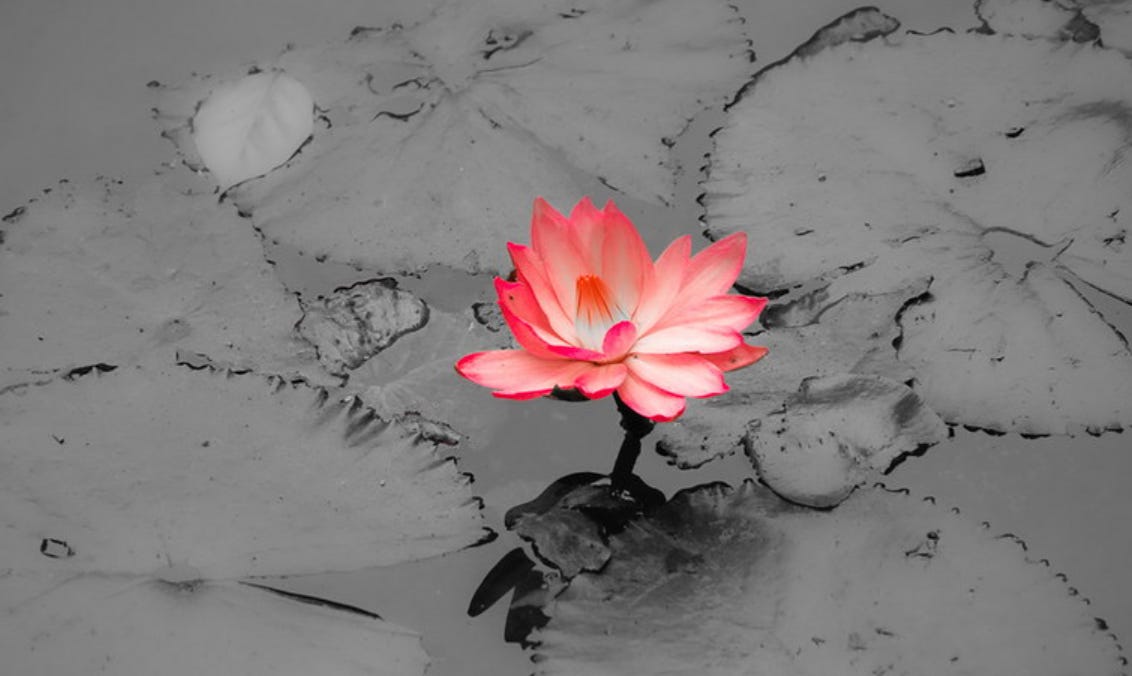
If you can perceive the atrocious — if the wretched, the depraved, the desecrated make you recoil to your core — it is because your soul is calibrated to an equal and opposite register. The capacity to see the horrific is the exact same instrument as the capacity to see the glorious. The same eye. The same nerve. The same Flesh. You do not perceive darkness because you are broken. You perceive it because you are tuned to a frequency where beauty is as real as gravity — and anything that violates it sets off every alarm you have.
The pure, the untouchable, the sacred — these are not naïve ideals you will return to once the darkness passes. They are what is reading the darkness right now, through you.
But we must now confront a harder question: What do you do with that perception when the world reveals its fractures?
This is where I want to introduce a framework I have been living inside for some time. I call it onto-ethics.
Ontology asks: What is real?
Ethics asks: How shall we live?
Onto-ethics asks: If reality has structure — if it tends toward coherence, generativity, and integration — then what forms of action align with that structure, and what forms violate it?
This is the question after the veil lifts. Not: What should we believe? Not: Which side are we on? But: What does alignment with the structure of reality actually look like — in a body, in a relationship, in a civilization?
Because if reality does have structure — and the evidence from physics, from biology, from sacred geometry across every tradition on Earth suggests that it does — then ethics is not a matter of opinion. It is a matter of alignment. Actions that increase coherence, that protect generativity, that distribute energy toward greater complexity and integration, are aligned. Actions that require secrecy to function, that sacrifice the vulnerable for the powerful, that concentrate energy in ways that reduce systemic resilience — these are not merely immoral. They are ontologically misaligned. They work against the grain of what is. And systems built on such misalignment do not need to be punished. They collapse. Because reality does not sustain what contradicts its own structure.
Onto-ethics is the discipline of living in alignment with what is.
In the Buddhist tradition, the awakened one is called Tathagata — the one who perceives tathata, suchness, things exactly as they are. Not as we wish them to be. Not as ideology insists they must be. As they are. And here is the hidden etymology of healing itself: to heal, to make whole, to make holy — these are the same word at root. To perceive what is truly, fully, without flinching, is not merely to know. It is to be made well. What is — at depth — is well.
✦
The Living Glyph of the Eagle
We are no longer in a terrestrial informational environment. The nervous system evolved for village-scale exposure. We now process planetary-scale disclosure. Some drown in this medium — overwhelmed by conspiratorial excess, dissociation from embodied life. Others retreat to denial. Both are maladaptive. The whale did not survive the transition from land to water by condemning land. It survived by becoming hydrodynamic. We will not survive this flood of revelation by becoming what we uncover.

There is a story — ancient, mythic, carried across cultures from Isaiah to the First Nations of the Pacific Northwest — about the eagle’s rebirth. In this story, the eagle reaches a point where its own form constrains it. Its beak has curved so far it can no longer feed. Its feathers have grown so heavy it can barely fly. The very structures that once enabled its sovereignty are now destroying it.
And so the eagle does something terrible and necessary. It breaks its own beak against rock. It pulls its own feathers out. It enters a season of radical vulnerability — flightless, exposed, unable to hunt — in order to be remade. The constraints of its three-dimensional form would have killed it otherwise.
This is not ornithology. This is glyph. This is the Phoenix process encoded in the body of the most sovereign creature in the Western sky.
The eagle ascends to heights where the air thins and perspective costs everything. It risks the giddiness that comes from seeing too far, too clearly, for too long. But it goes anyway. Because the truth is only visible from altitude.
And here we are.
With the internet as our wingspan. With instant communication as our thermals. With revelation after revelation carrying us higher than the human nervous system was designed to operate. We are at eagle altitude now. The view is staggering. The oxygen is thin. And the old form — the one that could not hold this much truth — is breaking apart beneath us.
Onto-ethics says: this is not collapse. This is reconfiguration. The eagle does not destroy itself out of despair. It destroys the form that can no longer serve its life. It aligns with a pattern deeper than its current structure — and it submits to the vulnerability that transformation requires.
This is childhood’s end as the prelude to something the old world was never designed to contain.
✦
The Price of Sight
But reconfiguration does not come without cost. Ask the ones who saw first. Ask the ones who spoke first.
Systems that require secrecy to function are ontologically misaligned. This is not opinion. It is structural analysis. Predation that depends on concealment violates transparency — a core principle of living systems. The sacrifice of the vulnerable for the powerful violates generativity — the biological bias toward protecting offspring. Corruption concentrates energy in ways that reduce systemic resilience. In thermodynamic terms, it increases entropy. In evolutionary terms, it reduces long-term viability.
Onto-ethics does not require supernatural framing. It requires structural clarity.
And the people who provided that clarity — who made the hidden visible — paid for it with their bodies.
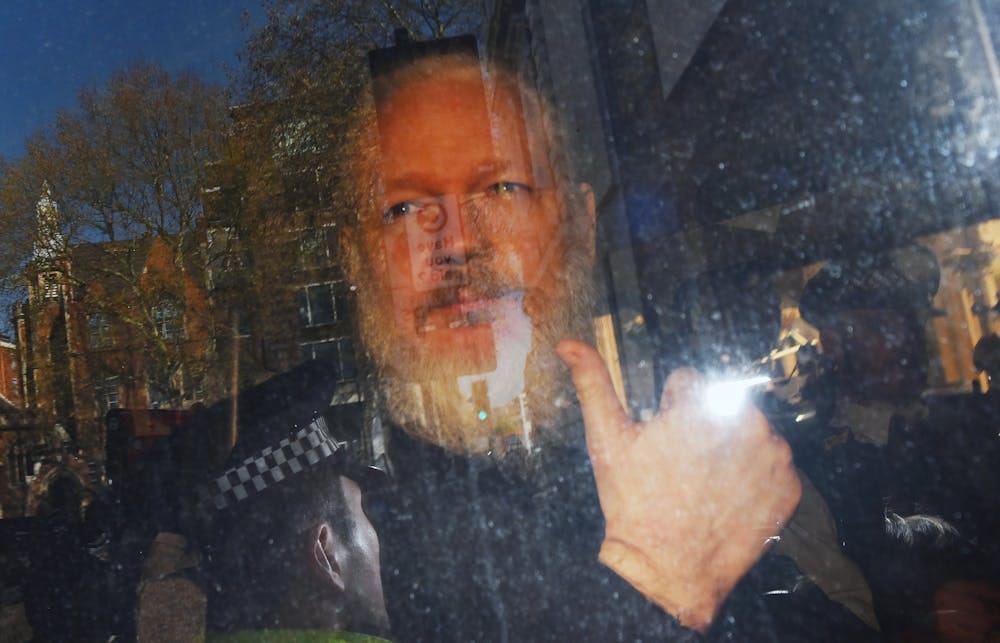
Think of Julian Assange — what was done to him for the crime of making state secrets legible to the people those secrets were kept from. The Obama-era Attorney General Eric Holder pursued a federal investigation against WikiLeaks while, across the Atlantic, then-Director of Public Prosecutions Keir Starmer’s Crown Prosecution Service worked to keep the extradition framework alive through Swedish proceedings. The machinery of two nations, brought to bear on a single publisher whose offense was transparency. Years in an embassy. Years in a maximum-security prison. His health broken. His family shattered. For journalism.
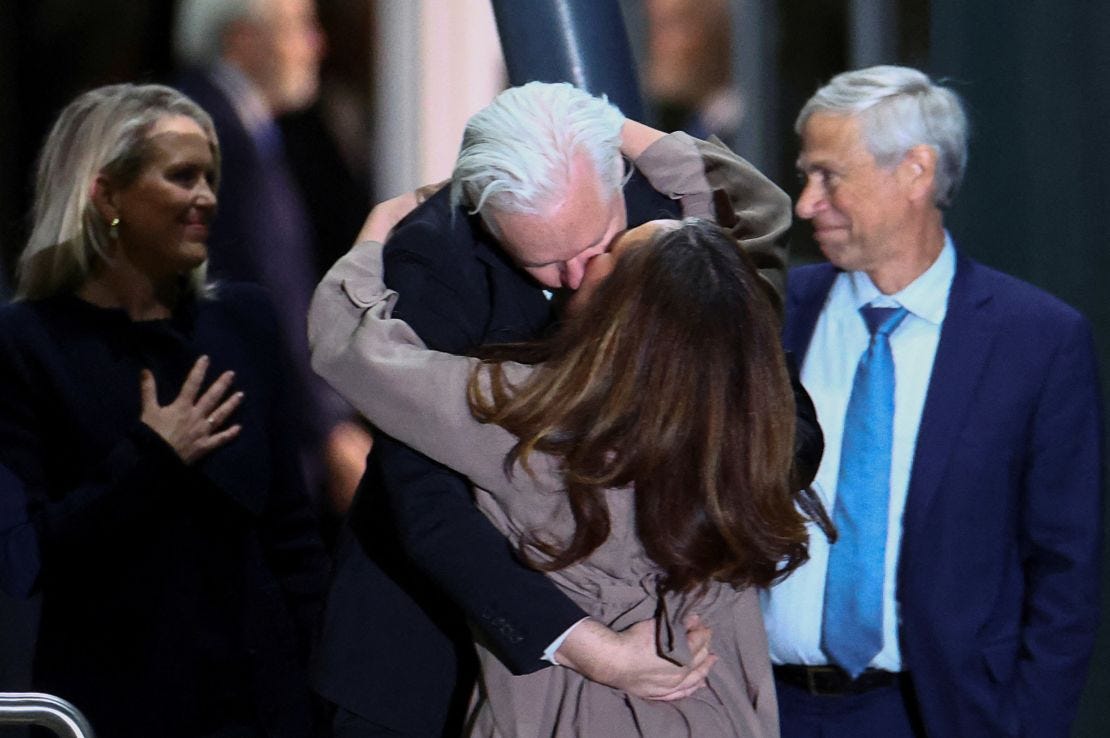
WikiLeaks founder Julian Assange kisses his wife, Stella Assange, as he arrives in Canberra, Australia, June 26, 2024
Only months ago, I narrowly averted a similar fate when an arrest application was made against me in the UK for my protected speech. I know the machinery. I have felt it turn toward me.
And Assange was only the most visible case. The architecture of suppression runs far deeper.
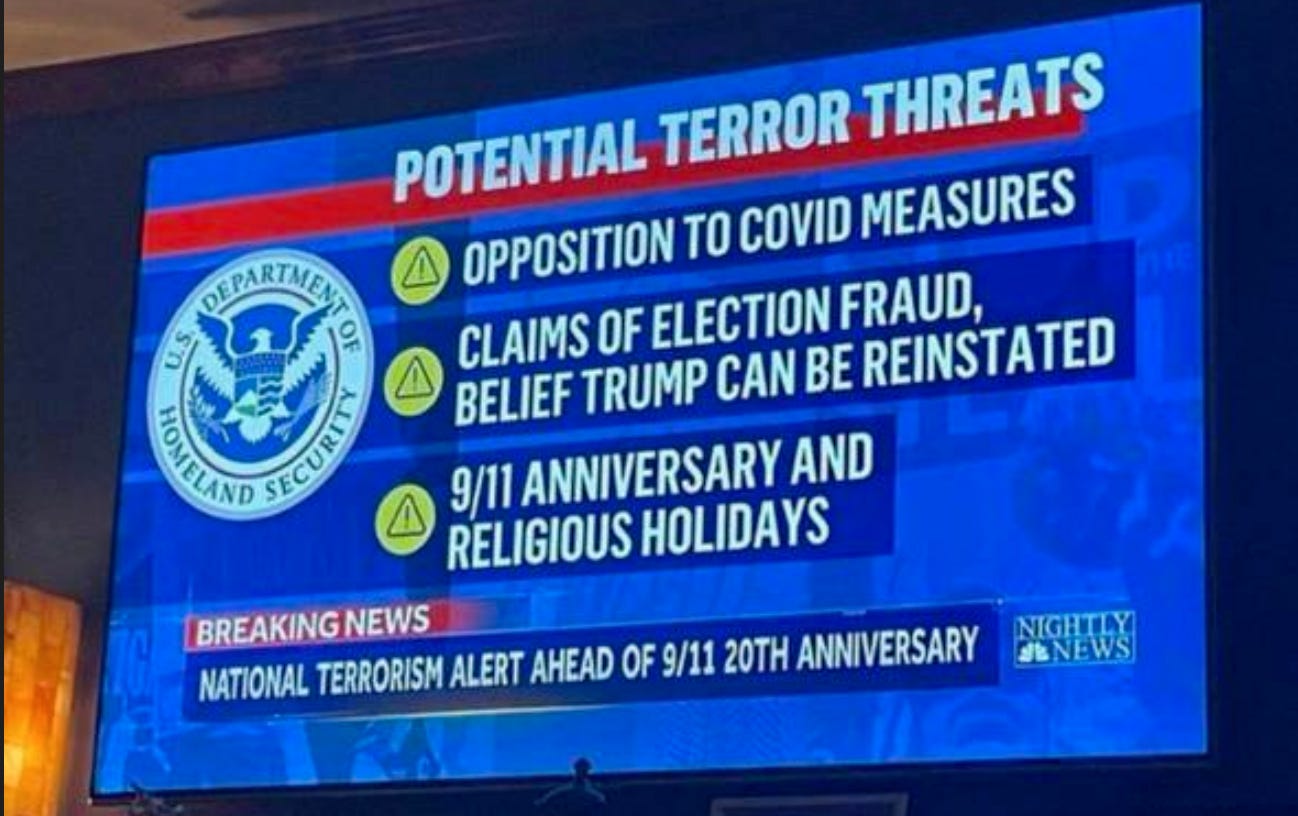
In recent years, we have watched in real time as the act of speaking truth to power was reclassified as a threat to it. Those who questioned the right of the state to mandate what you breathe through, or to compel participation in experimental transgenic gene therapies, were not met with debate. They were met with the machinery of domestic surveillance. DHS framework expanded to include dissent as a species of terrorism. Medical professionals who raised safety concerns were deplatformed, delicensed, and destroyed. Parents who objected were labeled threats to public health.
In recent years, speaking truth to power was reclassified as a threat to it. Those
We chose to stand anyway. We chose children over compliance. And the premise we stood on was not conspiracy but constitutional bedrock: the rights of the individual are not subordinate to the calculations of the state. No medical model, however collectively framed, overrides that.
✦
The Sacred Geometry of What Comes Next
And here is where the love comes in. Here is where Valentine’s Day earns its place in this essay. Because onto-ethics does not end with diagnosis. It moves toward alignment. And alignment, at its deepest, is love.
What happens next is not more war. What happens next is not revenge, or retribution, or the mirror image of the control we are dismantling. What happens next is the most radical act available to the human species:
Sovereign individuals, choosing one another freely.
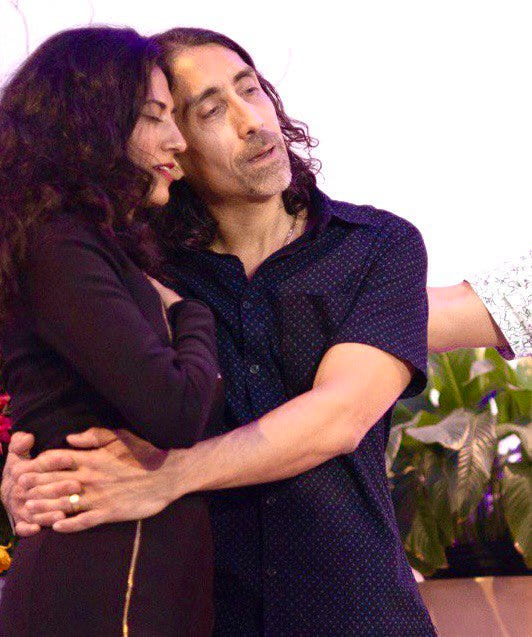
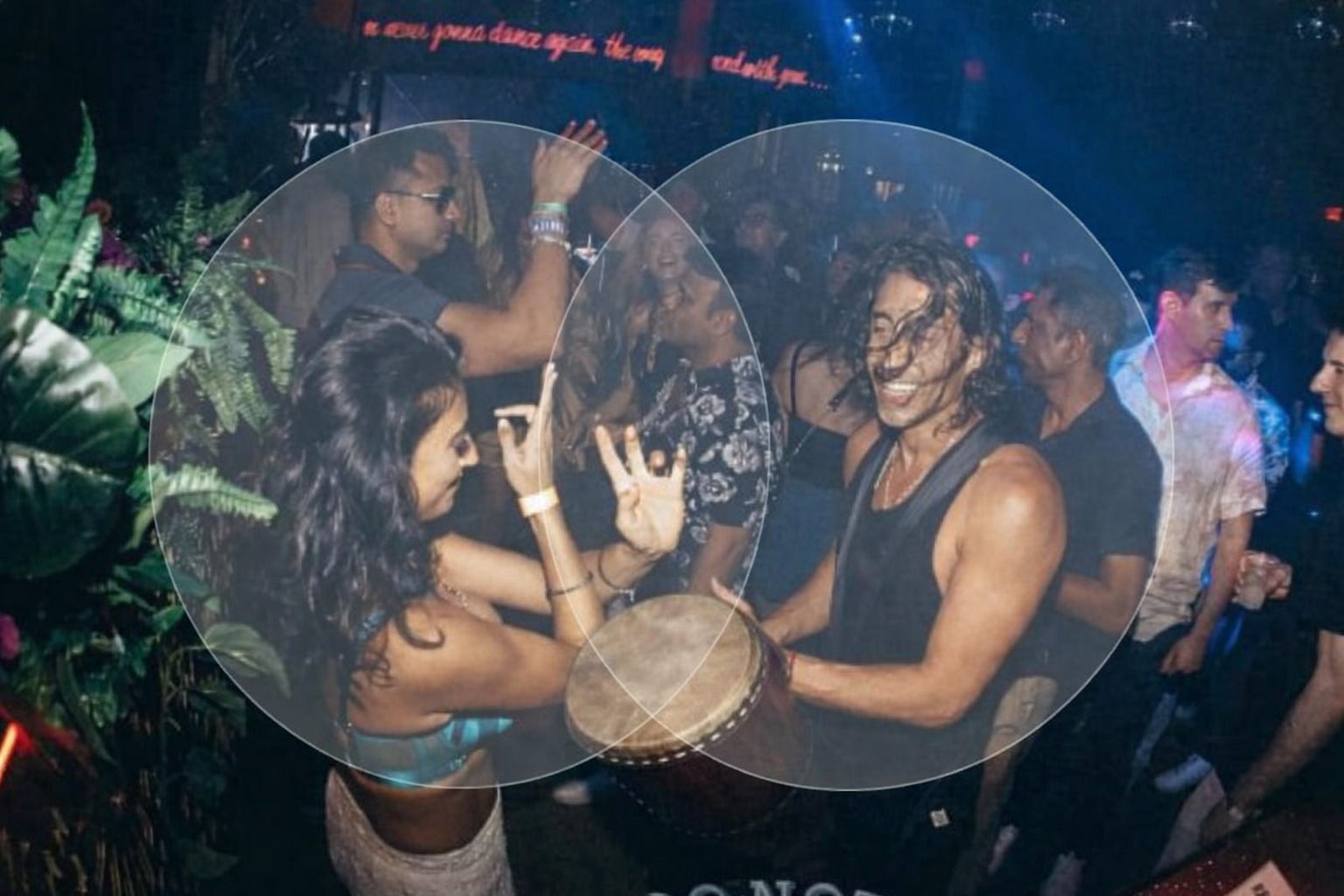
This is the key. As all sovereign beings come together — not through coercion, not through ideology, not through the surrender of selfhood to the collective — but through the free choice of whole persons entering into relationship with other whole persons, something geometrically precise occurs.
A Vesica Piscis forms.
The Vesica Piscis — the mandorla, the almond-shaped intersection of two circles — is one of the oldest sacred geometries known to the human species. It is the shape that appears when two sovereign wholes overlap without either one losing its center. It is the generative space between. The womb of creation in sacred art. The shape in which Christ is depicted in the icons — not in one circle or the other, but in the space between, where two realities meet and something new is born.
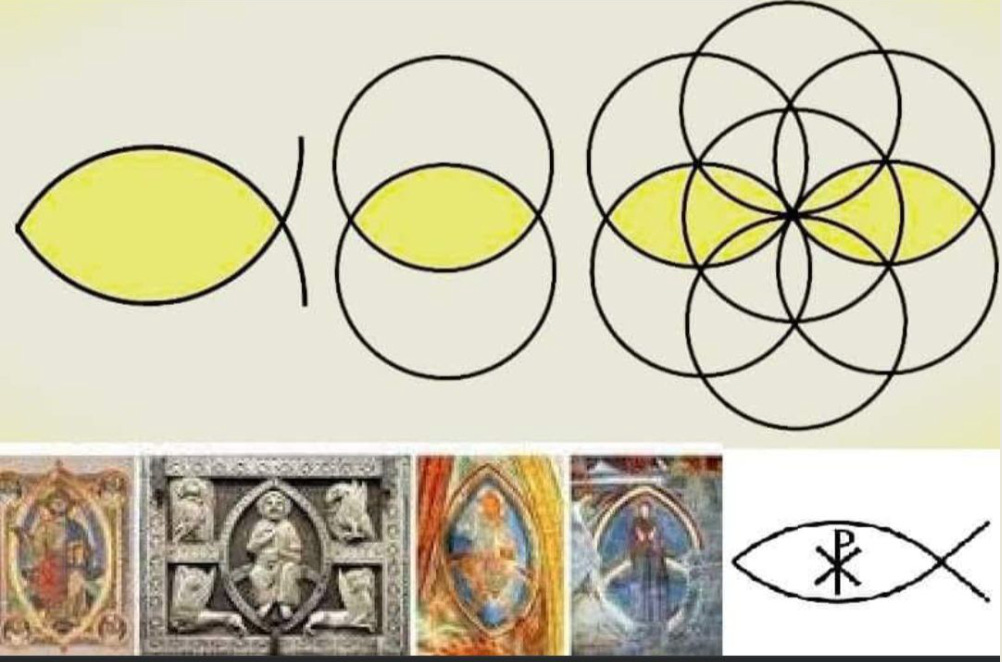
This is not metaphor. This is relational onto-ethics made visible.
When two sovereign individuals meet in truth — when they refuse to collapse into the other, refuse to dominate, refuse to merge into an undifferentiated mass — the field between them generates something that neither could produce alone. A third space. A living architecture. And when many such pairs connect, the Vesica multiplies into a lattice — the Flower of Life, the seed pattern of every sacred geometry tradition on Earth.
This is the latticework of the new earth. Not imposed from above by any government, institution, or ideology. Grown from below, from the sacred geometry of free relationship between sovereign beings. A jurisdiction that doesn’t merely supersede all others — it is the legitimizing substrate for them all. Because a republic of sovereign persons is the only form of governance that does not require the sacrifice of the individual for the benefit of the whole. It is the only form that can hold what we are becoming.
I want to be precise: this is not spiritual bypass. Peace embodied in a single sovereign person moves outward — into relationship, into the Vesica, into community, into culture, into governance. From the inside out, one sovereign node at a time. And the force that holds the geometry together is love — not sentiment, but love as Teilhard de Chardin understood it: the radial energy of the universe, drawing all consciousness toward greater coherence, greater union without loss of individuality.
✦
Christogenesis
Teilhard called the endpoint of this process the Omega Point — the moment toward which all of evolution converges. Not an impersonal abstraction, but a living center of cosmic love drawing everything into itself. He called this process Christogenesis: the universe becoming the body of Christ, not through dogma but through the actual evolutionary movement of matter toward spirit, of complexity toward consciousness, of isolation toward communion.
This is not theology imposed on science. This is what Teilhard saw in the science — a paleontologist reading the fossil record and recognizing in it the same pattern that Gaudí recognized in the sequoia: everything tends toward a greater order. Greater beauty. Greater love. Greater joy.
That telos — that directional pull — is as real as the human heart. It is what drives the heart. It is what the heart is: a resonant organ tuned to the frequency of a universe that is not running down but gathering itself up. And after the long travail — after the exposure, the disillusionment, the breaking of every false structure — it is what returns the heart to its origin.
Telos is not naïve optimism. It is structural bias — written into the fossil record, into the neurochemistry of parental care, into the fact that organisms are reinforced for the behaviors that sustain life. And onto-ethics is the discipline of aligning with it.
Gaudí said: “Originality consists of returning to the origin.”
We are returning now. Not backward. Forward, through the fire, toward the origin that was always ahead of us. Toward the love that is not behind us in some nostalgic Eden but before us — the Omega calling to the Alpha, the end that was always the beginning, the communion that every atom and every heartbeat has been straining toward since the first light.
✦
A Valentine
In Barcelona, Gaudí built a cathedral that resembles a forest. Columns branch like trees. Load distributes along curves. Light refracts into living color. The building did not invent sacred pattern. It revealed it.
You are standing in a similar threshold.
The veil has lifted. The abyss stares back. And yet the deeper structure remains intact — in you, in the geometry of your relationships, in the love that makes certain acts intolerable and certain beauty self-evident.
So here is my Valentine to you — to all of you whose hearts are broken open right now.
Merleau-Ponty had a word for this breaking open: déhiscence — the botanical term for a seed pod splitting to release what it carries. He understood that Being itself is not static. It dehisces. It breaks open, endlessly, into the ever-creative eternal moment — what he called existential eternity, not a frozen forever but the living miracle that something is rather than nothing at all, renewing itself at every instant. The abyss you are staring into is not the absence of meaning. It is the dehiscence. It is Being cracking its own husk because what is inside has outgrown the form.

The breaking is not the end. It is the Vesica forming. It is the mandorla opening. It is the space between your old self and your new self becoming a womb.
You are not falling apart. You are being reborn. Like the whale entering water. Like the eagle submitting to molt. Like the Phoenix. Like the universe itself, which has been dying and being born in every moment since the beginning — because that is what love does. It breaks the form that cannot hold the fullness of what is coming, and it makes a new one.
The children we are fighting for? They are the Omega. They are what all of this is for. Not as abstractions, not as symbols, but as living, breathing sovereign beings who deserve to inherit a world worthy of them — children in the flesh, whose bodies we refused to surrender to a medical model that calculated their sacrifice as acceptable. But not only them. There is a child within each of us — the divine child, the original innocence that precedes every wound and survives every betrayal. That innocence is not naivety. It is the soul's first alignment with what is real. And the fight to protect our children out there is inseparable from the fight to keep that inner innocence intact in here — to refuse the cynicism that would extinguish it, the despair that would bury it, the rage that would harden over it until we forget it was ever there. We protect both or we protect neither. A world built not on control, but on communion. Not on fear, but on the geometry of freely chosen love.
That world begins here. In this fold. In this body. In this simple, staggering act of opening your heart on the day the world set aside for love — and discovering that love is not soft. Love is not naive. Love is the strongest medicine I know. And it is the structure of reality itself.
Happy Valentine’s Day.
With everything I am, Sayer
No hay comentarios:
Publicar un comentario