Busca en Nuestros Archivos

Busca en Nuestro Blog

Translate / Traducir

Mostrando entradas con la etiqueta Qatar. Mostrar todas las entradas

22 julio, 2016

Ray of Hope? Finally, A #BritishNewspaper Admits #UK Are Backing #Terrorists in #Syria

tapnewswire,com
21st Century Wire says…


This appears to be the first UK mainstream media outlet to openly admit that the UK are backing terrorist extremists in Syria.

Although 21WIRE has been exposing this fact for the last 4 years, mainstream media outlets have maintained a code of silence over the US, UK, France, Saudi Arabia, Qatar and other ‘Coalition’ members who have been financing, training and arming of Islamist extremists currently running amok in Syria, Turkey, Iraq and Yemen.


The Expressarticle, filed by Charlie Peat, describes the latest savage barbaric deed done by NATO-backed “Moderate Rebels”, and admits how the US-led NATO confab is supplying weapons to these Islamist terrorist groups:

“The young [11 year old] boy is said to be a soldier for Liwaa al-Quds, a group which supports

03 abril, 2016

#China, #Cuba, #Turkey, #Qatar and…#CreditSuisse!

By Global Research News

Url of this article:

SELECTED ARTICLES:

By Stephen Lendman, April 02 2016
Sino/US relations are less than cordial. Beijing justifiably rejects Washington wanting dominion over part of the world not its own – its longstanding imperial agenda, intruding where it doesn’t belong, belligerently at its discretion. 

24 noviembre, 2015

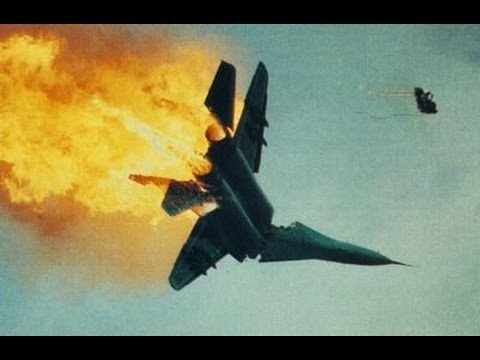
#US Supplies #Missiles to #ShootDown #RussianPlanes Attacking #ISIS in #Syria

Who is Behind the Air Defense System To “Protect ISIS” against Russian Strikes?
tapnewswire,com 

The Qatar-Ukraine Connection
The revealed information clearly indicates that the Qatar Ministry of Defense is arranging supplies of the Ukrainian air defense systems to Syria-based terrorist organizations via Bulgaria and Turkey. The US officers in Qatar have approved the deals. Taking into account that “Pechora 2D” system is able to strike the aircrafts at the heights up to 21 km, the investigation of the A321 Metrojet downfall over Sinai may receive an unexpected turn…


A word of caution: While the authenticity of the documents released by Cyber Berkut in this report are not corroborated by other sources, we have however been able to confirm that Qatar was among the countries

20 marzo, 2015

#ISIS #Terrorists: The #US Creates them, #Turkey Trains them, #Qatar Finances them


By Dr. Mohamed Elmasry


obama-isis

We used to believe it is a crime to organize, support and give political cover to terrorist organizations. Things have changed.


“If the (American) Joint Chiefs are liable to stand trial for crimes against humanity, so is the President – and of course those who fund, train, and collude with ISIS and its kind, including Turkey, Qatar, and the Muslim Brotherhood,” James Lewis wrote in the February 26, 2015 American Thinker.

Lewis added:


“… the Obama administration’s embrace of the Muslim Brotherhood, with its penetration of essentially all our government agencies, including the Department of Defense, has had an adverse impact on our policies, particularly with regard to the Middle East and the global war on terrorism…

05 septiembre, 2014

Who Created ISIS?

The Same People Who Created Al Qaeda. US.

It seems so obvious.
They're well armed. They're well trained. They're well commanded.
And they have fantastic media skills.
Where did they get this stuff from?
Hanging out in the desert and humping camels?
Did it fall from the sky?
Did they read how to do it on the Internet?
Most people have trouble organizing a bake sale.

Fact of life: You do not see this kind of operation without sophisticated support.

Turkey, Saudi Arabia and Qatar - US allies who in turn are funded, armed and trained by the US. -

US CREATED ISIS TO TOPPLE LYBIA 


Nice Toyotas! Is this a terrorist group or a presidential campaign in the US?
 

23 enero, 2014

US Fakes “Horror” Over Report on Syrian

US Feigns “Horror” Over Cooked-Up Report 
on Syrian War They Engineered
Qatar - chief financier of Al Qaeda in Syria - commissions "report" on atrocities published just ahead of Geneva conference.
By Tony Cartalucci

 
As with every Western-backed conference assembled regarding Syria, dramatic fabrications revealed just ahead of proceedings are intended to give them and their predetermined outcomes both gravity and “urgency.” Upcoming “peace talks” to be held in Switzerland are no exception. A report cooked up by the unelected dictatorship in Qatar is based on an anonymous source, codename “Caesar,” and remains admittedly unverified. 
The BBC’s report, “US and UN express horror at Syria torture report,” claims:
The report, by three former war crimes prosecutors, is based on the evidence of a defected military police photographer, referred to only as Caesar, who along with others reportedly smuggled about 55,000 digital images of some 11,000 dead detainees out of Syria.
The BBC then reveals the propaganda value the report is intended to serve in upcoming talks by stating:
US state department spokeswoman Marie Harf said it “underscores that it makes it even more important that we make progress [at Geneva II]. The situation on the ground is so horrific that we need to get a political transition in place, and we need to get the Assad regime out of power.”
Of course, spokesman for UN Human Rights Chief Navi Pillay would admit the report remains unverified (emphasis added):
Rupert Colville, spokesman for UN human rights chief Navi Pillay, told AFP: “This report is extremely alarming, and the alleged scale of the deaths in detention, if verified, is truly horrifying.
Codename Caesar, Codename Curveball

Image: From Independent’s “Man whose WMD lies led to 100,000 deaths confesses all: Defector tells how US officials ‘sexed up’ his fictions to make the case for 2003 invasion.” In retrospect, the corporate-media has no problem admitting the insidious lies that were told to justify the invasion and occupation of Iraq – the lead up to the war was another story. A verbatim repeat of these admitted lies are being directed at Syria amidst the West’s failure to overthrow the government with terrorist proxies.
….
Readers must recall another codename, that of Iraqi informant “Curveball” whose lies would lay the rhetorical foundation for the invasion and occupation of Iraq. The UK Independent’s article, ”Man whose WMD lies led to 100,000 deaths confesses all,” would recall:
A man whose lies helped to make the case for invading Iraq – starting a nine-year war costing more than 100,000 lives and hundreds of billions of pounds – will come clean in his first British television interview tomorrow.
“Curveball”, the Iraqi defector who fabricated claims about Iraq’s weapons of mass destruction, smiles as he confirms how he made the whole thing up. It was a confidence trick that changed the course of history, with Rafid Ahmed Alwan al-Janabi’s lies used to justify the Iraq war.
And once again, a disingenuous West along with a complicit UN is going into a so-called “peace conference” with unverified allegations designed to manipulate public perception on the most visceral levels, circumventing facts, logic, and reason, to bolster their position in a conflict they themselves engineered and are still purposefully perpetrating with the hopes of achieving long-desired “regime change.”
The ongoing conflict in Syria was engineered by the West and its regional allies as far back as 2007, revealed by Pulitzer Prize-winning journalist Seymour Hersh in his article, ”The Redirection: Is the Administration’s new policy benefiting our enemies in the war on terrorism?” which prophetically stated (emphasis added):
“To undermine Iran, which is predominantly Shiite, the Bush Administration has decided, in effect, to reconfigure its priorities in the Middle East. In Lebanon, the Administration has coöperated with Saudi Arabia’s government, which is Sunni, in clandestine operations that are intended to weaken Hezbollah, the Shiite organization that is backed by Iran. The U.S. has also taken part in clandestine operations aimed at Iran and its ally Syria. A by-product of these activities has been the bolstering of Sunni extremist groups that espouse a militant vision of Islam and are hostile to America and sympathetic to Al Qaeda.” It is now admitted that Al Qaeda comprises almost entirely all of the militants fighting the Syrian government, many of whom are foreigners crossing into Syrian territory with NATO’s aid.

29 septiembre, 2013

US, Saudis, Qatar Attempt “Arab Spring” Retread in Sudan

Old Dog, Old Trick: US, Saudis, Qatar Attempt “Arab Spring” Retread in Sudan
Protests are smokescreen for unfolding US-Saudi-Qatari backed violence seeking regime change in Sudan.
By Tony Cartalucci
protest sudan
The Associated Press reveals that recent and ongoing “Arab Spring-style” unrest in Sudan’s capital of Khartoum is led by Sudan’s Western-backed opposition, the National Umma Party, and the various faux-NGO’s and “independent media” organizations created by the West to prop it up. This reveals yet another Western-engineered uprising designed for regime change in favor of a new, Western friendly client regime.
The AP article, “Sudanese protesters demand the regime’s ouster,” first claims:
Activists acknowledge they have no unified leadership or support from political parties but express hope the spontaneous nature of the current round of protests means they’re gaining momentum.
However, AP then admits [emphasis added]:
One of Sudan’s most prominent opposition leaders, Sadiq al-Mahdi of the National Umma Party, told worshippers at a mosque in the district of Omdurman that al-Bashir has been spending the state’s budget on “consolidating power” and failed “to lift the agony off the citizens’ shoulders.”
After the sermon, protesters marched through the district, a longtime opposition stronghold, chanting “the people want the downfall of the regime,” the slogan heard in Arab Spring uprisings that began in late 2010 and have led to the ouster of the leaders in Tunisia, Egypt, Libya and Yemen.
Clearly, the “activists” indeed have a leader – Sadiq al-Mahdi of the National Umma Party who was literally leading the protesters out into the streets. And while comparisons to the “Arab Spring” invokes images of peaceful “pro-democracy” protests – AP admits that the protesters are already turning to violence:
Angry protesters torched police and dozens of gas stations and government buildings, and students marched chanting for al-Bashir’s ouster.
AP, perhaps hoping readers would not bother researching the matter further, also quotes “local blogger and journalist Reem Shawka” to bolster their narrative. Shawka is a columnist at Sudan’s 500 Words Magazine. While 500 Words maintains that it is “a Sudanese independent online magazine,” it proudly advertises in the right column of its website an upcoming US Institute of Peace “Sudanese and South Sudanese Youth Leaders Program.” Like Thailand’s deceitful US-funded propaganda front Prachatai, 500 Words is most likely directly funded by the US government, and is most certainly in tune with the US State Department’s agenda and talking points regarding Sudan.
Image: Sudan’s “independent online magazine,” 500 Words proudly advertises for the US Institute of Peace on its website (right-hand side), exposing the predictable ties between its support for Western-backed opposition inside of Sudan and the US State Department through the National Endowment for Democracy and others, who most likely funds the online propaganda front. 
….
Indeed 500 Words’ editor-in-chief, Moez Ali, has his own page on “Open Democracy” – funded by Open Society Institute, the Oak Foundation, the Sigrid Rausing Trust, TIDES, and many others.
It should be mentioned that the US Institute of Peace – advertised for on 500 Words - has played an instrumental role in the Western-engineered “Arab Spring,” where it literally crafts the constitutions and structure of proxy regimes the West plans to create once targeted nations have been overthrown.
Who is Opposition Leader Sadiq al-Mahdi?
Sadiq al-Mahdi, leader of Sudan’s National Umma Party, is a member of the EU-US-Saudi-Qatari run Arab Democracy Foundation and the Club de Madrid which features former US President Bill Clinton as a “full member” amongst many others, and is backed by Wall Street and London’s myriad of “international institutions” and foundations including the World Bank, the Rockefeller Brothers Fund, the Ford Foundation, Walmart, North Atlantic Treaty Organization (NATO), Microsoft, and many others.
Al-Mahdi himself was Oxford educated, according to his official Club de Madrid biography, which also states [emphasis added]:
Al-Mahdi was elected president of the Umma party in November 1964, and led a campaign to promote political activity, develop political Islam, and reform the party by expanding its base and promoting democracy behavior. Despite his efforts towards a democratic government, there was another coup d´état in 1969 that led to a dictatorship referred to as the May Regime.
He was soon arrested by the military government, exiled to Egypt, and detained in Sudanese prisons repeatedly until 1974. Later that year, he traveled abroad and toured Arab and African Capitals where he delivered a number of lectures. While in exile, he formed the National Democratic Front (NDF), comprised of Umma, the Democratic Unionist Party, and the Muslim Brotherhood. Through his efforts, the NDF was able to make an accord of national reconciliation in 1977 with the May Regime that mandated democratic reform.
His direct association with the Muslim Brotherhood is important, as this is the organization that as far back as 2007, under then US President George Bush, began receiving US-Saudi-Israeli support to prepare the violent overthrow of several nations, including in particular, Syria. Pulitzer Prize-winning journalist Seymour Hersh in his 2007 New Yorker article,  “The Redireciton: Is the Administration’s new policy benefiting our enemies in the war on terrorism?” would reveal US-Saudi-Israeli support behind funding and arming the Muslim Brotherhood in Syria:
“the Saudi government, with Washington’s approval, would provide funds and logistical aid to weaken the government of President Bashir Assad, of Syria. The Israelis believe that putting such pressure on the Assad government will make it more conciliatory and open to negotiations.”
Hersh also reported that a supporter of the Lebanese pro-US-Saudi Hariri faction had met Dick Cheney in Washington and relayed personally the importance of using the Muslim Brotherhood in Syria in any move against the ruling government:
“[Walid] Jumblatt then told me that he had met with Vice-President Cheney in Washington last fall to discuss, among other issues, the possibility of undermining Assad. He and his colleagues advised Cheney that, if the United States does try to move against Syria, members of the Syrian Muslim Brotherhood would be “the ones to talk to,” Jumblatt said.”
The article would continue by explaining how already in 2007 US and Saudi backing had begun benefiting the Brotherhood:
“There is evidence that the Administration’s redirection strategy has already benefitted the Brotherhood. The Syrian National Salvation Front is a coalition of opposition groups whose principal members are a faction led by Abdul Halim Khaddam, a former Syrian Vice-President who defected in 2005, and the Brotherhood. A former high-ranking C.I.A. officer told me, “The Americans have provided both political and financial support. The Saudis are taking the lead with financial support, but there is American involvement.” He said that Khaddam, who now lives in Paris, was getting money from Saudi Arabia, with the knowledge of the White House. (In 2005, a delegation of the Front’s members met with officials from the National Security Council, according to press reports.) A former White House official told me that the Saudis had provided members of the Front with travel documents.”
That al-Mahdi, whose coalition included the Muslim Brotherhood that’s played an instrumental role executing recent Western designs in Syria and Egypt, and whose uprising and calls for faux-reform is echoed by the likes of Sudanese extremist leader Hassan al-Turabi (who had in fact invited Osama Bin Laden to Sudan), is now leading protesters through the streets of Sudan’s capital, torching infrastructure, government buildings, and police stations (just as was done across Egypt and Syria), indicates another attempt by the West to overthrow the Sudanese government via proxy militancy.
That the West has once again “coincidentally” arrayed its vast resources behind al-Mahdi’s “revolution,” which includes Al Qaeda-linked leaders like al-Turabi, once again illustrates that so-called “Islamic” extremism is a geopolitical tool both created and intentionally perpetuated by the West, both as a pretext for direct military invasion and occupation (Mali, Afghanistan) and as an inexhaustible proxy mercenary force for overthrowing targeted nations (Libya, Egypt, Syria).
What to Watch For 
Sudan shares borders with NATO-overthrown Libya, destabilized Egypt, and US military proxy Ethiopia. It is also across the Red Sea from Saudi Arabia itself. Both Libya and Egypt have sizable US-Saudi-Israeli-Qatari-backed terrorist organizations and their affiliated political arms – the Muslim Brotherhood being the most prominent. Sudan is a potential tinderbox made more volatile in recent years due to the Muslim Brotherhood’s US-Saudi-Qatari-Israeli enabled rise, along with the Western-backed terrorist organizations, including Al Qaeda, that form it’s armed factions.
The West’s interest in Sudan is not causal or spontaneous. It was listed as one of several nations the US had intended to violently overthrow and subjugate as a client regime since at least 2001, revealed in a speech given by US Army General Wesley Clark in 2007.
With a recent terrorist attack by US armed and backed Al Qaeda in Nairobi Kenya threatening to justify new joint African Union-US AFRICOM incursions into Somalia, and destabilizations ongoing in both Egypt and to a much greater extent in Syria, the words of General Wesley Clark are both prophetic and indicative of the true nature of both the so-called “Arab Spring” and the attempted violent regime changes being organized behind the smokescreen of “pro-democracy protesters.”
While Sudan may not seem to have significance to most across the West, the geopolitical implications of an entire region from Mali to Pakistan under Western destabilization directly impacts oil, logistics, and stability across the globe. Nations like China which relies on African and Middle Eastern trade, are directly impacted by US attempts to destabilize and overthrow Sudan - and is in fact one of the driving motivations of the West’s so-called “Arab Spring.”
Following the “Arab Spring” playbook, we should expect attempts to justify the increased militarization of the so-called “opposition,” who will at first be portrayed as “pro-democracy” moderates forced to “defend themselves,” but will be fully revealed as Al Qaeda as full-scale proxy military operations get underway. The only way to avert a destructive military conflict is for the Sudanese government to swiftly and severely crush the opposition and secure the borders where NATO-backed militants and their equipment are most likely to flow.
Sudan’s government must also make real attempts at reform, while exposing the foreign-backed nature of opposition leaders trying to divide and destroy the nation. By breaking the predictable “evil dictator” mold Sudan’s leadership has been cast in by the Western media, it, and other nations targeted by Western regime change can even the odds leveled against them by the still formidable Western press and their partners in propaganda across Saudi Arabia, Qatar, and Israel.
Unprecedented amounts of resources have been committed to the geopolitical reordering of North Africa, the Middle East, and Central Asia. It would be a considerable mistake for any nation overtly listed by the US as “pending regime change” to underestimate any beginnings of unrest clearly backed by foreign interests. While some operations may be “testing the waters,” the final push can come at any time with fully militarized proxies pre-positioned and prepared to sow the same genocidal destruction US-backed terrorists in Syria are carrying out.
 

28 enero, 2013

Hacked Emails Reveal ‘Washington-Approved’ Plan to Stage Chemical Weapons Attack in Syria

Paul Joseph Watson
Obama administration complicit in war crime?
Alleged hacked emails from defense contractor Britam reveal a plan “approved by Washington” and funded by Qatar to stage a chemical weapons attack in Syria and blame it on the Assad regime, fulfilling what the Obama administration has made clear is a “red line” that would mandate US military intervention.
The leaked emails, obtained by a hacker in Malaysia, feature an exchange (click here for screenshot) between Britam Defence’s Business Development Director David Goulding and the company’s founder Philip Doughty;
Phil
We’ve got a new offer. It’s about Syria again. Qataris propose an attractive deal and swear that the idea is approved by Washington.
We’ll have to deliver a CW to Homs, a Soviet origin g-shell from Libya similar to those that Assad should have. They want us to deploy our Ukrainian personnel that should speak Russian and make a video record.
Frankly, I don’t think it’s a good idea but the sums proposed are enormous. Your opinion?
Kind regards
David
The fact that the plan involves delivering a CW (chemical weapon) that is “similar to those Assad should have,” clearly suggests that the idea is to stage a false flag chemical weapons attack that could be blamed on Assad by Gulf states like Qatar and NATO powers.
If the claim that such as plot was “approved by Washington” can be verified, then the Obama administration is complicit in a war crime.
According to Cyber War News, which details the process of how the emails were hacked and includes screenshots of the leaked documents, the hack also uncovered, “extremely personal information,” including copies of passports of Britam employees, some of whom appeared to be mercenaries.
A full list of all the hacked documents can be found here.
Online business profiles confirm that both David Goulding and Philip Doughty work for Britam Defence.
Last year, reports began to circulate that that US-backed rebel fighters in Syria had been given gas masks and were willing to stage a chemical weapons attack which would then be blamed on the Assad regime to grease the skids for NATO military intervention.
Soon after in August, President Barack Obama warned that the use or even transportation of chemical weapons by the Assad regime would represent a “red line” that would precipitate military intervention. French President Francois Hollande followed suit, stating that the use of such weapons “Would be a legitimate reason for direct intervention.”
At around the same time, a source told Syrian news channel Addounia that a Saudi company had fitted 1400 ambulance vehicles with anti-gas & anti-chemical filtering systems at a cost of $97,000 dollars each, in preparation for a chemical weapons attack carried out by FSA rebels using mortar rounds. A further 400 vehicles were prepared as troop carriers.
The attack would be blamed on the Syrian Army and exploited as an excuse for a military assault. A March 2012 Brookings Institution report entitled Saving Syria: Assessing Options For Regime Change outlined this very scenario – where a manufactured humanitarian crisis would be cited as justification for an attack.
Yesterday, Israel’s vice premier Silvan Shalom told reporters that if Syrian rebels obtained chemical weapons from stockpiles belonging to the Assad regime, such a development would force Israel to resort to “preventive operations,” in other words – a military strike on Syria.
In December, a shocking video emerged of Syrian rebels testing what appeared to be a form of nerve gas on rabbits, bolstering claims that the rebels had already obtained chemical weapons.
As Tony Cartalucci also highlights, “Mention of acquiring chemical weapons from Libya is particularly troubling. Libya’s arsenal had fallen into the hands of sectarian extremists with NATO assistance in 2011 in the culmination of efforts to overthrow the North African nation . Since then, Libya’s militants led by commanders of Al Qaeda’s Libyan Islamic Fighting Group (LIFG) have armed sectarian extremists across the Arab World, from as far West as Mali, to as far East as Syria.”
Last month, 29 different US-backed Syrian opposition groups pledged their allegiance to Al Nusra, an Al-Qaeda-affiliated group which, as the New York Times reported, “killed numerous American troops in Iraq.
Numerous reports confirm that Al Nusra is the leading front line fighting force in Syria and is commanding other rebel groups. Given their prominent role, allied with the fact that the terror group has been responsible for numerous bloody attacks in Syria, the notion that the Obama administration would approve a plot that could see chemical weapons fall into the hands of Al-Qaeda terrorists could represent a foreign policy scandal even bigger than Benghazi-Gate.
In a related story, the Syrian Electronic Army, a separate hacktivist group, continues to release hacked files and emails from numerous sensitive foreign ministry and military websites belonging to Saudi Arabia, Qatar and Turkey, including emails sent between these countries.

24 enero, 2013

Qatar Major Ally of America

El escritor D. Estulin explicaba esta situación en el año 2011. Siria: “La financiación de los rebeldes y de las manifestaciones viene de Arabia Saudita, a través de Londres con el apoyo no tan sutil de Turquía.” “Turquía está intentando la reconquista de los territorios de Siria que antes formaban parte de Imperio Otomán” “Turquía está fortaleciéndose con el dinero procedente de Arabia Saudita y Qatar por parte de los mismos tipos que también financian Fundación Qatar que patrocina al FC Barcelona” 
The writer D. Estulin explained the situation in 2011. Syria: "The financing of the rebels and the manifestations comes from Saudi Arabia, through London with the support not so subtle of Turkey." "Turkey is trying to win back the territories of Syria formerly part of the Ottoman Empire" "Turkey is strengthened with money from Saudi Arabia and Qatar by the same guys who also fund Qatar Foundation which sponsors FC Barcelona" 
Qatar, Sponsor of Islamist Political Movements, Major Ally of America
Qatar and U.S. : Collusion or Conflict of Interest?
Nicola Nasser  
Nicola Nasser is a veteran Arab journalist based in Bir Zeit, West Bank of the Israeli-occupied Palestinian territories.
 In his inaugural address on January 21, U.S. President Barack Obama made the historic announcement that “a decade of war is ending” and declared his country’s determination to “show the courage to try and resolve our differences with other nations peacefully,” but his message will remain words that have yet to be translated into deeds and has yet to reach some of the U.S. closest allies in the Middle East who are still beating the drums of war, like Israel against Iran and Qatar against Syria.
In view of the level of “coordination” and “cooperation” since bilateral diplomatic relations were established in 1972 between the U.S. and Qatar , and the concentration of U.S. military power on this tiny peninsula, it seems impossible that Qatar could move independently apart, in parallel with, away or on a collision course with the U.S. strategic and regional plans.
According to the US State department’s online fact sheet, “bilateral relations are strong,” both countries are “coordinating” diplomatically and “cooperating” on regional security, have a “defense pact,” “ Qatar hosts CENTCOM Forward Headquarters,” and supports NATO and U.S. regional “military operations. Qatar is also an active participant in the U.S.-led efforts to set up an integrated missile defense network in the Gulf region. Moreover, it hosts the U.S. Combined Air Operations Center and three American military bases namely Al Udeid Air Base, Assaliyah Army Base and Doha International Air Base, which are manned by approximately 5,000 U.S. forces.
Qatar, which is bound by such a most intimate and closest alliance with the United States , has recently developed into the major sponsor of Islamist political movements. Qatar appears now to be the major sponsor of the international organization of the Muslim Brotherhood, which, reportedly, disbanded in Qatar in 1999 because it stopped to view the ruling family as an adversary.
The Qatar/Brotherhood marriage of convenience has created the natural incubator of Islamist armed fundamentalists against whom the U.S. , since September 11, 2001, has been leading what is labeled as the “global war on terrorism.”
The war in the African nation Mali offers the latest example on how the U.S. and Qatar , seemingly, go on two separate ways. Whereas US Secretary of Defense, Leon Panetta, was in London on January 18 “commending” the French “leadership of the international effort” in Mali to which his country was pledging logistical, transportation and intelligence support, Qatar appeared to risk its special ties with France, which peaked during the NATO-led war on Libya, and to distrust the U.S. and French judgment.
On January 15, Qatari Prime and Foreign Minister, Sheikh Hamad bin Jassem al-Thani, told reporters he did not believe “power will solve the problem,” advised instead that this problem be “discussed” among the “neighboring countries, the African Union and the (U.N.) Security Council,” and joined the Doha-based ideologue for the Muslim Brotherhood and their Qatari sponsors, Yusuf Abdullah al-Qaradawi – the head of the International Union of Muslim Scholars who was refused entry visa to U.K. in 2008 and to France last year – in calling for “dialogue,” “reconciliation” and “peaceful solution” instead of “military intervention.”
In a relatively older example, according to WikiLeaks , Somalia ’s former president in 2009, Sharif Ahmed, told a U.S. diplomat that Qatar was channeling financial assistance to the al-Qaeda-linked Shabab al-Mujahideen, which the U.S. listed as “terrorist.”
In Syria, for another example, the Brotherhood is the leading “fighting” force against the ruling regime and in alliance with and a culprit in the atrocities of the terrorist bombings of the al-Qaeda-linked Al-Nusra Front, designated by the United States as a terrorist organization last December; while the Brotherhood-led and U.S. and Qatar-sponsored Syrian opposition publicly protested the U.S. designation, the silence of Qatar on the matter could only be interpreted as in support of the protest against the U.S. decision.
Recently, Qatar has, for another example, replaced Syria , which has been on the U.S. list of state sponsors of terrorism since 1979, as the sponsor of Hamas, whose leadership relocated from Damascus to Doha , which the U.S. lists as a “terrorist” group, and which publicly admits being the Palestinian branch of the Brotherhood.
Qatar, in all these examples, seems positioning itself to be qualified as a mediator, with the U.S. blessing, trying to achieve by the country’s financial leverage what the U.S. could not achieve militarily, or could achieve but with a much more expensive cost in money and souls.
In the Mali case, the Qatari PM Sheikh Hamad went on record to declare this ambition: “We will be a part of the solution, (but) not the sole mediator,” he said. The U.S. blessing could not be more explicit than President Obama’s approval of opening the Afghani Taliban office in Doha “to facilitate” a “negotiated peace in Afghanistan,” according to the Qatari Foreign Ministry on January 16.
However, a unilateral Qatari mediation failed in Yemen, a Qatar-led Arab mediation in Syria has similarly proved a failure two years on the Syrian crisis, the “Doha Declaration” to reconcile Palestinian rival factions is still a paper achievement, the Qatari mediation in Sudan’s Darfur crisis has yet to deliver, the Qatari “mediation” in Libya was condemned as intervention in the country’s internal affairs by the most prominent among the post-Gaddafi leaders, and in post-“Arab Spring” Egypt Qatar dropped its early mediation efforts to align itself publicly to the ruling Brotherhood. But in spite of these failures, Qatar ’s “mediation” efforts were successful in serving the strategy of its U.S. “ally.”
Hence the U.S. blessing. The Soufan Group’s intelligence analysts on last December 10 concluded that “Qatar continues to prove itself to be a pivotal U.S. ally… Qatar is often able to implement shared U.S.-Qatari objectives that Washington is unable or unwilling to undertake itself.
The first term Obama administration, under the pressure of “fiscal austerity,” blessed the Qatari funding of arming anti-Gaddafi Islamists in Libya, closed its eyes to Qatar’s shipment of Gaddafi’s military arsenal to Syrian and non-Syrian Islamists fighting the regime in Syria, “understood” the visit of Qatar’s Emir to Gaza last October as “a humanitarian mission,” and recently approved to arm the Qatar-backed and Brotherhood-led Egypt with 20 F-16 fighter jets and 200 M1A1 Abrams tanks.
This contradiction raises the question about whether this is a U.S./Qatari mutual collusion or it is really a conflict of interests; the Obama administration during his second term has to draw the line which would give an explicit answer.
Seemingly nowadays, Doha and Washington do not see eye to eye on Islamic and Islamist movements, but on the battle grounds of the “war on terror” both capitals could hardly argue that in practice their active roles are not coordinated and do not complement each other.
Drawing on the historical experience of an Iranian similar “religious” approach, but on a rival “Shiite” sectarian basis, this Qatari “Sunni” Islamist” connection will inevitably fuel sectarian polarization in the region, regional instability, violence and civil wars.
Given the U.S./Qatar alliance, the Qatari Islamist connection threatens to embroil the U.S. in more regional strife, or at least to hold the U.S. responsible for the resulting strife, and would sustain a deep-seated regional anti-Americanism, which in turn has become another incubator of extremism and terrorism and which is exacerbated by the past “decade of war,” which President Obama in his inaugural address promised to “end.”
Traditionally, Qatar, which stands in the eye of the storm in the very critical geopolitical volatile Gulf region, the theatre of three major wars during the last three decades, did its best to maintain a critical and fragile balance between the two major powers which determine its survival, namely the decades-old U.S. military presence in the Gulf and the rising regional power of Iran.
In 1992 it signed a comprehensive bilateral defense pact with the United States and in 2010 it signed a military defense agreement with Iran, which explains its warming up to closer ties with the Iran – supported Islamic anti – Israel resistance movements of the Hezbullah in Lebanon and Hamas in the Israeli-occupied Palestinian territories and explains as well Qatar’s “honey moon” with Iran’s ally in Syria.
However, since the eruption of the bloody Syrian crisis two years ago, the Qatari opening up to regional pro-Iran state and non-state powers was exposed as merely a tactical maneuver to lure such powers away from Iran. In the Syrian and Hezbullah cases, the failure of this tactic has led Qatar to embark on a collision course with both Syria and Iran, which are backed by Russia and China, and is leading the country to a U-turn shift away from its long maintained regional balancing act, a shift that Doha seems unaware of its threat to its very survival under the pressure of the international and regional conflicting interests as bloodily exposed in the Syrian crisis.
During the rise of the massive Pan-Arab, nationalist, socialist and democratic movements in the Arab world early in the second half of the twentieth century, the conservative authoritarian Arab monarchies adopted the Brotherhood, other Islamists and Islamic political ideology and used them against those movements to survive as allies of the United States, which in turn used both, spearheaded by al-Qaeda in Afghanistan, against the former Soviet Union and the communist ideology, to their detriment after the collapse of the bipolar world order.
However history seems to repeat itself as the U.S.-backed Arab monarchies, spearheaded by Qatar, are resorting to their old tactic of exploiting the Islamist ideology to undermine and preempt an Arab anti-authoritarian revolution for the rule of law, civil society, democratic institutions and social and economic justice in Arab countries on the periphery of their U.S. protected bastion in the Arabian peninsula, but they seem unaware they are opening a Pandora’s box that would unleash a backlash in comparison to which al-Qaeda’s fall back on the U.S. will prove a minor precedent.