Busca en Nuestros Archivos

Busca en Nuestro Blog

Translate / Traducir

Mostrando entradas con la etiqueta Pesticides. Mostrar todas las entradas

11 enero, 2019

#MediaDisinformation and The #ProtestMovement

In Pictures: The Largest Strike in History Is Happening in India Right Now
By Ben Cowles
Around 150 million people began a two-day general strike in India today against Prime Minister Narendra Modi’s anti-Labour and anti-trade union policies in India. Read more...

A Majority of Americans Do Not Believe the Official 9/11 Story
By Dr. Paul Craig Roberts
The media has NEVER EXAMINED the evidence or explained the analysis provided by scientists, architects, engineers, pilots, and the first responders who experienced the explosions of the World Trade Center twin towers. Read more...

Everything the Western Mainstream Media Outlets Get Wrong When Covering Poor Countries
By Tamara Pearson
From de-prioritizing the lives of locals in poor countries, to downplaying global inequality, racism, and condescension, the way Western news agencies do international news is deeply harmful. Read more...
20 septiembre, 2016

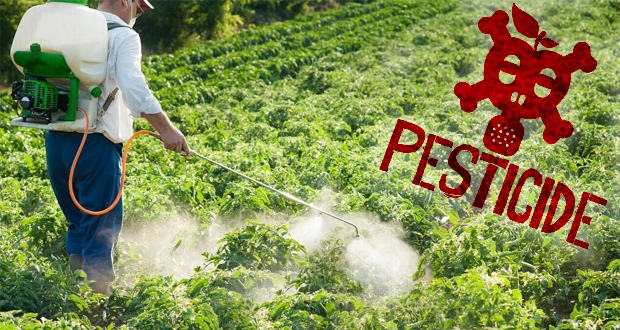
#Pesticides and #Cancer: The #LoveAffair Continues


In a hurry? Click here to read the Article Summary...
Chemical pesticides, herbicides, fungicides, and disinfectants have been in use for so long and and in so many places that many of us don’t even give a second thought to the ongoing damage these poisons are causing the environment… and us!
Pesticides are a broad class of substances used to control, kill, or repel certain plants and animals categorized as pests. Fungicides keep mold and mildew at bay. Disinfectants kill off any bacteria that may be a threat and prevent its spread. Herbicides destroy weeds that steal nutrients from crops. Insecticides repel and kill any insects that may feed on crops.
But Aren’t these Chemicals Keeping Us Safe?
Not so much. The residues left over from these compounds are everywhere. There are at least 70 widely used pesticides in use that are classified as probable or possible human carcinogens. Pesticide residue is found in homes, schools, hospitals, workplaces, and the food supply of both people and animals.
And while we often worry about the toxic air outside (and we should), the Environmental Protection Agency (EPA) discovered that dangerous contaminants (including pesticides) are as much as five times more prevalent indoors as outdoors. That means you could have more residual toxins inside your house than you do in your yard!

The Link Between Pesticides and Cancer
The major danger of pesticide use is the amount of chemical residue in and on our food. Residue is left behind on the crops sold to supermarkets and food manufacturers. People purchase and ingest the food. The chemicals kill beneficial bacteria in the digestive system and wreak havoc on the immune system.
We’re being poisoned from within because our bodies have difficulty expelling and defending against the ever-present chemicals. Bear in mind that these very same pesticides were approved for use by the EPA!
To “protect” us and allay our fears, the EPA has set limits on pesticide usage on crops as well as how much they think is okay for us to ingest. However… do you really trust these Government agencies?
After all, they are the folks who banned DDT for use in the United States, but had no problem allowing it to be sold to other countries. These other countries then use it on food that is imported to the U.S.
And who is to say how much pesticide exposure is too much? For the person who rarely eats

12 junio, 2014

Organic Food

April McCarthy
Organic Trade Groups Finding Pesticides On Over 45 Percent of Organic Produce
Organic fresh fruits and vegetables tested in the past two years contained pesticide residue


Organic Trade Groups Finding Pesticides On Over 45 Percent of Organic Produce


The most common recommendation made by health experts in the area of produce selection is to choose “organic” varieties for maximum health benefits. We trust organic label certifications because they are supposed to comply with organic standards set by national governments and international organizations. Synthetic pesticides and chemical fertilizers are not allowed in organic practices, but that’s not always the case. Research by a Food Inspection Agency in Canada has found that nearly half the organic fresh fruits and vegetables tested in the past two years contained pesticide residue, violating maximum allowable limits for the presence of pesticides, the data shows.
 
 
Of the 45.8 percent of samples that tested positive for some trace of pesticide. Most consumers of organic food do not expect to hear that the produce they buy contains pesticides, epsecially for the premium paid.

The data released to CBC News under the federal Access to Information Act includes testing of organic fruits and vegetables sampled between September 2011 and September 2013.

The results were not what Winnipeg organic consumer Mathieu Rey was expecting. “I would hope that the products are without pesticides. That is what I would be looking for,” Rey said in an interview. “I’m trusting the companies to provide a non-pesticide or pesticide-free product.”

As widespread as the pesticide residues were, they were still considerably less than the 78.4 percent of non-organic samples the inspection agency found containing pesticide residues, violating the allowable limits 4.7 percent of the time.

A U.S. Department of Agriculture that found nearly 20 percent of organic lettuce tested positive for pesticide residues piqued our interest. Lots of the lettuce contained quite a bit of spinosad, a pesticide marketed by Dow Chemical under the brand name.

Jeff Gillman, a professor of nursery management at the University of Minnesota, stated “when people are buying organic food, they often make the incorrect assumption that there are no pesticides. It’s true that organic production often uses fewer dangerous chemicals, but certain pesticides are allowed.”

It turns out that a key factor in chemicals being cleared for use on organic crops is whether they occur naturally. Spinosad, for example, comes from the soil bacterium Saccharopolyspora spinosa. It can fatally scramble the nervous systems of insects. It’s also poisonous to mollusks.